VI PassportFacts Global Citizenship
Searching…
No results found.

Popular searches

Browse by continent

📜 Policy changes

U.S. Tightens OPT: $70,000 for First Application, $30,000 for Subsequent Ones

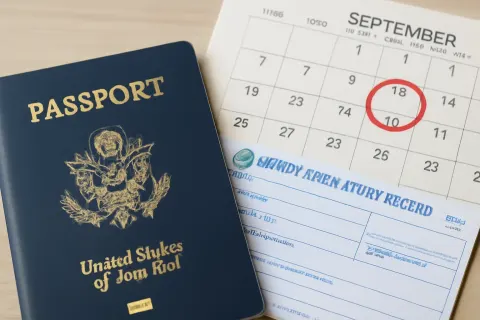
Illustration: U.S. Tightens OPT: $70,000 for First Application, $30,000 for Subsequent Ones
Facebook Messenger WhatsApp Telegram X Email

On October 8, 2026, the U.S. Department of Homeland Security (DHS) announced a proposed rule introducing new fees for the OPT (Optional Practical Training) program — $70,000 for the first application and $30,000 for each subsequent application. This is a major change directly affecting international F-1 students who wish to work in the United States after graduation.

In this article

How Much Is the New Fee?

DHS proposes charging $70,000 for the first time an F-1 student is recommended by their school to participate in OPT, and $30,000 for each subsequent OPT recommendation, including STEM OPT extensions. If a STEM student participates in a full OPT program (12 months initial + 24 months STEM extension), the total cost could reach $100,000.

The $70,000 fee applies to any F-1 student's first OPT application, whether pre-completion or post-completion OPT. The subsequent $30,000 fee applies to any other OPT recommendation for a student who has already participated in OPT and paid the initial fee, including STEM OPT extensions.

Who Pays?

Fees will be paid by schools accredited by the Student and Exchange Visitor Program (SEVP), not by employers. However, DHS states that schools "may pass on the financial burden of this fee to F-1 foreign students, all students, or employers."

This means that although the school is the official party responsible for payment, the cost could ultimately be transferred to students or hiring companies. International students need to prepare for the possibility that OPT costs could increase significantly.

DHS's Rationale

DHS states that the proposed fees are intended to reduce fraud and abuse in the OPT program, strengthen oversight, and protect U.S. workers. The agency also claims the move aims to curtail what it describes as the use of OPT as a source of cheap foreign labor.

This argument is problematic. Current OPT already requires companies to pay prevailing wage standards for the position — not "cheap labor." This $70,000 fee is essentially a financial barrier, not a measure to protect U.S. workers.

Caution Advised

This is a proposed rule, not a final regulation, and these fees are not currently in effect. The federal government is accepting public comment on the proposed regulatory changes until 9/11/2026.

However, if the proposed rule takes effect, it could effectively exclude international students from OPT participation, disrupt employers' ability to recruit STEM talent, and force many schools to reduce or eliminate their international student programs.

F-1 students currently studying in the United States should not panic — this rule is not yet in effect. However, if you plan to apply for OPT in the coming years, monitor the progress of this proposed rule. Should it be adopted, OPT costs will increase substantially, and some schools may decide no longer to recommend international students for OPT.
Sources: Major Immigration Changes Happening in October - Newsweek · Summary of Autumn 2026 Immigration Rule changes · U.S. Immigration Updates: What You Need to Know - Office for International Students & Scholars · Visa Bulletin For October 2026 · October 2026 Visa Bulletin - Latest Update · Green Card Update Brings Gains for Applicants—List of Changes - Newsweek · WR Immigration News Digest - WR Immigration · US Immigration Update October 2026: What Changed? · October 2026 Visa Bulletin: Major Changes in EB-1, EB-2, EB-3 and EB-5 - Ashoori Law · Dubai announces 2026 golden visa for teachers. Figures and dates should be checked with the relevant authorities before you rely on them.

Questions & answers

What is OPT and why do F-1 students need it?

OPT (Optional Practical Training) allows F-1 students to work in the U.S. in a field related to their major after graduation. Currently, students are permitted to work 12 months, or 24 months with a STEM degree.

When will this $70.000 fee take effect?

Unclear. This is still a proposed rule, not a final rule. Public comment runs through 9/11/2026, after which DHS will decide whether to implement it.

If I'm an F-1 student now, will I be affected?

If you applied for OPT before this rule takes effect, you will not be affected. However, if the rule is passed, students who apply for OPT after that will have to pay the new fee.

Can my school transfer this fee to me?

Yes. DHS allows schools to transfer costs to students, employers, or a combination. You should ask your school about their policy.

Found this useful? Send it to someone who needs it
Facebook Messenger WhatsApp Telegram X Email

Need advice on your specific case?

A Viking Global Group adviser will review your case free of charge.

Related articles

Check your own case

Back to News →