What is changing?
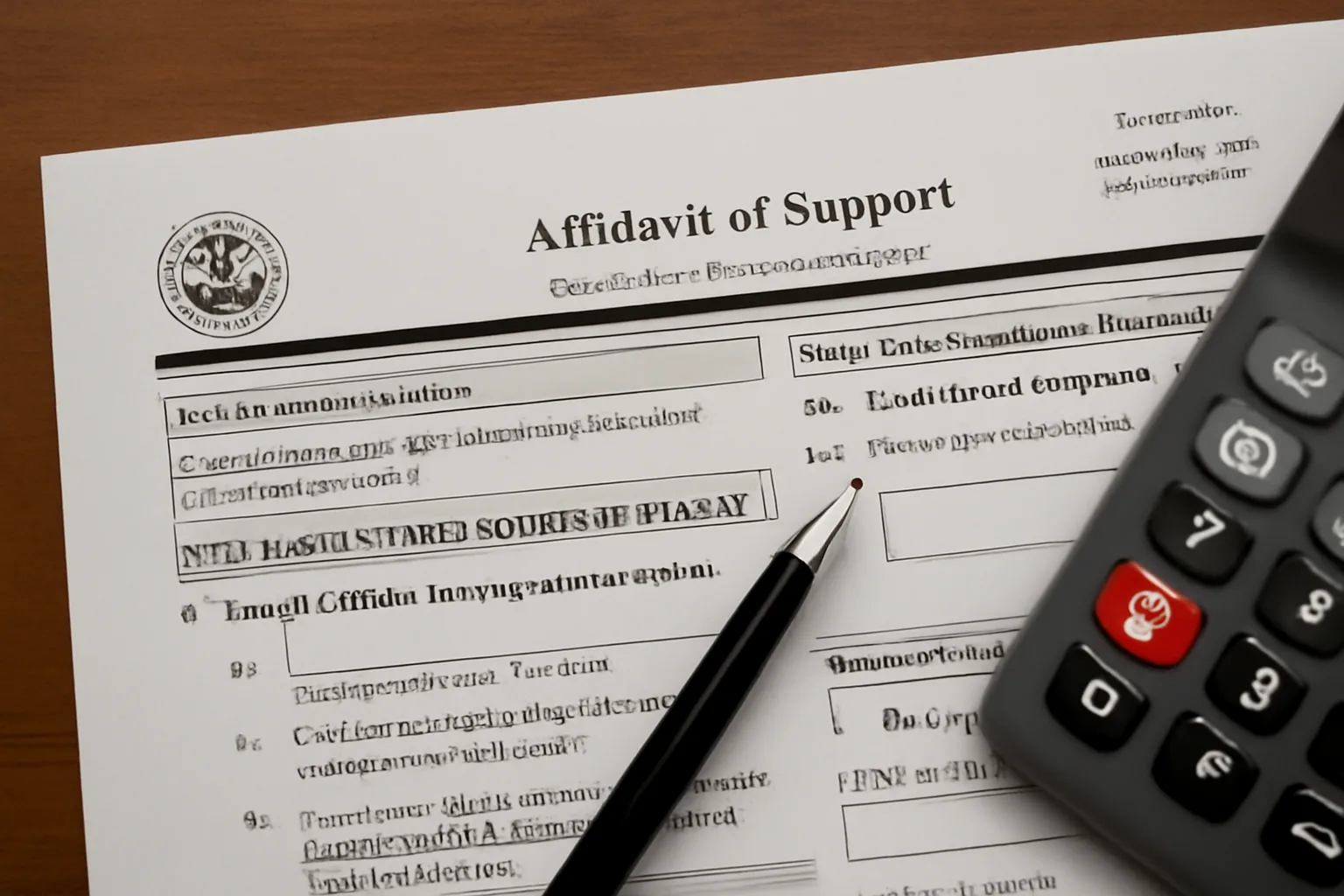
USCIS is updating Form I-864 as of August 31, 2026, adding a credit check requirement for family-based green card sponsors. Starting October 1, 2026, USCIS will only accept the 08/24/26 version of Form I-864—the previous version (10/17/24) will no longer be accepted.
The new Form I-864 includes a section that allows USCIS to request credit information from one or more credit reporting agencies. By signing this form, you consent to USCIS checking your credit report.
What will happen next?
This remains unclear. USCIS has not explained how it will use this information to evaluate sponsorship. USCIS has not announced a minimum credit score requirement, and has not specified what it will look for in a credit report or how it will weigh this information.
It is still uncertain whether USCIS will examine factors such as late payments, outstanding debts, account charge-offs, bankruptcy, or fraud alerts, or how much weight these factors will carry.
However, sponsors should not assume that USCIS will evaluate credit the same way a bank or lender would—you are entering into a financial sponsorship contract for immigration purposes, not applying for a loan.
Who is affected?
This change primarily affects family-based green card applications, since most immigrants sponsored by family members must file Form I-864.
If you are filing a family-based green card application (F-2A, F-2B, F-3, F-4, IR, CR, etc.) and have not yet submitted Form I-864, you will be required to use the new version starting October 1, 2026.
What should you prepare?
One practical concern: if a sponsor has a credit freeze or security freeze, USCIS may not be able to obtain the report. If you have a freeze in place, unfreeze it before submitting Form I-864.
Financial requirements remain unchanged—sponsors must still commit to maintaining income at 125% of the federal poverty line and must submit the most recent tax return along with W-2s and all 1099s.
If you are the primary sponsor and your income is insufficient, you can use a co-sponsor—but the co-sponsor's credit information may also be checked by USCIS.
Important considerations
Do not assume that a low credit score will automatically lead to denial, since USCIS has not announced a cutoff score. However, USCIS has indicated that credit information may be necessary to evaluate Form I-864, meaning you should anticipate that this information will be reviewed.
If you have credit issues (high debt, late payments, recent bankruptcy), prepare documents explaining your situation. Although USCIS has not been specific, having documentation showing you are improving your financial condition could be helpful.