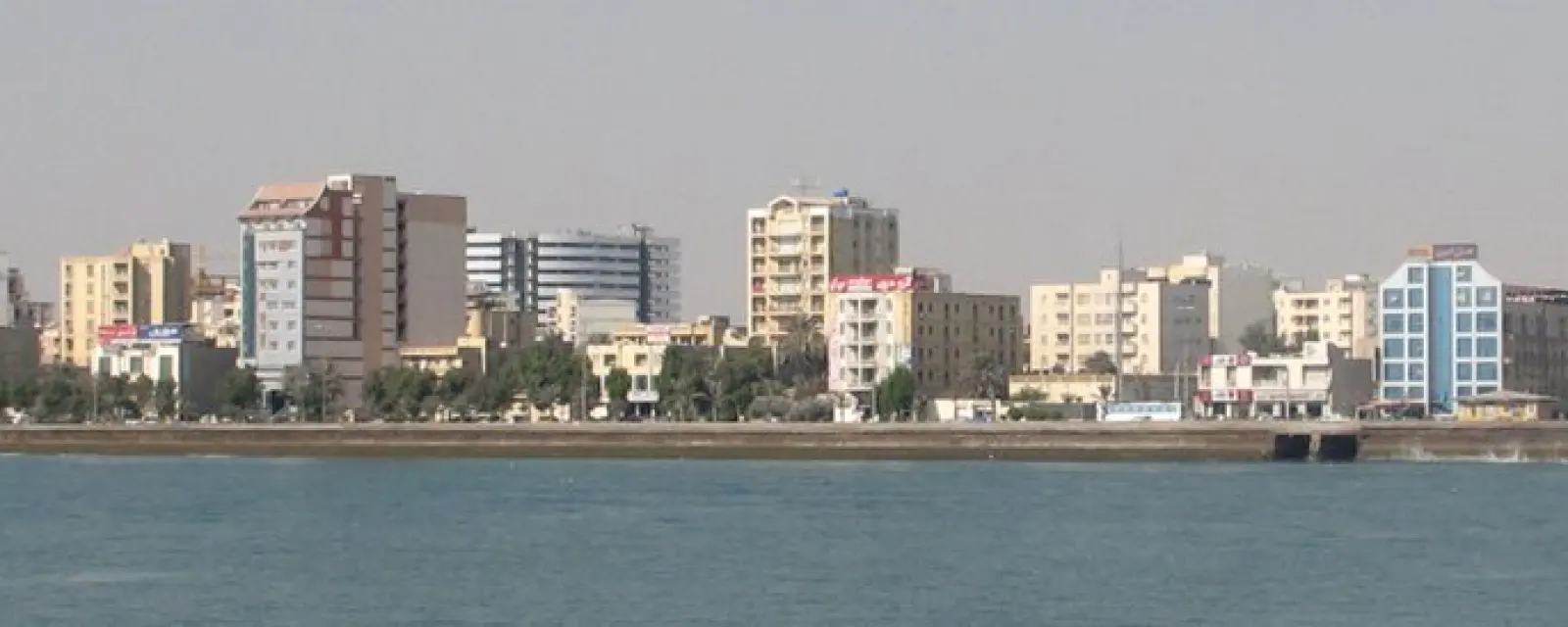
Overview
Iran holds a rank-83 passport reaching 43 destinations without a prior visa. Its population is around 89 million, the capital is Tehran, and the currency is the rial (IRR).
Iran has no citizenship-by-investment programme.
But Iran contains a legal lesson that anyone contemplating a second nationality should read, whether or not they will ever go there. It is in the next section.
🔴 "Non-recognition" is not "prohibition" — and the difference is costly
This library has recorded several models of dual nationality:
Prohibited outright — Kazakhstan, Azerbaijan, India: acquiring another nationality ends the original. Permitted by list — Pakistan, Bangladesh. Permitted outright — Kyrgyzstan, Armenia, and in practice Vietnam.
🔴 Iran is a fourth model, unlike all three: NON-RECOGNITION.
The principle, stated precisely: Iran regards a person born an Iranian citizen as remaining an Iranian citizen, and does not recognise that person's acquisition of another nationality. Iran revokes nothing — it simply acts as though the other nationality does not exist.
📌 It sounds like a legal technicality. The consequences are concrete:
🔴 1. Consular protection barely functions. If a dual Iranian and country-X national encounters difficulty on Iranian soil, country X's mission is typically not granted access, because Iran regards the person as an Iranian citizen and the matter as internal. Numerous such cases have been documented over many years.
🔴 2. Entering Iran on a foreign passport does not erase Iranian nationality. Iranians holding another nationality must in principle use Iranian documents to enter Iran. Using a foreign passport does not make one "a foreigner" in the eyes of Iranian law.
🔴 3. Obligations under Iranian law continue to apply — including military service for men within the prescribed ages, and rules on civil status, inheritance and marriage.
📌 Why every reader of this site should know this, even those with no connection to Iran:
The Vietnam article in this library states the general principle: while you stand on the territory of a country whose nationality you hold, that country treats you as its citizen, and the other country's scope to intervene is very limited. This is the general worldwide rule on dual nationality, not an Iranian peculiarity.
🔴 Iran is simply where that rule is applied most strictly and where the most real cases exist. Anyone weighing a second nationality should ask directly: if I encounter difficulty in country A while holding both A and B, what can B do for me? The honest answer in a great many countries is: very little.
✅ A change on gender in nationality law worth recording
The Lebanon article immediately preceding describes a country where women cannot pass nationality to their children. Iran once belonged to a similar group — nationality transmitted through the paternal line, so children of Iranian women and foreign husbands did not automatically hold Iranian nationality.
📌 This has been changed: from 2019, Iran adopted provisions allowing children of Iranian women and foreign husbands to acquire Iranian nationality under a prescribed procedure.
🔴 For completeness: it is an application-based, conditional mechanism, not automatic parity with the paternal line. But it remains a real change for tens of thousands of families, particularly in border provinces with many marriages to foreign nationals where children had previously fallen into an undocumented condition.
📌 Why it deserves recording on this site: the three-article sequence on gender in nationality law — Nepal, Lebanon, Afghanistan — has so far been entirely negative in consequence. Iran is the first case in this library showing that such provisions CAN be changed. That is useful information for anyone following the situation in a country with comparable rules.
🔴 Banking barriers — the main business obstacle
This is the most practical section for readers doing business.
🔴 The largest obstacle to doing business with Iran is not tax and not procedure, but PAYMENT. Owing to international sanctions, most Iranian banks are restricted from or cut off from common international payment channels, and many third-country banks decline to process Iran-related transactions because of their own compliance risk.
📌 Practical consequences:
- International transfers by ordinary means are very difficult or impossible.
- 🔴 International credit and debit cards generally do not work in Iran — visitors must carry cash or use prepaid domestic cards issued for foreigners.
- Foreign businesses, even operating lawfully, face the risk that their own bank declines to serve them.
🔴 For Vietnamese businesses, this must be resolved BEFORE discussing anything else, and resolved with your own bank, your freight forwarder and your insurer — not merely with the Iranian counterparty. Many transactions collapse at this stage after the commercial terms have already been negotiated.
📌 This library has recorded transfer-risk types in Turkmenistan (currency controls), Myanmar (banking isolation) and Lebanon (deposits not withdrawable). Iran is a fourth type: the barrier lies in the external international system rather than in domestic rules.
🔴 Additionally, exchange rates and inflation: the rial has depreciated very heavily over years, and Iran operates multiple parallel exchange rates. This must be factored into every costing.
Geography & climate
Iran is the second-largest country in West Asia after Saudi Arabia, bordering Iraq, Türkiye, Armenia, Azerbaijan, Turkmenistan, Afghanistan and Pakistan, with coastlines on the Persian Gulf and the Caspian Sea.
📌 That position is Iran's greatest strategic asset: it controls the northern shore of the Strait of Hormuz — the route through which a very large share of the world's seaborne oil passes.
Terrain: the Zagros and Alborz ranges enclose an arid central plateau containing two great deserts. 📌 Mount Damavand, above 5,600 m, is the highest peak in West Asia.
🔴 The water crisis is the most serious environmental problem: prolonged drought, over-extraction of groundwater and agricultural expansion have produced land subsidence in many regions, and Lake Urmia — once the largest salt lake in the Middle East — has shrunk drastically.
📌 Lake Urmia belongs to the same problem family as the Aral Sea, which this library recorded in Kazakhstan and Uzbekistan: a large body of water lost because its inflow was diverted for irrigation. Three countries, three lakes, one mechanism — and among the most characteristic environmental problems of this whole landmass.
🔴 Earthquakes are a constant risk; Iran sits on a tectonic collision zone and has experienced many events with very heavy casualties.
History — among the world's longest continuous civilisations
📌 Iran is among the few countries with a continuous state history exceeding two and a half thousand years.
- The Achaemenid Empire from the sixth century BCE was the first great empire spanning three continents. 📌 The Cyrus Cylinder, an artefact of that period, is frequently cited in discussions of the earliest declarations concerning the treatment of conquered peoples.
- Persepolis — the empire's ceremonial capital — is a UNESCO site.
- Then followed the Parthian and Sassanid periods, the Arab conquest, the Perso-Islamic dynasties, and the Safavid, Qajar and Pahlavi empires.
📌 A culturally notable point: despite repeated conquest, Iran retained its own language and identity rather than being assimilated — unlike most of the Middle East, which shifted to Arabic. Persian survived continuously and became a major literary language across a vast region, influencing Central Asia, Afghanistan, South Asia and the Mughal empire in India.
📌 Persian poetry is among the most influential literary traditions in the world — Ferdowsi, Hafez, Saadi, Rumi, Omar Khayyam. The Afghanistan article notes Rumi's birth in Balkh, and the Tajikistan article notes Rudaki — three countries today, one shared literary tradition.
In 1979 the Islamic Revolution ended the monarchy and established the Islamic Republic of Iran. 🔴 The subsequent period includes the Iran–Iraq war of 1980–1988, among the longest and costliest wars of the later twentieth century, and decades of international sanctions relating to the nuclear programme and other matters.
📌 This site states these at the level of facts and delivers no political judgment.
Economy
1. Oil and gas. 📌 Iran holds among the world's largest natural gas reserves and very large oil reserves. 🔴 But the ability to sell is constrained by sanctions and by the payment barriers described above — another variant of the lesson that reserves are not wealth until they can be sold, recorded in Turkmenistan and Afghanistan.
2. Petrochemicals, steel, vehicles. Iran has a broader domestic industrial base than most countries in the region, largely because it has been compelled to manufacture many things itself.
3. Agriculture. 📌 Iran is the world's largest producer of saffron — accounting for the overwhelming share of global output — alongside pistachios, dates and hand-woven carpets.
4. Persian carpets. The longest-renowned product, and still a large employer.
📌 A notable point on human capital: Iran has a very high rate of university education, and 📌 a high proportion of female university students — in some science and engineering fields exceeding men. This frequently surprises those outside the region.
🔴 The other side: "brain drain" has been raised by Iran's own institutions for many years — a substantial proportion of highly qualified people leave. Iranian communities in the United States, Canada, Germany, the United Kingdom, Australia and the Gulf are large and highly educated.
As always: tax obligations here do not replace those in your country of residence.
Culture & people
Persian (Farsi) is the national language, written in an extended Arabic script. 📌 As noted, Persian is close to Dari in Afghanistan and Tajik in Tajikistan — three countries, one language area.
Iran is multi-ethnic: Persians form the majority, alongside Azerbaijanis (📌 a very large community which, as the Azerbaijan article notes, by most estimates outnumbers Azerbaijan's own population), Kurds, Lurs, Arabs, Baloch, Turkmen and others.
Shia Islam is the majority religion — 📌 Iran is the largest Shia country in the world, a fundamental distinction from most neighbouring Arab states, which are Sunni. Armenian and Assyrian Christian, Jewish and Zoroastrian minorities are constitutionally recognised.
📌 Nowruz — the Persian new year — is the largest annual festival, celebrated across a wide region from the Balkans to Central Asia. The Tajikistan article notes it too.
The Vietnamese community in Iran is very small.
Immigration routes
No investment programme exchanging for citizenship.
Categories existing in law include employer-sponsored work permits, investment and business visas, student visas, and residence through marriage. 📌 Iran maintains distinct entry and residence provisions for people of Iranian origin abroad.
🔴 Foreign purchase of property in Iran is restricted and requires approval, with rules varying by category.
🔴 Many countries maintain advisories restricting travel to Iran or to parts of it. Check what is in force before planning.
Citizenship
By descent. Naturalisation of foreigners exists in law but requires long residence and case-by-case assessment; numbers are very small.
🔴 And the most important point, repeated: Iran does not recognise its citizens' second nationality. Renouncing Iranian nationality is a procedure that exists but is very difficult and highly discretionary — not a matter of simply filing an application.
🔴 If anyone offers you "Iranian citizenship by investment", stop. No such programme exists.
Everyday life
Living costs measured in foreign currency are very low because of the exchange rate — but that figure misleads, since domestic incomes have been eroded correspondingly.
Healthcare: 📌 Iran has a more developed domestic health system and pharmaceutical industry than most countries at comparable income levels, partly out of necessity. 🔴 But some imported medicines and equipment are affected by payment barriers. International insurance is necessary, and you must check whether your policy excludes Iran — a point very often overlooked.
Education: a broad university system with long tradition; instruction is mainly in Persian.
Connectivity: Imam Khomeini International Airport in Tehran connects to many points in the Gulf, Türkiye, Europe and Asia, though the number of carriers has fallen. 🔴 International cards do not work — see the banking section.
Internet: 🔴 infrastructure exists but many international platforms are blocked, and there have been widespread access restrictions during certain periods.
🔴 Safety and social regulations: Iran applies rules on dress and public conduct that also apply to foreigners, including head covering requirements for women. Visitors should research these carefully in advance to avoid inadvertent breaches.
Who should consider Iran
It may fit if:
- You work in commodity trade, petrochemicals, speciality agricultural products or industrial equipment and have already solved the payment and compliance problem — if that is unsolved, everything else is moot.
- You research Persian history, archaeology or literature — this is among the richest heritage environments in the world.
Not a fit if:
- 🔴 You are offered "Iranian citizenship by investment": no such programme exists.
- 🔴 You are of Iranian origin holding another nationality and considering a return without understanding the consequences of Iran's non-recognition of second nationality — research this carefully first; it has real effects.
- 🔴 You need ordinary international payment channels: this is the decisive barrier.
The point to carry away, applying to everyone weighing a second nationality: distinguish clearly between "does this country let me hold two nationalities" and "if something happens to me on its soil, what can the other country do for me?" These are different questions, and the second is almost never asked while costs and processing times are being discussed. Iran is where the answer to the second is clearest — but the principle behind it holds in a great many other places.