Overview
Uzbekistan holds a rank-64 passport reaching 63 destinations without a prior visa. Its population is around 35.6 million — the largest in Central Asia, nearly equal to all the region's other countries combined. The capital is Tashkent and the currency the som (UZS).
Uzbekistan has no citizenship-by-investment programme, and does not permit dual citizenship.
But the reason to read this article lies elsewhere, and it touches something most readers have never had to think about.
🔴 Exit visas — the right to leave your own country
Until the end of 2018, Uzbek citizens wishing to travel abroad required an exit visa issued by their own government. Not a visa for the destination — permission from their own country to depart.
The requirement was a Soviet inheritance, and Uzbekistan was one of very few countries anywhere still maintaining it into the 2010s.
📌 Uzbekistan abolished the exit visa on 1 January 2019.
This is a far larger change than its technical appearance suggests, and it merits a pause:
- This entire site is about the right to enter — which passport reaches which country, which programme grants residence where. But the right to enter means nothing unless you are permitted to leave.
- For most readers, the right to leave one's own country is so self-evident that nobody considers it — it appears in the Universal Declaration of Human Rights, and in most countries is simply not in question.
- 🔴 But it is not self-evident everywhere. Uzbekistan is this region's most recent example of such a requirement genuinely existing, and of its being abolished.
📌 The transferable lesson: when assessing a citizenship, do not only count the countries the passport reaches. Ask two further questions: does the issuing country restrict its citizens' departure, and are there restrictions by category — occupation, gender, military service obligation? None of these appear in any passport ranking.
📌 Reform after 2016 — necessary context
Abolishing the exit visa did not stand alone. It formed part of a broader policy shift beginning in 2016, following a leadership transition. The major changes, stated as facts:
- 2017 — currency liberalisation. Uzbekistan had maintained an official exchange rate detached from the market rate, making currency conversion extremely difficult. This was the single largest barrier to foreign investment, and removing it transformed the possibility of doing business here.
- 2019 — exit visas abolished.
- Expanded visa-free entry and e-visas for nationals of many countries, reversing a previously closed policy.
- Reform in the cotton sector, after years of international documentation of forced labour during the harvest. International monitoring bodies have recorded substantial progress.
🔴 For completeness, without gloss: international human rights organisations continue to document significant restrictions on freedom of expression, assembly and civil society activity. Economic reform and political reform have not moved at the same pace. This belongs in the disadvantages, and anyone planning long-term here needs the accurate picture.
🔴 Dual citizenship — the same bloc as Kazakhstan
Uzbekistan does not permit dual citizenship. Those naturalising must renounce their prior nationality, and Uzbek citizens acquiring another nationality must resolve that position under the rules.
📌 This is common to the Central Asian bloc, as the Kazakhstan article sets out in its table against Vietnam:
Vietnam — acquiring another nationality does not automatically end the original. Kazakhstan, Uzbekistan, Turkmenistan, Kyrgyzstan, Tajikistan — single-nationality approaches, varying in enforcement, with exceptions under bilateral agreements.
🔴 The consequence is as in the Kazakhstan article: if the objective is to add a nationality while retaining an existing one, the whole Central Asian bloc is off the list. If the objective is residence and business, that is an entirely different matter — and post-2017 Uzbekistan is a market with genuine movement.
Geography — one of the world's two doubly landlocked countries
📌 Uzbekistan is one of only two countries entirely surrounded by other landlocked countries — doubly landlocked. The other is Liechtenstein.
For Uzbek goods to reach the sea, they must cross at least two national borders. This is not a trivia point: it is a structural determinant of logistics costs and of foreign policy, and it explains why the country invests heavily in relations with every neighbour.
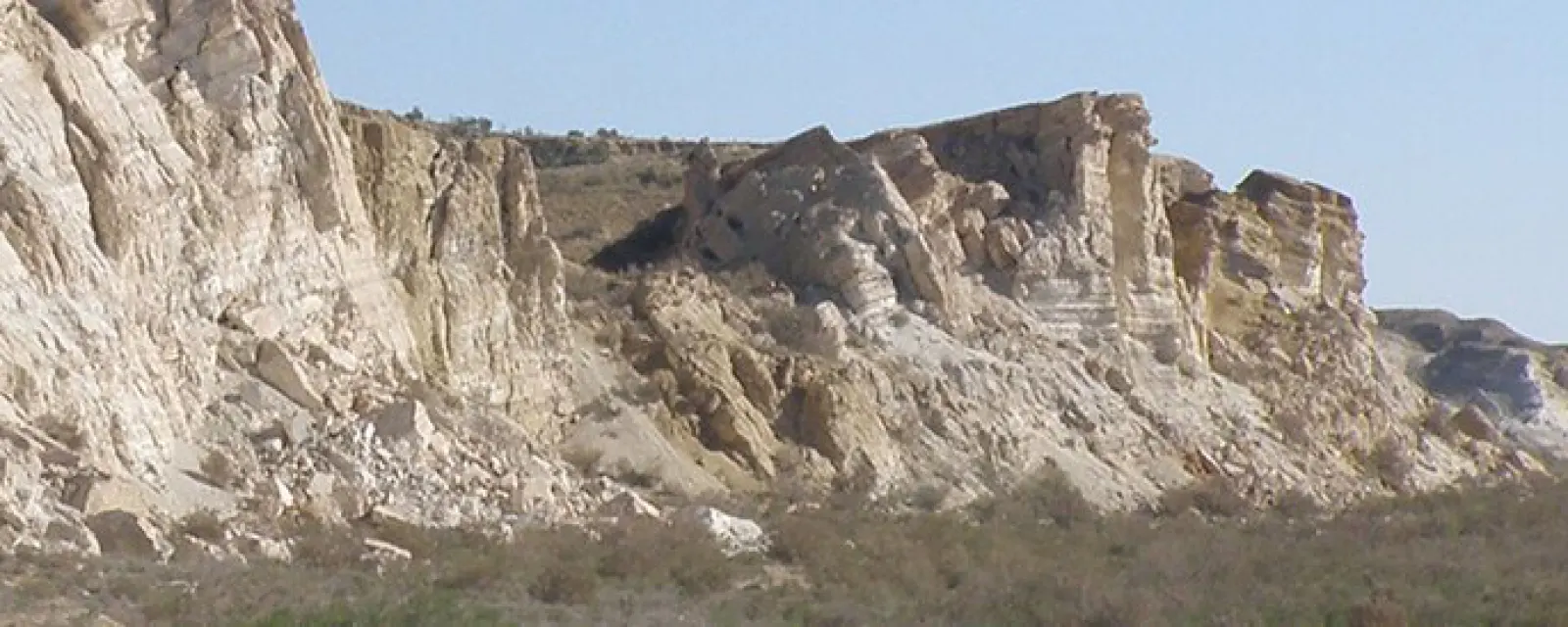
Terrain: the Kyzylkum desert covers much of the country, with the densely populated and fertile Fergana valley to the east and high mountains bordering Tajikistan and Kyrgyzstan.
The climate is dry continental: very hot summers, cold winters, low rainfall.
🔴 The Aral Sea. Most of the lost lake area lies on the Uzbek side. The exposed bed left a salt desert contaminated with agricultural chemicals, and dust storms from it affect health across the region. 📌 Unlike Kazakhstan, which restored the North Aral behind the Kokaral dam, the southern Aral on the Uzbek side is essentially beyond recovery. Two outcomes from one disaster, differing by terrain and by how much inflow remains.
History — a centre, not a periphery
This is where readers from East Asia most often misjudge. This land was once among the centres of the world, not a remote margin.
Samarkand, Bukhara and Khiva — all three UNESCO sites — sat on the Silk Road and were for centuries among Eurasia's wealthiest cities.
📌 In science: Bukhara and its region produced or nurtured names the world still uses — al-Khwarizmi, from whose name the word "algorithm" derives and from whose work comes "algebra"; Ibn Sina (Avicenna), whose medical Canon served as a European textbook for centuries; al-Biruni; and Ulugh Beg, grandson of Timur, who built the Samarkand observatory and produced star tables Europe took centuries to surpass.
Timur (Tamerlane) built an empire from Samarkand in the late fourteenth century, and Babur, his descendant born in the Fergana valley, went on to found the Mughal empire in India.
In the nineteenth century the region was conquered by the Russian Empire, later becoming the Uzbek Soviet Socialist Republic. Independence came in 1991.
📌 This sequence matters practically: Uzbekistan has far deeper urban, administrative and educational foundations than "emerging Central Asian country" suggests, and that is part of why post-2017 economic reform could move quickly.
Economy
1. Gas, gold and minerals. Uzbekistan is among the world's significant gold producers, and the Muruntau mine is one of the largest open-pit gold mines on earth.
2. Cotton and agriculture. Cotton dominated the entire Soviet-era economy — and was the direct cause of the Aral disaster. Recent policy has shifted toward domestic processing rather than raw cotton export, and toward reducing planted area.
3. Remittances. 🔴 This figure must be stated: millions of Uzbeks work abroad, chiefly in Russia, and remittances constitute a very large share of household income. That makes the Uzbek economy directly sensitive to Russian economic conditions and migration policy — a highly concentrated risk.
4. Manufacturing and assembly. Vehicles, chemicals, textiles — strongly promoted since currency liberalisation.
📌 A young population is the greatest asset and the greatest pressure. Uzbekistan's age structure is markedly younger than other post-Soviet states, meaning an abundant workforce — but also that a great many jobs must be created every year, which is the central problem of economic policy.
As always: tax obligations here do not replace those in your country of residence.
Culture & people
Uzbek is the state language; Russian remains widely used in business and in cities, especially among older generations. English is spreading quickly among the young and in the business sector. 📌 The Uzbek script is also transitioning from Cyrillic to Latin over a multi-year programme — as in Kazakhstan, with the same practical effect of documents existing in both systems.
Society is multi-ethnic, with Uzbeks in the majority alongside Tajik, Russian, Kazakh, Karakalpak, Korean and other communities. Karakalpakstan is an autonomous republic within Uzbekistan, in the Aral region.
Extended family tradition and the neighbourhood community (mahalla) play a real role in daily life, and in some respects in local administration.
The Vietnamese community in Uzbekistan is small, mainly in Tashkent, around trade and some investment projects.
Immigration routes
No investment programme exchanging for citizenship.
Categories existing in law include employer-sponsored work permits, residence through marriage, residence for those of Uzbek origin, and business investment categories assessed case by case. 📌 Since the 2017 reforms and visa liberalisation, entering to survey the market has become far easier than before — but entering to survey and residing long-term are different things.
Citizenship
Chiefly by descent; naturalisation requires long residence, Uzbek language, and renunciation of the prior nationality.
🔴 If anyone offers you "Uzbek citizenship by investment", stop. No such programme exists, and even if it did, the single-nationality rule would defeat the purpose for anyone wishing to retain an existing nationality.
Everyday life
Living costs are low — among the lowest of any country with comparable urban infrastructure.
Healthcare: the public system is quality-constrained; private hospitals in Tashkent serve foreigners and the middle class. Complex cases typically go to Türkiye, India, South Korea or Germany. International insurance is necessary.
Education: a broad public system with long tradition; numerous foreign university branch campuses have opened in Tashkent in recent years (British, Korean, Russian, Italian and others) — a direct consequence of the opening policy.
Connectivity: Tashkent International Airport connects to Istanbul, Dubai, Moscow, Seoul, Frankfurt and Delhi among others. 📌 Domestic rail is very good by regional standards — the Afrosiyob high-speed service links Tashkent with Samarkand and Bukhara, and is the easiest way to travel between major cities.
Internet: urban infrastructure is improving rapidly. 🔴 But note that access to certain platforms has been restricted at times, and the openness of the online space does not match the openness of the economy.
Safety: street crime is low; Tashkent is regarded as one of the region's safer capitals.
Who should consider Uzbekistan
It may fit if:
- You work in textiles, agricultural processing, mining, construction, energy or education and are seeking a market of 35 million people, young, low-cost and newly opened — this is Uzbekistan's genuine appeal to businesses.
- You want to survey a Central Asian market at low entry cost with simplified entry procedures.
Not a fit if:
- 🔴 You want an additional nationality while retaining your existing one: Uzbekistan does not permit dual citizenship.
- You are offered "Uzbek citizenship by investment": no such programme exists.
- You need open media and civil society space, or specialist healthcare on the spot.
But the opening section is worth reading for everyone, including those who will never visit Central Asia. That a country required its own citizens to seek permission to leave — and abolished it only on 1 January 2019 — is a reminder that passport rankings measure only half the problem. The other half is whether you are permitted to go, and that question must be asked separately.