Overview
Eswatini holds a rank-57 passport reaching 73 destinations without a prior visa. Its population is around 1.2 million, with Mbabane as administrative capital and Lobamba as legislative capital, and the currency is the lilangeni (SZL), pegged at par to the South African rand.
Eswatini has no citizenship-by-investment programme.
📌 2018 — a country renamed in a day
The events, stated as facts:
- 📌 Until 2018 the country's official name was Swaziland. ✅ That year the King proclaimed the name Eswatini — 📌 the indigenous name, meaning "land of the Swazi".
- 📌 The publicly stated reasons included returning to the original name after the colonial period, and avoiding confusion with Switzerland in international forums.
- 📌 The new name was registered with the United Nations and recognised by other states.
🔴 Why I record this on a nationality site — it is not decorative:
📌 A country renaming means passports change, country codes in systems change, the name on every treaty must be updated, and every database in every other country must follow.
✅ During transition, people hold passports bearing the OLD name while systems carry the NEW one, or vice versa. 🔴 This is real and causes real friction at immigration desks, at banks, in document checks.
📌 This library has met the same in other forms: 🔴 North Macedonia renamed in 2019 under an international agreement; Türkiye registered its name; the Netherlands changed its national branding.
✅ The usable lesson: 📌 your documents are not a constant. 🔴 Country name, country code, passport design, even the name of the issuing authority — all can change within the life of one passport. ✅ So when planning long term, do not tie yourself to one form; keep certified copies of original documents and know which authority in that country re-certifies when things change.
📌 Africa's last absolute monarchy
📌 Eswatini is the only remaining absolute monarchy in Africa. 🔴 The King holds wide powers: appointing the prime minister, appointing part of the legislature, with political parties restricted in electoral activity.
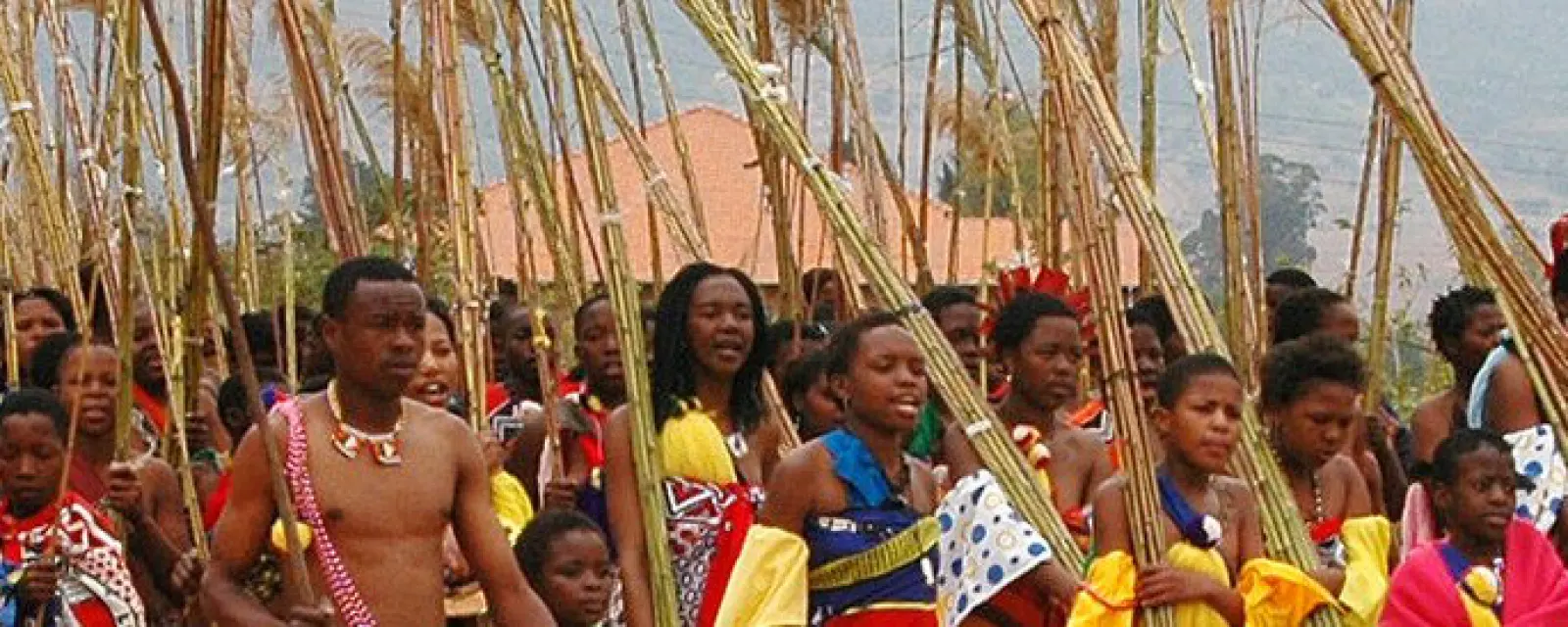
📌 The traditional system — including the role of the Ndlovukati (queen mother) as a ceremonial and institutional counterweight — is a long-standing indigenous political structure, and 📌 national ceremonies such as Umhlanga and Incwala are central to cultural life.
🔴 Stated fully: 🔴 international human rights organisations document concerns about political space, and there have been protests demanding reform met with forceful measures in recent years. 📌 This site states this at the level of facts.
📌 For readers, the practical part is: ✅ in a system with highly concentrated power, rules on investment, land and residence can change far faster than in a system with multiple approval layers. 🔴 That is a real risk for long-horizon plans, and it cuts both ways — favourable changes come fast too.
🔴 One specific point to know: most land in Eswatini is held under the traditional system administered by the monarchy, 📌 and the access mechanism differs entirely from ordinary private freehold. ✅ Anyone planning land-linked investment must clarify this BEFORE, not after.
Geography & economy
Eswatini is among Africa's smallest countries, bordered by South Africa on three sides and Mozambique to the east. 📌 The terrain shifts from cool highveld in the west to hot lowveld in the east over a very short distance — 🔴 few countries pack four climate zones into so small an area.
Economy: sugar and cane — 📌 among the largest export earners — with fruit concentrates, timber, textiles and tourism. 🔴 Most trade passes through South Africa, and 📌 Eswatini belongs to the Southern African Customs Union, whose revenue share is a significant part of the budget.
🔴 Disadvantages: 🔴 heavy dependence on South Africa in both trade and currency; 🔴 budget revenue dependent on customs union allocations — a variable outside its control; 🔴 HIV prevalence among the world's highest; 🔴 high unemployment, especially among the young; and 🔴 the political space concerns noted above.
As always: tax obligations here do not replace those in your country of residence.
Immigration routes & citizenship
Categories existing in law include work permits, residence tied to registered business activity, and residence through marriage.
📌 On dual citizenship: check the current statute — 🔴 and note that nationality rules here connect in part to the traditional system, so do not infer from other countries' models.
🔴 If anyone offers you "Eswatini citizenship by investment", stop. No such programme exists.
Who should consider Eswatini
It may fit if: you work in sugar and juice processing, timber, textiles or tourism — 📌 and have clarified the land question before committing.
Not a fit if: 🔴 you are offered "Eswatini citizenship by investment"; 🔴 you need a legal environment with multiple layers of control; or you need a domestic market.
The point to carry away: ✅ Eswatini offers two small but practical lessons.
📌 One — country name, country code and passport design are all variables, not constants. ✅ Anyone planning long term should keep certified copies of original documents and know which authority re-certifies when things change.
📌 Two — in a system with concentrated power, rules change fast in both directions. 🔴 That is not automatically bad, but it means long-term commitments here should rest on a specific document and a specific authority, not on custom.