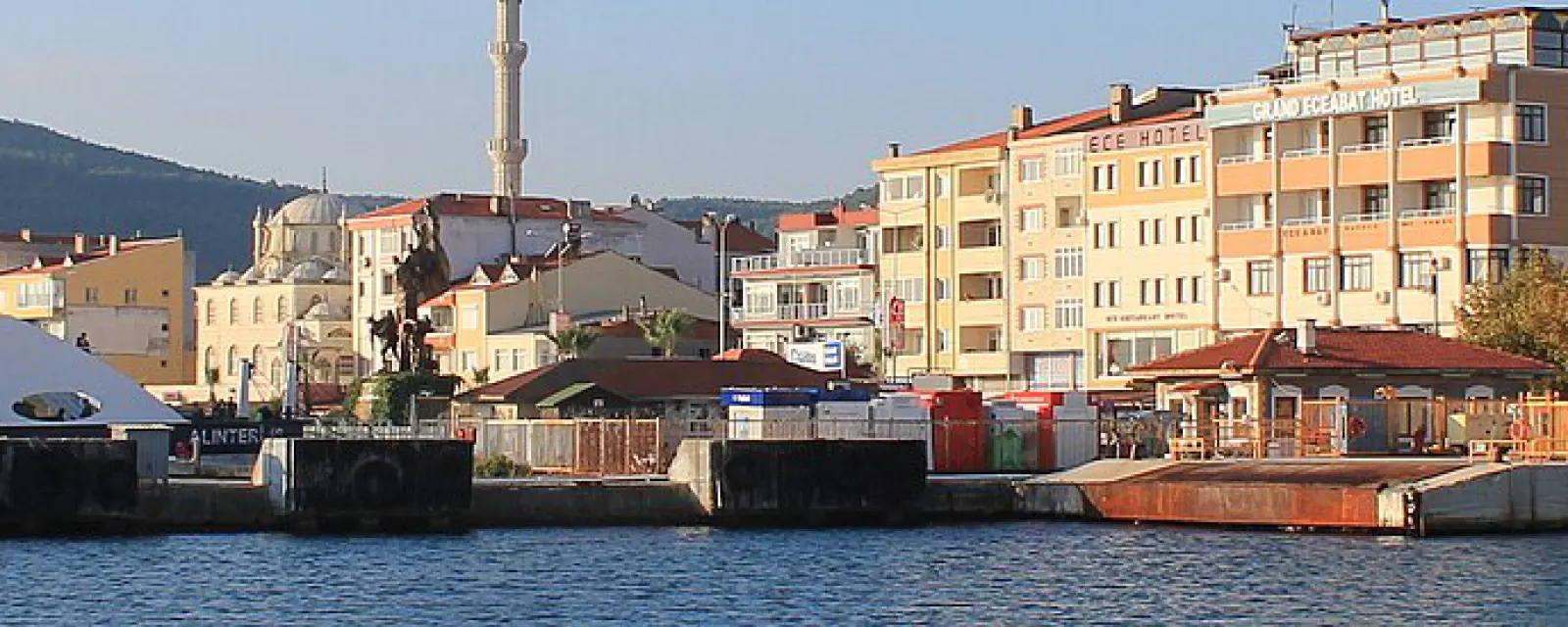
Overview
Turkey is the only country in the world that straddles two continents — the majority of its territory lies in Asia (the Anatolian Peninsula), with a smaller portion in Europe (Thrace region), separated by the Bosphorus Strait that flows through the heart of Istanbul.
With over 85 million people and an economy ranking among the world's top 20, this is an entirely different scale from Caribbean microstates. You are not acquiring citizenship of a small nation for convenient travel; you are entering a market of 85 million people backed by the infrastructure, hospitals, schools, and supply chains of a regional power.
Turkey's citizenship-by-investment program stands out in one key respect: you receive a tangible asset in return — typically real estate — rather than a non-refundable contribution. This is what draws many international investors, including from Vietnam.
Geography & Climate
Area of 783,000 km². The terrain is remarkably diverse: Mediterranean and Aegean coastlines in the south and west, the arid Anatolian Plateau at the center, high mountains to the east bordering Iran and Armenia, and a wet Black Sea coast to the north.
Climate varies dramatically by region — something you must understand clearly before choosing where to buy:
- Istanbul: four distinct seasons, winters 3–8°C with snow, summers 25–30°C with humidity
- Antalya and the Mediterranean coast: mild winters 10–15°C, hot dry summers 30–35°C, over 300 sunny days annually
- Ankara and the interior plateau: continental climate, brutal winters below 0°C, hot dry summers
Those accustomed to tropical climates typically adapt better along the southern coastal regions. Istanbul winters are considerably colder and more humid than many first-time experience visitors expect.
One must speak plainly about earthquakes: Turkey sits atop the North Anatolian Fault and carries high seismic risk. The February 2023 earthquake in the southeast caused severe casualties and property damage. When selecting property to purchase, request structural documentation and construction year — buildings completed after 2000, particularly post-2018 when seismic codes were strengthened significantly, are considerably safer.
Historical Background
Few regions have witnessed as many layered civilizations as Anatolia: Hittite, Ancient Greek, Roman, Byzantine, Seljuk, and Ottoman.
The Ottoman Empire ruled from the 14th century and at its height spanned three continents, controlling the Balkans, the Middle East, and North Africa. Following World War I, the empire collapsed. Mustafa Kemal Atatürk led the War of Independence and established the Turkish Republic on October 29, 1923.
Atatürk undertook sweeping reforms: secularization of the state, replacement of Arabic script with the Latin alphabet, educational and legal modernization modeled on European standards. This legacy explains why modern Turkey uses Latin script, a civil law system comparable to continental Europe, and maintains an identity that is simultaneously Muslim and Western-oriented.
Turkey has been a NATO member since 1952 and a candidate for EU membership since 1999 — but accession negotiations have stalled for years. This point must be stated clearly: a Turkish passport currently does not grant visa-free entry to the Schengen zone, and there is no credible timeline for this to change. Anyone advising you to "buy Turkish citizenship and later access the EU visa-free" is providing you with information that has no factual basis.
Culture & People
Population exceeds 85 million, predominantly Sunni Muslim, yet the state has adhered to secular principles since Atatürk's era. In practice, the degree of religious observance in daily life varies dramatically by region: central Istanbul neighborhoods, Izmir, and Antalya's tourist zones operate with a distinctly European openness, while rural Anatolia remains far more traditionally minded.
Turkish is the official language, uses the Latin alphabet so Vietnamese speakers pick up reading relatively quickly. English is common in tourist zones, hotels, private hospitals, and among urban youth, but administrative procedures and official documents are almost exclusively in Turkish — you will need translation services or professional support in your initial period.
Turkish culture emphasizes family, hospitality, and lengthy communal meals — quite familiar to Vietnamese people. Cuisine is diverse: grilled meats, flatbreads, yogurt, fresh vegetables; not spicy in Southeast Asian style but genuinely approachable.
The Vietnamese community in Turkey remains small but is growing, concentrated in Istanbul. A handful of Vietnamese restaurants and mutual-aid groups already exist — considerably more than in Caribbean islands.
Economy & Opportunity
Turkey has substantial manufacturing: automotive and parts, textiles, steel, appliances, processed agriculture. It is a major production hub serving European and Middle Eastern markets owing to geography and competitive labor costs.
For Vietnamese entrepreneurs, two directions merit attention:
Trade: Istanbul is a natural transshipment point between Asia and Europe. Many Vietnamese enterprises in textiles, home furnishings, and food products use Turkey as a gateway to EU and Middle Eastern markets.
Tourism and rental property: Turkey welcomes tens of millions of international visitors annually. Short-term rental apartments in Istanbul and Antalya can generate cash flow, though they demand close management and realistic operating-cost accounting.
On currency risk — this must be stated plainly. The Turkish Lira (TRY) has depreciated sharply against the USD over many years, accompanied by high inflation. This cuts both ways:
- Real estate priced in USD helps preserve relative value, and Turkish property becomes cheaper for foreign-currency holders
- But rental income is collected in Lira, operating costs are in Lira, and recovery of your full USD outlay upon resale is not guaranteed
Anyone calculating "buy property for citizenship, resell in three years, recover principal" must model a severe currency depreciation scenario — do not assume value stability in USD.
Residency & Citizenship Program
Turkey grants citizenship through investment routes that have been codified and adjusted repeatedly since 2017. Principal pathways:
Real estate purchase meeting minimum value thresholds, with a commitment not to resell within a statutory minimum period. This is the most common route for international investors.
Bank deposit into Turkish banks or approved financial instruments, held for the prescribed duration.
Business investment with conditions for job creation among Turkish citizens.
Applications include spouse and children under 18. No residency requirement, no language examination, no interview.
On specific figures: minimum investment thresholds, holding periods, and processing fees have been adjusted multiple times and may change further. Check current parameters in the Program section on this page or ask a specialist directly. We do not publish fixed numbers in articles because outdated information causes more harm than help.
Three Critical Points When Purchasing Turkish Real Estate
This is what Viking Global Group most emphasizes with clients, as most problems stem from here:
First — inflated valuations. Some projects selling to foreigners price units well above true market value, inflated precisely to the minimum threshold for citizenship. You need independent appraisal, not reliance solely on the seller's quote.
Second — title documentation (Tapu). Verify legal status, zoning, liens, and building permits before transferring funds. Cases exist where units lack completion certificates or are entangled in disputes.
Third — holding obligations. Reselling before the mandatory holding period expires may jeopardize granted citizenship. This is not a flexible investment you can exit quickly.
Where Does a Turkish Passport Take You
Visa-free or arrival-visa access to many Asian, African, Latin American countries and some non-Schengen Eastern European nations. Notably, Turkish citizens meeting criteria may apply for U.S. E-2 visa — similar to Grenada — opening a pathway to operate business in the United States.
To reiterate: no Schengen visa-free, no UK visa-free, no U.S. visa-free. This is a major difference from Caribbean passports, and you must carefully assess against your actual travel needs.
Day-to-Day Life
Cost of living is noticeably lower than Western Europe and competitive with Ho Chi Minh City on many categories — fresh produce, public transit, dining are all affordable. Cars and imports carry steep tariffs, so they're pricier.
Healthcare is a genuine strength. Private hospital networks in Istanbul and Ankara meet international standards; many are JCI-accredited. Physicians trained in Europe and the U.S. Turkey is a major medical tourism destination globally — surgery, dentistry, fertility treatment costs far below Western Europe at equivalent quality. For families with elderly members, this is a material advantage over Caribbean islands.
Education: state schools teach in Turkish and are tuition-free. International schools in Istanbul run British, American, and IB curricula at tuition significantly lower than Singapore or Hong Kong. Turkish universities include some regionally ranked institutions with reasonable fees and many English-taught programs.
Transportation: Istanbul airport is among the world's largest hubs. Turkish Airlines serves over 300 destinations. Direct Istanbul–Ho Chi Minh City flight, approximately 10–11 hours. A decisive advantage over Grenada — visiting family in Vietnam is a single flight.
Time zone is 4 hours ahead of Vietnam — you can still conduct same-day business with domestic contacts, far more convenient than the 11-hour offset of Caribbean locations.
Who Should Consider Turkey
Well-suited if you:
- Want to acquire a tangible, real asset rather than a non-refundable contribution
- Need to visit Vietnam frequently — direct flights and minimal time difference are major advantages
- Care about healthcare quality for your family, especially elderly members
- Trade between Asia and Europe and need legal presence at the crossroads
- Are targeting the E-2 U.S. pathway but want a meaningful, usable asset alongside it
- Want affordable international schooling for children in a major city
May not be suitable if:
- Your primary goal is visa-free or visa-on-arrival access across Europe, UK, and U.S. — Turkish passport does not deliver this
- You cannot tolerate Lira currency risk to your capital outlay
- You require liquidity — you have holding obligations and cannot exit freely
- You wish to avoid earthquake risk or lack appetite for structural due diligence
- You need a fully English-language environment for daily life and official dealings
This article provides foundational reference information. Investment thresholds, holding periods, and application requirements change over time. Please consult a Viking Global Group specialist to receive advice tailored to your specific circumstances before making a decision.