Overview
North Macedonia holds a rank-33 passport with 117 destinations reachable without a prior visa, including visa-free access to the Schengen area since 2009. It is a small landlocked Balkan country of around 2.1 million people, and a NATO member since 2020.
This country deserves its own article for one fact more useful than anything else in it:
🔴 North Macedonia received EU candidate status in 2005 — and has still not joined.
That is two decades of waiting.
The figure matters because this series covers several current candidates: Albania (since 2014), Ukraine and Moldova (since 2022). In each of those articles I wrote that EU accession is "a multi-year process without a guaranteed timeline".
North Macedonia is the concrete evidence for that statement. Not because the country did anything wrong — but because accession depends on many factors outside a candidate's control, including bilateral relations with each existing member state.
The practical lesson: if your financial or family plan only makes sense once a country joins the EU, that is not a plan — it is a bet. Assess each country on what it currently has, not on what it might have.
As for North Macedonia itself: an eight-year citizenship path, dual citizenship permitted, and very low living costs.
North Macedonia has no citizenship-by-investment programme.
Geography & climate
North Macedonia lies at the centre of the Balkan peninsula, landlocked, bordering Kosovo and Serbia to the north, Bulgaria to the east, Greece to the south and Albania to the west.
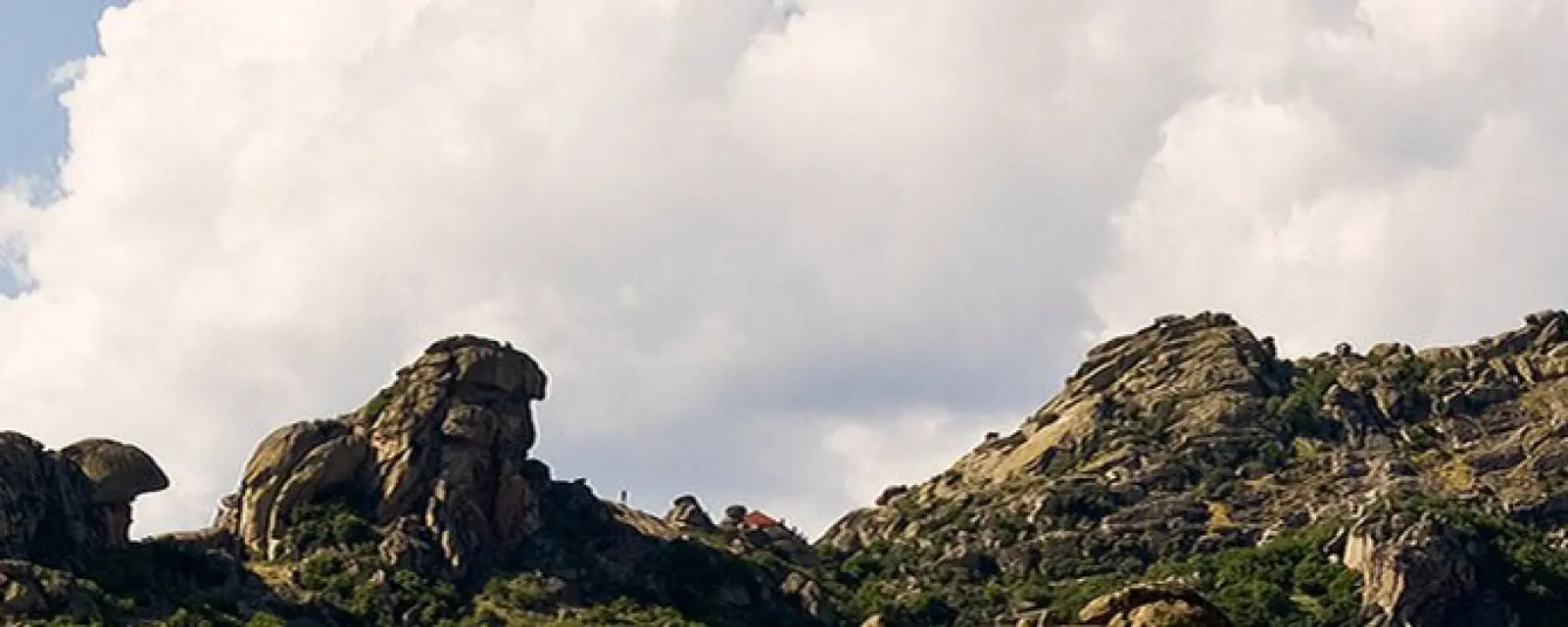
The terrain is predominantly mountains and valleys, with the Vardar river running through the middle. Lake Ohrid in the south-west is among Europe's oldest and deepest lakes, UNESCO-listed for both natural and cultural value.
The capital, Skopje, sits in the north.
The climate is transitional between Mediterranean and continental: hot dry summers, cold winters.
🔴 Winter air pollution in Skopje is a serious problem that needs stating plainly. The city sits in a mountain-ringed basin, and with wood and coal heating in many households, Skopje regularly ranks among Europe's most polluted cities during winter months. For families with young children or respiratory conditions this is a serious consideration, not a footnote. Other cities and the Ohrid region are considerably better.
History
This territory sat on ancient trade routes linking the Mediterranean to central Europe, passing through Roman, Byzantine and Slavic rule, then the Ottoman Empire for roughly five centuries.
After the Balkan Wars and both world wars, it became one of the six republics of socialist Yugoslavia.
Independence came in 1991 — and notably, this was the only republic to leave Yugoslavia without armed conflict.
But independence came with a dispute lasting nearly three decades that anyone reading older material about the country will encounter: the name dispute with Greece. Greece objected to the use of "Macedonia" because it coincides with the name of a Greek region, and the dispute blocked NATO membership and impeded the EU process for years.
It was resolved by the Prespa Agreement of 2018, effective 2019: the country's official name became North Macedonia. The direct result was NATO membership in 2020.
This detail is worth including because it illustrates precisely the point made at the outset: a country's integration can be blocked by factors entirely unrelated to its own economic capacity or reforms.
Culture & people
Macedonian is the official language, a South Slavic language written in Cyrillic. Albanian also holds official status where the Albanian-speaking community forms a substantial share — that community comprises roughly a quarter of the population.
Both must be learned from scratch by most newcomers; Macedonian adds the Cyrillic barrier.
English is common among urban young people and in services.
Society is multi-ethnic, with Macedonian and Albanian communities as the two largest, alongside Turkish, Roma and Serbian communities. The political structure includes power-sharing mechanisms between communities. Stated as fact.
Lake Ohrid and the town of Ohrid form a long-standing cultural and religious centre, with many ancient Orthodox churches.
The Vietnamese community in North Macedonia is very small.
Economy & opportunity
North Macedonia has a notable industrial policy: Technological Industrial Development Zones (TIDZ), offering substantial tax incentives to foreign manufacturers investing there. The policy has attracted several automotive component and equipment manufacturers to site plants supplying European supply chains.
For a manufacturing business seeking European market access at low labour cost, this is a concrete reason to consider the country — far more so than any passport consideration.
Other sectors: agriculture (fruit and vegetables, tobacco, wine), metallurgy, textiles, tourism around Ohrid, and remittances from the diaspora.
Living costs are very low — among the lowest in Europe.
The difficulties belong here too: unemployment is high by European standards, particularly among the young, and emigration is heavy — a structural issue across the Western Balkans.
As always: tax obligations here do not replace those in your home country.
Immigration routes
No investment programme. The genuine routes:
- Work permits and temporary residence — requiring a contract.
- Residence through business activity — establishing and running a genuine company; TIDZ investment has its own support mechanisms.
- Study — low fees, with English-taught programmes available.
- Family reunification.
- Permanent residence — after continuous temporary residence.
Citizenship
Standard conditions: around eight years of continuous lawful residence, Macedonian language ability, proof of means of support, and a clean record.
✅ North Macedonia permits dual citizenship.
But in the context of this series: with a rank-33 passport and an eight-year path, neighbouring Albania offers five years at comparable cost, and Romania is already an EU member with a rank-10 passport and also permits dual nationality. Stating that plainly lets you compare.
The sound reason to choose North Macedonia is usually manufacturing business or personal ties, not passport value.
Everyday life
Living costs are very low — the clearest advantage for those with foreign-currency income.
Housing: the market is untroubled, with accessible rental and purchase prices.
Healthcare: the public system is resource-constrained; private care in Skopje is of reasonable quality at low cost. Highly specialised cases usually go to Greece, Serbia or Türkiye — all nearby.
Education: public schools teach in Macedonian or Albanian depending on the area; a few international schools operate in Skopje.
Travel: Skopje airport has low-cost routes to many European cities. Thessaloniki in Greece is about two hours by road and a larger air gateway. Travel to Southeast Asia is a multi-leg journey.
Safety: good.
🔴 Skopje's winter air: repeated because it is the most important point in this section. If you want this country but are concerned about air quality, consider Ohrid, Bitola or areas outside the Skopje basin.
Who should consider North Macedonia
A good fit if:
- You are investing in manufacturing and want European supply chain access at low labour cost — the TIDZ tax incentives are specific and this is the clearest reason.
- You work remotely and want very low living costs, accepting the language barrier.
- You work in agriculture, food or tourism and see opportunity around Ohrid.
- You value that the country permits dual citizenship.
Not a fit if:
- 🔴 You are planning on the expectation that North Macedonia will soon join the EU: it has been a candidate since 2005 and has still not joined. Assess on what exists now.
- You are aiming at passport value: neighbouring Albania offers a five-year path, and Romania is already an EU member — both permit dual citizenship.
- 🔴 Your family includes young children or people with respiratory conditions and you intend to live in Skopje: winter air pollution is a serious and real problem.
- You need a broad labour market: 2.1 million people with high unemployment.
- You need to be close to home in Asia.