Overview
The Netherlands holds a rank-4 passport with 164 destinations reachable without a prior visa. It is a founding member of the European Union, part of Schengen, and uses the euro.
For anyone weighing a move, two things must be said immediately — and neither is good news.
First: the Dutch investor visa CLOSED on 1 January 2024. The scheme had always been little used — the capital threshold was high and the conditions strict enough that only a handful of applications were approved over several years — so the government ended it. There is no successor.
Second, and far more consequential: the Netherlands does not, as a rule, permit dual citizenship on naturalisation. Those who naturalise are generally required to renounce their original nationality. This sets it apart from Ireland, Portugal, Sweden or Finland — and it is something many advisers omit, even though it determines the entire calculation for a family with assets, elderly parents and work back home.
Exceptions exist — a spouse of a Dutch national, someone born in the Netherlands, or cases where renunciation is legally impossible — but they are exceptions, not the rule. Do not plan on falling into one.
Geography & climate
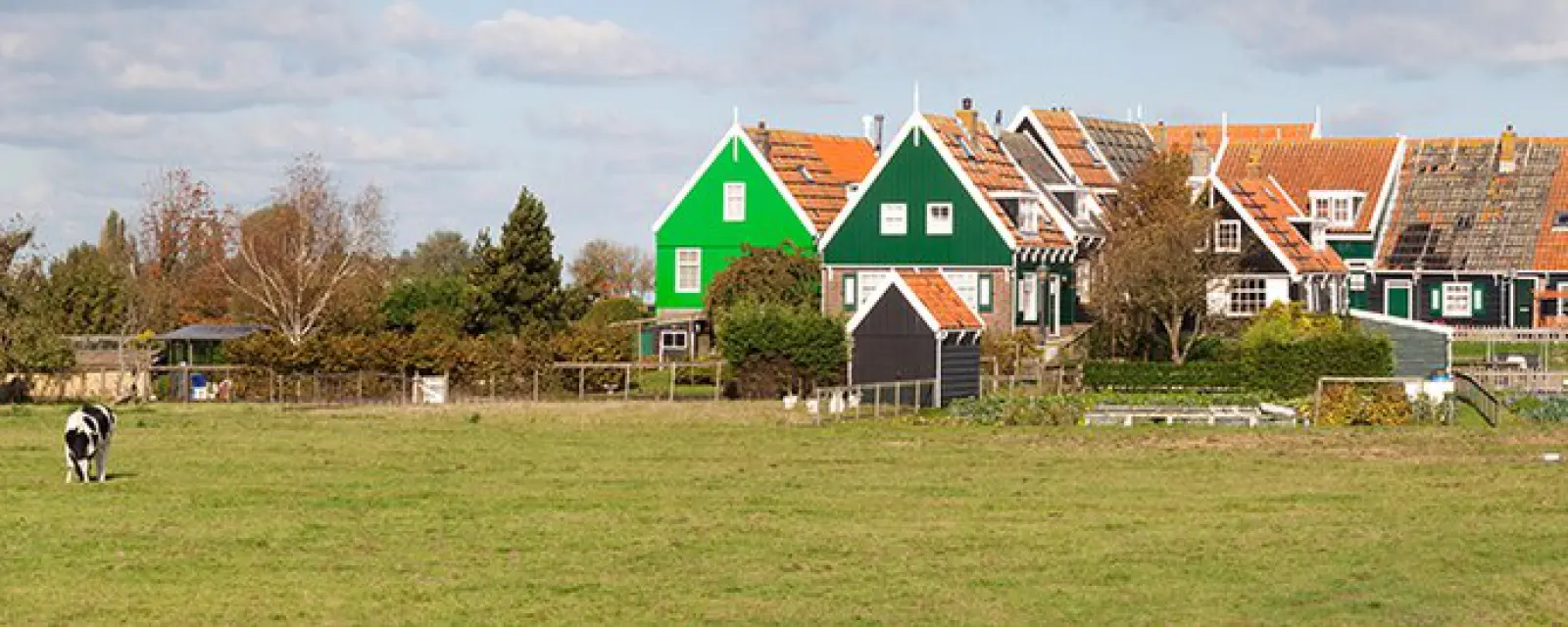
The Netherlands lies on the North Sea, bordering Germany to the east and Belgium to the south. Its name means "low countries", and literally so: about a quarter of the land sits below sea level, kept dry by a system of dykes, sluices and pumps built up over eight centuries.
The terrain is almost perfectly flat — the highest point on the mainland is roughly 320 metres, in the south-eastern corner.
Amsterdam is the constitutional capital, but the government, parliament and embassies sit in The Hague — a common source of confusion. Rotterdam is Europe's largest port.
The climate is temperate maritime: winters rarely bite hard, summers stay cool, and wind and rain are spread through the year. Not Nordic-harsh, but grey and damp for months at a stretch.
History
The seventeenth century — the "Golden Age" — saw the Netherlands as the world's leading trading and maritime power. The Dutch East India Company was the world's first joint-stock company, Amsterdam had the earliest stock exchange, and Dutch trade reached from Japan to the Caribbean.
That rise rested not on resources — the country had almost none — but on trade, finance and comparative tolerance: while other European states expelled religious minorities, Amsterdam took them in, and took in their capital and skills with them.
The twentieth century brought the loss of Indonesia, its largest colony, after the Second World War. The Netherlands then became one of the six founding members of the European Economic Community in 1957, forerunner of the European Union.
The struggle with the sea continues: after the catastrophic 1953 flood killed more than 1,800 people, the country built the Delta Works, among the largest engineering undertakings ever attempted.
Culture & people
Around 17.8 million people in a small space — this is one of Europe's most densely populated countries, which explains a great deal, from tight land-use planning to the housing crisis.
The Dutch are famously direct, to a degree many Asians find jarring. Voicing disagreement openly in a meeting signals respect rather than rudeness, and "no" is said plainly rather than softened. Anyone accustomed to face-saving indirection should prepare for this — and understand that it is not contempt.
The principle of overleg — deliberating until consensus emerges — governs both politics and offices.
English is near-universal: the Netherlands consistently tops English-proficiency rankings among non-native-speaking countries. Living and working in Amsterdam entirely in English is genuinely feasible.
And there lies the trap: naturalisation requires passing the civic integration exam in DUTCH. Many people live here five or seven years in English before discovering they have not started learning the language that actually matters.
Cycling is not a secondary mode of transport but the primary one — the country has more bicycles than people.
Economy & opportunity
The Dutch economy is open and outward-facing: the port of Rotterdam and Schiphol airport are two of Europe's principal gateways, making logistics a major strength. Beyond that: high-technology agriculture — the Netherlands is the world's second-largest agricultural exporter by value despite its tiny area, thanks to greenhouses and automation; chemicals and energy (Shell); semiconductor equipment (ASML is pivotal to the entire global chip industry); finance and design.
Demand for foreign labour concentrates in IT, engineering, semiconductors, finance and healthcare.
On tax, one feature is familiar to foreigners: the 30% ruling, under which part of the salary of a worker recruited from abroad is paid tax-free as a relocation allowance. Be clear: this benefit has been cut back repeatedly in recent years, in both duration and percentage. Do not model your finances on articles describing the older version.
As always: Dutch tax obligations do not replace those in your home country.
Immigration routes
The investor visa — closed
Closed to new applications on 1 January 2024, with no successor. Anyone still marketing "Dutch residency by investment" is selling something that no longer exists.
What remains
- Highly skilled migrant (kennismigrant) — the main route. Requires a contract with a recognised sponsor employer and a salary meeting the annually published threshold, with a lower threshold for applicants under 30. The process is fast and predictable — a genuine Dutch strength: employers know the procedure and use it routinely.
- EU Blue Card — running alongside, with the advantage that time in other EU states accumulates.
- Startup visa — requires a recognised facilitator to act as sponsor. The assessment covers the idea and its innovativeness, not the capital involved. After a year you must move to self-employed status.
- Orientation year (zoekjaar) — graduates of Dutch universities, or of certain top-ranked institutions worldwide within the past three years, may stay a year to find work without needing an employer sponsor first. This is the most overlooked route.
- Family reunification.
- Dutch-American Friendship Treaty (DAFT) — allows US citizens to establish a business in the Netherlands with a very low capital requirement. Mentioned because it is frequently raised, but to be clear: it applies only to United States citizens, not to Vietnamese passport holders.
Permanent residence and citizenship
Permanent residence typically follows five years of continuous lawful residence plus the integration exam.
Citizenship also typically follows five years, with the integration exam in Dutch — and the renunciation requirement described at the start.
One option is underappreciated: EU long-term resident status permits living and working indefinitely without giving up your original nationality. It confers no voting rights and no passport, but for many families that is a far better trade. Consider this route seriously before assuming a passport must be the goal.
Everyday life
The housing crisis is problem number one. The Netherlands is severely short of homes across every segment: social housing waiting lists run to years, Amsterdam's private rental market is expensive and fiercely contested, and purchase prices have risen steeply. Newcomers usually accept either a long commute or costs well above expectation. Solve this before anything else.
Healthcare: basic health insurance is compulsory for every resident, bought from private insurers within a state-defined framework, with an annual excess. It is a fixed household cost, unlike the tax-funded Nordic model.
Education: good quality, with many international schools and English-taught degree programmes — though the number of English-taught bachelor's courses is being reduced under new policy.
Transport: bicycles for short distances, a dense and punctual rail network for longer ones. Many families live comfortably without a car.
Work-life balance is strong: part-time work is common and carries no stigma, including among highly qualified professionals.
Who should consider the Netherlands
A good fit if:
- You work in technology, semiconductors, engineering, logistics or finance and can be hired by a recognised sponsor — the highly skilled route here is among Europe's fastest and clearest.
- You want to work in English from day one without waiting to learn a new language.
- You have recently graduated from a top-ranked university and can use the orientation year — this door does not require a job in hand.
- You are content to stop at long-term residence rather than citizenship, in order to keep your original passport.
Not a fit if:
- You are looking for an investment programme: closed since 1 January 2024, with no replacement.
- You want a Dutch passport while keeping your original nationality — as a rule you cannot, and it is better to know before investing years.
- You have no housing plan. This is the largest practical obstacle, and it is not easing.
- You assume English will suffice for everything: true for daily work, but not for the integration exam.