Overview
Mongolia holds a rank-61 passport reaching 66 destinations without a prior visa. Its population is around 3.4 million, the capital is Ulaanbaatar, and the currency is the tugrik (MNT).
Mongolia has no citizenship-by-investment programme, and does not permit dual citizenship.
📌 Mongolia has the lowest population density of any sovereign state in the world — 3.4 million people across an area larger than Western Europe. That figure explains almost everything in this article.
And Mongolia does one thing worth reading about for anyone interested in how small countries manage:
📌 Mongolia has exactly TWO neighbours — Russia and China — and no others. Rather than accept that as fate, the country invented a diplomatic concept to work around it.
📌 The "third neighbour" — an answer to circumstances that cannot change
Very few countries border exactly two others, and among them almost none is in Mongolia's position: both neighbours are the region's largest powers, and no route to the sea avoids one of them.
In such circumstances the conventional option is to align firmly with one side. Mongolia chose otherwise, and gave it a name:
📌 The "third neighbour" policy — deliberately building deep political, economic and security relationships with countries that are not geographic neighbours: the United States, Japan, South Korea, the European Union, India, Türkiye, Australia and Canada. The objective is not to oppose the two actual neighbours but to create a third option in everything — export markets, capital, student scholarships.
📌 Why this belongs on a citizenship site: because it is a rare example of a small country actively designing its position rather than enduring it. This library has met many countries defined by geography — Turkmenistan dependent on one customer because it built pipelines in one direction, Armenia constrained by two closed borders, Uzbekistan doubly landlocked. Mongolia's position is narrower still, but its response differs: if the map cannot be changed, change the list of partners.
🔴 For completeness: the policy does not erase economic reality. The overwhelming share of Mongolian exports still goes to China, and most fuel is imported from Russia. Third neighbours create political space and capital, but not yet an alternative market. That is a real limit and should not be overstated.
🔴 Dual citizenship — not permitted
Mongolia does not permit dual citizenship. Those naturalising must renounce their prior nationality, and Mongolian citizens acquiring another nationality must resolve that position under the rules.
📌 Placed in the regional table this library has been building:
| Country | Dual citizenship |
|---|---|
| Vietnam | ✅ Acquiring another nationality does not automatically end the original |
| Kyrgyzstan | ✅ Permitted |
| Armenia | ✅ Permitted since 2007 |
| Kazakhstan · Uzbekistan · Turkmenistan | 🔴 Not permitted |
| Tajikistan | 🔴 Not permitted, except with Russia |
| Azerbaijan | 🔴 Not permitted, declaration mandatory |
| Mongolia | 🔴 Not permitted |
🔴 The consequence for Vietnamese readers: if the objective is to add rather than exchange a nationality, Mongolia is not on the list.
📌 But if the objective is business and residence, that is a different matter, and Mongolia has one clear advantage: entry policy has been substantially liberalised in recent years, with visa-free access for nationals of many countries to promote tourism and investment. Entering to survey is not difficult.
Geography — and a disaster type only a few countries have
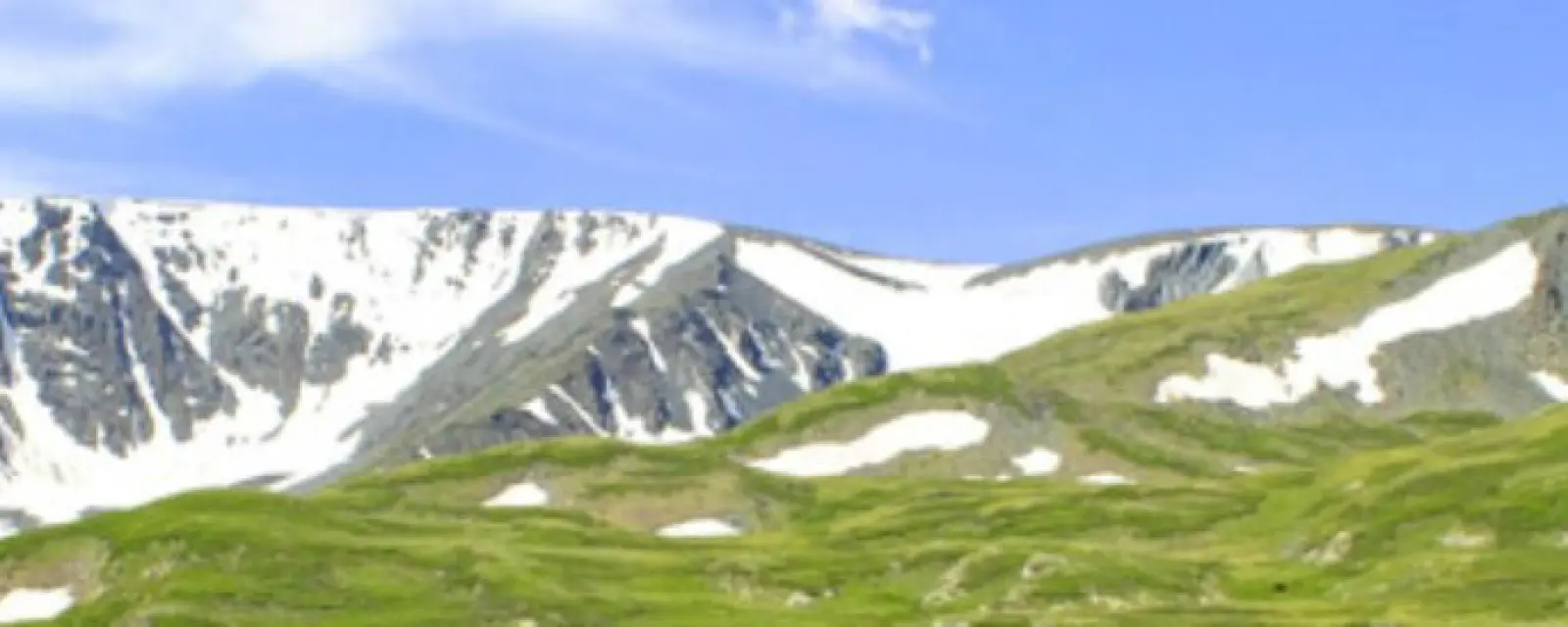
Mongolia is the world's second-largest landlocked country after Kazakhstan. Its terrain: vast steppe across the centre and east, the Gobi desert to the south, the Altai mountains to the west, and taiga forest to the north bordering Siberia.
🔴 Ulaanbaatar is the coldest capital in the world — winter temperatures routinely below −30°C and reaching −40°C. The Kazakhstan article notes Astana as among the coldest capitals; Ulaanbaatar tops that table. This is a living condition to picture seriously, not a curiosity.
📌 Mongolia has a disaster type for which only a few countries have their own word: the "dzud".
A dzud is a dry summer leaving livestock without sufficient fat reserves, followed by an extreme winter — deep snow or an ice crust preventing animals from reaching the grass beneath. The result is mass livestock death, in some episodes running to millions of animals.
🔴 Why this matters beyond herding: for a nomadic family, the herd is the entire asset base, income and pension. A single dzud can erase all of it in one winter. This is the direct cause of rural-to-Ulaanbaatar migration over the past thirty years, and of the city's expansion into ger districts — peripheral settlements of traditional felt tents.
📌 It is among the world's clearest examples of climate change producing internal migration. This library has recorded two mechanisms of cross-border climate migration in Tuvalu (treaty) and Kiribati (human rights decision). Mongolia is a third kind, the most common worldwide yet the least discussed: climate migration inside a single country, from countryside to city, which raises no nationality question and so is almost never called by that name.
🔴 Winter air pollution in Ulaanbaatar ranks among the worst in the world — a direct consequence of ger districts burning coal for heat at temperatures dozens of degrees below zero. This is the largest disadvantage in living conditions and must be stated plainly.
History
Mongolia is the homeland of the largest contiguous land empire in human history, established by Genghis Khan and his successors from the early thirteenth century, extending from East Asia into Eastern Europe.
📌 The Secret History of the Mongols, compiled in the thirteenth century, is the oldest surviving work of Mongolian literature and among the most important sources for that era.
After the empire fragmented, the region came under Qing influence for centuries. Mongolia declared independence in 1911 and became a Soviet-model people's republic from 1924 — the second socialist state in the world after the USSR.
🔴 The 1930s saw large-scale purges, in which most Buddhist monasteries were destroyed and tens of thousands of people, many of them monks, were killed. Tibetan Buddhism — the foundation of Mongolian culture for centuries — lost nearly all its physical institutions and recovered only after 1990.
📌 In 1990 Mongolia transitioned peacefully to a multiparty system, and has since maintained a functioning multiparty democracy with power transferring through elections. Stated as fact: this distinguishes Mongolia clearly from the post-socialist states of the region covered above, and is part of why the third neighbour policy works — Western countries have a basis for deep cooperation.
Economy
1. Minerals — overwhelmingly dominant in exports. Coal, copper, gold, iron ore, uranium and rare earths. 📌 The Oyu Tolgoi mine in the Gobi is among the largest copper and gold deposits in the world.
🔴 And Oyu Tolgoi is this library's third lesson in institutional risk on major mining projects:
Papua New Guinea — the Panguna mine, disputes over benefits and environmental damage with landowners, leading to civil war and permanent closure. Kyrgyzstan — the Kumtor mine, years of dispute ending with the state assuming operational control. Mongolia — Oyu Tolgoi, years of dispute over contract terms, profit sharing, cost overruns and the Mongolian side's debt burden, renegotiated repeatedly before a new agreement was reached. 📌 Three countries, three continents, one pattern: a mining project too large relative to the economy becomes a political question, however tightly the original contract was drafted. Anyone assessing investment risk in developing countries should remember these three names.
2. Livestock. Animals outnumber people many times over. Mongolian cashmere is a globally recognised product — 📌 Mongolia is among the world's largest cashmere producers.
3. Agriculture and processing. Limited in scale by climate.
📌 Mongolia has legislated fund mechanisms to accumulate mineral revenue for the future, the same idea as the sovereign fund sequence this library tracks. 🔴 But as in Papua New Guinea, actual capitalisation has lagged the design under budget spending pressure. The same failure mode: a fund that exists on paper but is not filled.
🔴 Disadvantages, stated plainly: the economy is highly exposed to commodity prices and to a single export market; public debt reached levels requiring international financial institution involvement; and growth swings sharply with the mineral cycle.
As always: tax obligations here do not replace those in your country of residence.
Culture & people
Mongolian is the state language, written in Cyrillic since the socialist period. 📌 The state is implementing plans to use the traditional vertical Mongolian script alongside it in official documents — an identity restoration project of the same kind as Kazakhstan's and Uzbekistan's moves to Latin, but running the other way: returning to an ancient script rather than adopting a new one.
Russian remains in use among older generations; English is spreading rapidly among the young and has replaced Russian as the first foreign language in schools.
📌 A substantial share of the population still lives nomadically or semi-nomadically, moving seasonally with herds and living in gers (the traditional round tent, called yurt in Russian). This is not tourist display but a genuine way of living, and one of very few large-scale nomadic cultures surviving anywhere.
Naadam — the summer festival of wrestling, archery and horse racing — is UNESCO heritage and the largest event of the year.
Tibetan Buddhism is the principal religion, alongside traditional shamanism, still practised.
📌 Vietnam–Mongolia relations have long foundations from the shared socialist period, with generations having studied in each other's countries. The Vietnamese community in Mongolia is small but has history.
Immigration routes
No investment programme exchanging for citizenship.
Categories existing in law include employer-sponsored work permits, residence through marriage, investor residence at prescribed thresholds, and specialist categories. 📌 Demand for foreign specialists concentrates in mining, construction, energy, finance and education.
🔴 Quotas apply to foreign labour by sector and as a proportion of a company's total workforce. This should be checked before planning staffing.
Citizenship
By descent. Naturalisation requires long residence, the Mongolian language, and renunciation of the prior nationality. Annual naturalisation numbers are very small.
🔴 If anyone offers you "Mongolian citizenship by investment", stop. No such programme exists. Investor residence does, and the two must be called by their correct names.
Everyday life
Living costs are low relative to developed countries; Ulaanbaatar concentrates nearly all services.
🔴 Climate determines everything else. Winters are long and extremely cold; heating costs are high; and as noted, winter air pollution in Ulaanbaatar ranks among the worst in the world. Anyone with respiratory conditions or young children should weigh this very carefully.
Healthcare: a basic public system; private hospitals in Ulaanbaatar serve foreigners. Complex cases typically go to South Korea, Japan, China or Thailand. International insurance is necessary. 🔴 Outside Ulaanbaatar healthcare is very limited and the distance to the nearest facility can run to hundreds of kilometres.
Education: a broad public system with high literacy; international schools operate in Ulaanbaatar.
Connectivity: Chinggis Khaan International Airport connects to Seoul, Beijing, Tokyo, Istanbul, Moscow and Frankfurt among others. 🔴 Domestic travel is difficult: great distances, limited roads outside main corridors, and winter closing many routes.
Internet: reasonably good in Ulaanbaatar; limited across the steppe.
Safety: violent crime is low; ordinary caution against theft in crowded places in the capital is warranted.
Who should consider Mongolia
It may fit if:
- You work in mining, construction, energy, infrastructure or education with a specific role — these genuinely require foreign specialists.
- You work in cashmere, livestock or agricultural processing and are seeking supply.
- You research nomadic culture, archaeology or palaeontology — the Gobi is among the world's most important dinosaur fossil regions.
Not a fit if:
- 🔴 You want an additional nationality while retaining Vietnamese nationality: Mongolia does not permit dual citizenship.
- You are offered "Mongolian citizenship by investment": no such programme exists.
- 🔴 You or your family are sensitive to air pollution: winter in Ulaanbaatar is a genuine health issue, not an inconvenience.
- You need specialist healthcare on the spot or convenient domestic travel.
The point to carry away: Mongolia occupies the tightest geographic position of any country in this library — two neighbours, both major powers, and no alternative route to the sea. Its response was not to pick a side but to define a "third neighbour" and build relationships with it. It does not erase economic reality, but it demonstrates something broadly true: circumstances often cannot be changed, but the list of options usually can be — if you are willing to do the work of creating it.