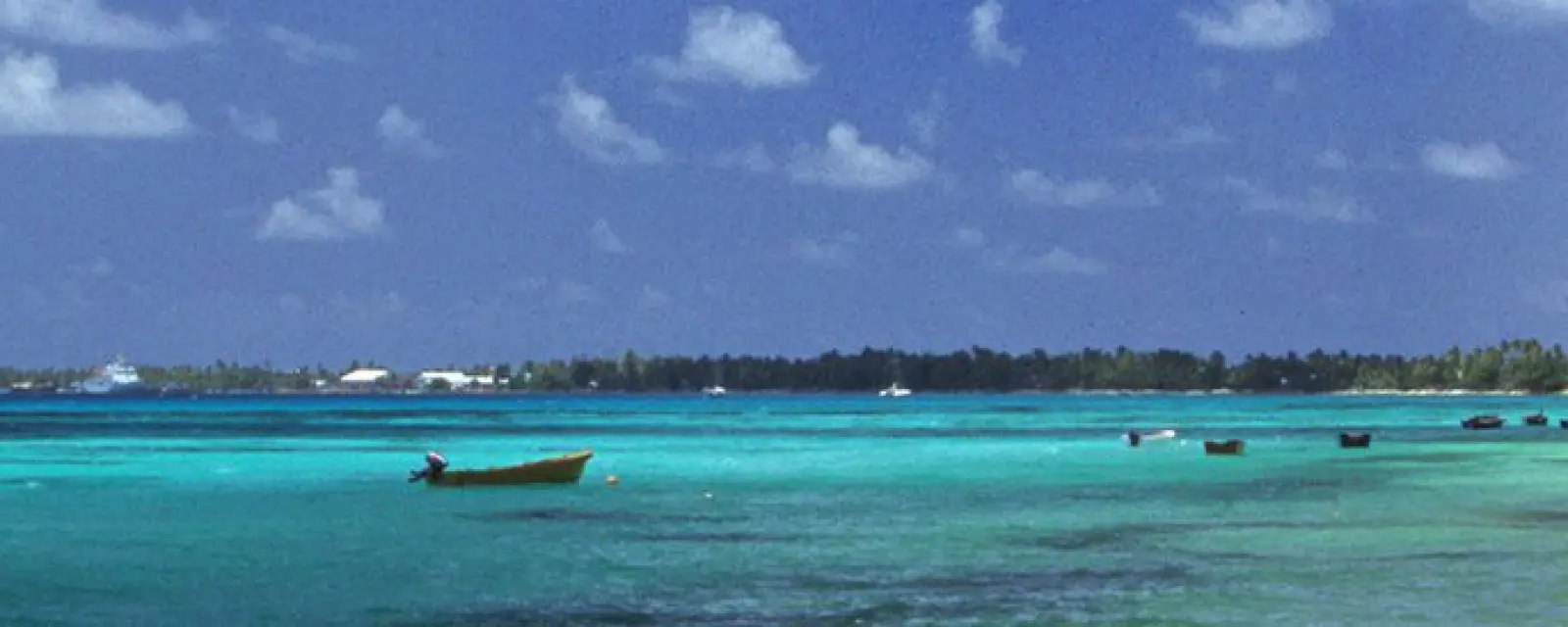
Overview
Tuvalu holds a rank-35 passport with 115 destinations reachable without a prior visa. It is among the smallest UN member states, with around 11,000 people on roughly 26 km² of land.
Tuvalu deserves its own article for three reasons, all of them rare:
🔴 One — Tuvalu signed the world's FIRST bilateral climate migration treaty, with Australia.
✅ Two — it earns substantial revenue from the `.tv` internet domain — among the strangest cases of how a country makes money.
📌 Three — Tuvalu established a national trust fund in 1987, regarded as a successful governance model at very small scale.
But state this clearly so as not to waste your time:
🔴 Tuvaluan citizenship is largely by descent, and naturalisation for foreigners is very restricted. The migration pathway to Australia described above is for Tuvaluan citizens, not something accessible by moving to Tuvalu.
Tuvalu has no citizenship-by-investment programme.
🔴 The Falepili Union — why this matters
In 2023, Tuvalu and Australia signed the Falepili Union Treaty, in force from 2024. Its core terms:
- Australia opened a dedicated migration pathway for Tuvaluan citizens, with a fixed number of places each year — initially 280 people. Those selected receive permanent residence in Australia, with rights to work, study and access certain public services.
- Australia committed to supporting Tuvalu on disaster response and climate change.
- In return, Tuvalu committed to consulting Australia on security and defence arrangements with third parties.
What makes this treaty distinctive: it is the first time two states have signed a treaty in which climate change is explicitly the basis for an organised migration pathway.
Until then, international refugee law did not recognise "climate refugees" as a protected category — someone displaced by sea-level rise does not fall within the 1951 Convention definition. That is a legal gap international lawyers have debated for decades.
The Falepili Union is the first bilateral answer to that gap. It does not solve the global problem, but it sets a precedent, and other Pacific countries are watching.
For readers interested in citizenship and migration, this is worth remembering for a broader reason: climate risk is beginning to enter immigration law. That trend will develop further, and it affects how low-lying island countries should be assessed over the long run.
State the limits clearly: 280 places a year for a country of 11,000 is meaningful, but it is a category for Tuvaluan citizens allocated through a selection mechanism. It is not a door for foreigners.
Geography & climate
Tuvalu comprises nine coral atolls scattered across a wide area of the South Pacific, between Hawaii and Australia. The capital, Funafuti, sits on the atoll of the same name.
🔴 The country's highest point is only about 4.6 metres above sea level, with most land far lower. Tuvalu is among the three or four lowest-lying countries in the world.
The consequences are concrete:
- King tides flood parts of Funafuti several times a year, even without storms.
- Groundwater has salinised in many places, leaving domestic water almost entirely dependent on rainwater harvesting.
- Drought has previously triggered water emergencies.
The airstrip at Funafuti occupies a significant share of the main islet and, outside flight times, serves as community space — an image that says much about the country's scale.
The climate is tropical and warm year-round. Tuvalu sits at the edge of the South Pacific cyclone zone and has suffered heavy damage from several storms.
History
Polynesians settled here thousands of years ago. In modern times the islands formed part of the British Gilbert and Ellice Islands Colony.
In 1974, residents of the Ellice Islands — predominantly Polynesian — voted to separate from the Gilberts, which were predominantly Micronesian. The result: the Ellice Islands became Tuvalu, independent in 1978, and the Gilberts became Kiribati.
This is among the few cases of a colonial territory deliberately splitting in two before independence along ethnic lines — and it happened peacefully, by referendum.
Economy — three highly unusual revenue sources
This section is worth reading for what it shows about how a very small country manages.
1. The `.tv` domain
When the internet domain system allocated country codes, Tuvalu received `.tv` — coinciding with the abbreviation for "television".
The result: the domain became commercially valuable to the global television and streaming industry, and Tuvalu licenses its exploitation. Revenue from `.tv` accounts for a significant share of the state budget — a very large sum for a country of 11,000.
This is perhaps the world's clearest example of an entirely accidental asset becoming a national revenue source.
2. The Tuvalu Trust Fund
In 1987, Tuvalu, together with Australia, New Zealand and the United Kingdom, established the Tuvalu Trust Fund — a sovereign fund operating on the principle of drawing only returns above a defined threshold, preserving the real value of the capital.
International bodies have assessed it as a good governance model at very small scale, and it has survived multiple market cycles.
Within this series, this is the final piece in the sequence on resource and sovereign funds:
Kuwait 1953 · Norway 1990 · Timor-Leste soundly designed but its fields decline fast · Nauru fund dissipated · Venezuela largest reserves, worst outcome · Tuvalu 1987 — smallest country, smallest fund, disciplined governance. Tuvalu reinforces the conclusion already drawn: scale does not determine the outcome. Governance discipline does.
3. Fishing fees and remittances
Tuvalu has a very large exclusive economic zone relative to its land, and sells tuna fishing rights. In addition, many Tuvaluans work as seafarers on international merchant vessels, and their remittances are an important household income source.
Currency: Tuvalu uses the Australian dollar, alongside some of its own coins.
As always: tax obligations here do not replace those in your home country.
Culture & people
Tuvaluan and English are both used; English serves administration, education and business. No new language to learn.
Traditional Polynesian society with tight community structures. Land is tied to lineage and not open to foreign ownership — as in Palau and the Marshall Islands.
With 11,000 people, this is a community where everyone genuinely knows everyone. That is both closeness and an absolute absence of privacy.
There is virtually no Vietnamese community in Tuvalu.
Immigration routes
No investment programme. And to be direct: Tuvalu is not a migration destination.
Routes existing in law include employer-sponsored work permits, residence through marriage, and certain specialist categories — but in a market of 11,000 people, realistic opportunity is essentially confined to specialist roles in development or aid projects.
Citizenship
Largely by descent. Naturalisation for foreigners exists in law but is very restricted and discretionary. In a country of 11,000, each new citizen represents a very large proportional share — tight control is understandable.
🔴 And most importantly, repeated: the Australian migration pathway under the Falepili Union is for TUVALUAN CITIZENS. There is no route by which a foreigner moves to Tuvalu and accesses that category.
If anyone offers you "Tuvaluan citizenship to reach Australia", stop immediately. This is precisely the kind of offer this series exists to warn against — the same shape as "Palauan citizenship for US access" and "a Marshall Islands passport into the US".
Everyday life
Living costs are high — everything is imported and supply vessels are infrequent.
Healthcare: local facilities are very limited. Specialist cases are transferred to Fiji or New Zealand. International health insurance with medical evacuation is absolutely essential.
Education: a basic public system; students typically continue abroad, mainly in Fiji.
Connectivity: very limited air service, mainly via Fiji, at low frequency. This is among the hardest places to reach in this entire series.
Internet: limited, though improving. The paradox is that the country owning the `.tv` domain has very modest domestic internet infrastructure.
Fresh water: dependent on rainwater harvesting. This is a basic living condition to understand.
Safety: crime is very low.
🔴 Long-term risk: this is among the countries most severely threatened by sea-level rise. The Tuvaluan government has undertaken a notable project: digitising its territory and cultural heritage for preservation, while raising the question of whether a state continues to exist in law once its territory becomes uninhabitable — a question without precedent in international law.
Who should consider Tuvalu
This article differs from the others, and needs stating directly.
It may fit if:
- You work in climate research, development assistance, maritime affairs or fisheries management with a specific project here.
- You have professional interest in legal precedent on climate migration.
Not a fit if:
- 🔴 You are offered "Tuvaluan citizenship to reach Australia": the Falepili category is for Tuvaluan citizens, citizenship is largely by descent, and no route exists for foreigners to access it. This is a serious warning sign.
- You are looking for somewhere to settle, work or invest: a market of 11,000 does not offer that.
- You need healthcare, education, internet or travel at even a minimum standard.
- You are making long-term asset plans: this is a country whose government has itself raised existential geographic risk at international forums.
But this article is still worth reading, even if you never go to Tuvalu — because the Falepili Union is the first precedent of a kind of agreement that will recur, and because the Tuvalu Trust Fund is evidence that good governance does not depend on scale.