Overview
Libya holds a rank-85 passport reaching 39 destinations without a prior visa. Its population is around 7.4 million, the capital is Tripoli, and the currency is the Libyan dinar (LYD).
📌 Libya is Africa's fourth-largest country by area, 🔴 and more than 90% of it is Sahara.
Libya has no citizenship-by-investment programme.
🔴 Libya has been through prolonged conflict and instability since 2011. 📌 This site states this as fact and says plainly: this is no place to consider a personal relocation or investment plan.
🔴 Two administrations, one territory — and the question of who issues documents
📌 This is Libya's contribution, and it is the missing piece in a sequence this library has nearly completed.
The facts:
- 🔴 After 2011, Libya went through several periods with TWO governing structures claiming authority, based in the west and the east.
- 🔴 During those periods both operated administrative machinery, and the question of whose documents held value abroad became a practical problem for ordinary people.
- 📌 The international community recognises one side as the administration acknowledged in international procedures, and 📌 other countries take that as the basis when handling passports, visas and consular legalisation.
- 🔴 The consequence for people is very concrete: documents issued in areas administered by the unrecognised side may face difficulty abroad, and 🔴 people living in those areas must travel far or wait long to obtain documents from an accepted source.
✅ A four-article sequence — and Libya is the last piece
📌 This library has nearly completed a sequence on the question "WHAT MAKES A PASSPORT VALUABLE", and there are now four pieces:
| Article | The piece |
|---|---|
| Mali | ✅ Passport strength is the sum of TREATIES, not something in the booklet |
| Somalia | ✅ Somaliland has the CAPACITY to issue but lacks RECOGNITION → nearly useless |
| South Sudan | ✅ There must be a REGISTER recording that you exist before anything can be printed |
| Libya | ✅ When TWO parties issue, what decides is which one others treat as valid |
✅ Together they give a complete sentence, and I think it is the most important conclusion this whole library reaches:
✅ A passport is three things stacked: A LINE IN A REGISTER (South Sudan) · AN AUTHORITY RECOGNISED AS COMPETENT TO WRITE THAT LINE (Libya) · AND A NETWORK OF OTHER COUNTRIES AGREEING TO ACCEPT IT (Somalia, Mali).
🔴 Remove any one of those three layers and the booklet in your hand stays intact while opening no doors.
📌 For anyone buying a nationality, that is the framework to use instead of a price table: ✅ ask about all three layers — is the civil registration trustworthy, is the issuing authority stable and recognised, and is the acceptance network deep and durable. 🔴 The visa-free number measures only the third layer, and only as of today.
📌 Oil, and revenue still flowing amid instability
📌 Libya holds proven oil reserves among Africa's largest, with high-quality crude and relatively low extraction costs.
🔴 Output has swung sharply with security conditions, with periods when fields and oil ports were shut.
📌 One institutionally notable point: ✅ the national oil company and the central bank have been maintained as shared institutions, and oil revenue still flows through internationally recognised channels — 🔴 though allocation of that revenue is contested between the parties.
📌 A detail I find worth learning from: ✅ even amid deep instability, the parties preserved a few shared institutions — because destroying them would mean nobody could sell oil. 🔴 Shared interest sometimes preserves what goodwill cannot.
Geography & economy
Libya borders Egypt, Sudan, Chad, Niger, Algeria and Tunisia, with Africa's longest Mediterranean coastline.
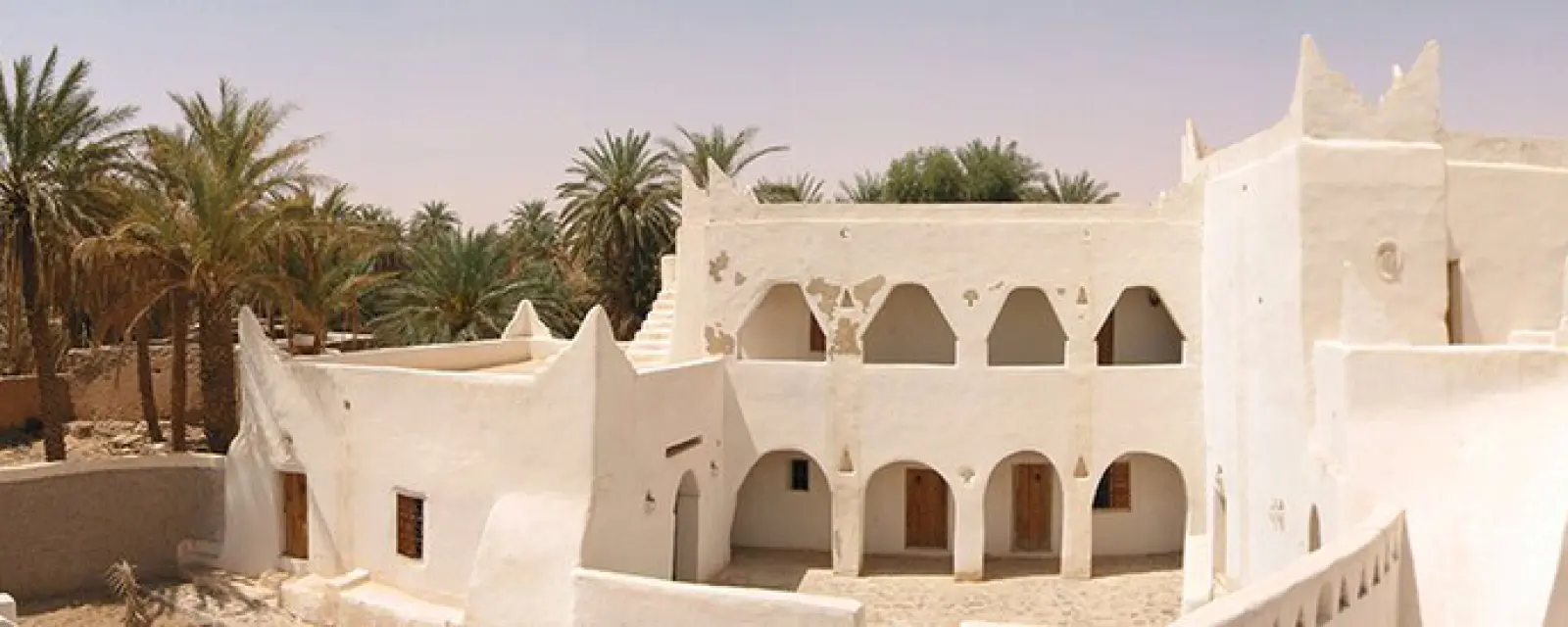
📌 Leptis Magna, Sabratha and Cyrene are ancient Roman and Greek cities, all UNESCO sites — 🔴 among the best-preserved Roman remains anywhere, though very few visitors reach them. 📌 Ghadamès and the Tadrart Acacus rock paintings are also UNESCO sites.
📌 The Great Man-Made River — a pipeline network drawing fossil groundwater from beneath the desert to the coastal cities — is among the world's largest water engineering projects. 🔴 But it draws on a non-renewable aquifer.
🔴 Disadvantages: 🔴 prolonged conflict and instability; 🔴 damaged infrastructure; 🔴 near-absolute oil dependence; and 🔴 international organisations document serious problems in the treatment of migrants on Libyan territory — 📌 connecting directly to the Niger article on Saharan migration routes.
As always: tax obligations here do not replace those in your country of residence.
Immigration routes & citizenship
🔴 Not applicable in present circumstances.
🔴 If anyone offers you "Libyan citizenship by investment", stop. No such programme exists.
Who should consider Libya
🔴 This site does not propose Libya for personal relocation or investment in present circumstances. 📌 This article exists to record an important fact about documents and to complete the library of 199 countries.
The point to carry away: ✅ Libya is the last piece of a four-article sequence, and those four give this library's fullest answer to "what makes a passport valuable".
📌 Three layers, and all three are required:
- ✅ A register recording that you exist.
- ✅ An authority holding that register, recognised as competent.
- ✅ A network of other countries agreeing to accept what it prints.
🔴 The programme comparison table an advisory firm hands you measures only the third layer, and only as of today. ✅ The other layers determine what that passport is still worth in twenty years.