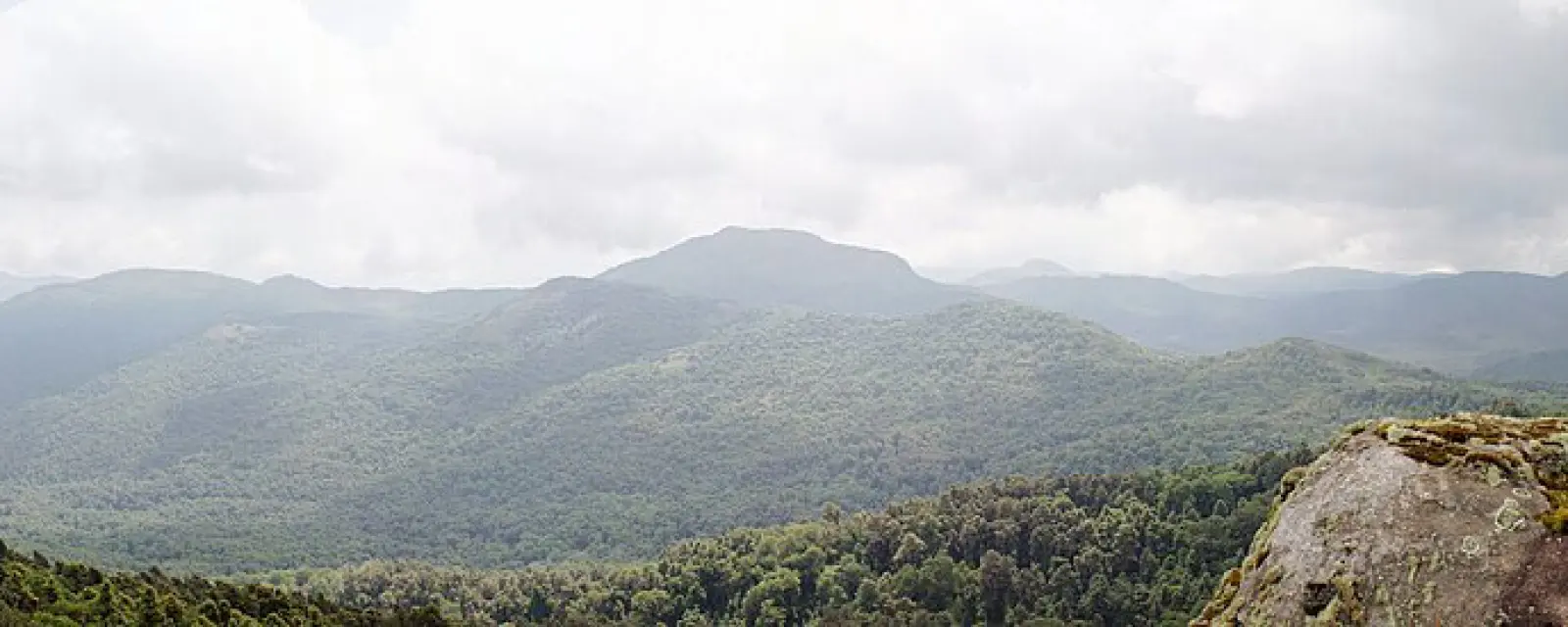
Overview
South Sudan holds a rank-83 passport reaching 45 destinations without a prior visa. Its population is around 11.9 million, the capital is Juba, and the currency is the South Sudanese pound (SSP).
📌 South Sudan is the world's YOUNGEST independent country, established on 9 July 2011.
South Sudan has no citizenship-by-investment programme.
🔴 South Sudan went through prolonged internal conflict after independence and humanitarian conditions remain very difficult. 📌 This site states this as fact and says plainly: this is no place to consider a personal relocation plan.
📌 A task almost no modern state has faced
📌 The Sudan article records the losing side: hundreds of thousands treated as South Sudanese and stripped of Sudanese nationality. ✅ This article records the receiving side, and the problem here is far harder than people assume.
The events, stated as facts:
- 🔴 At independence in 2011, South Sudan had to answer "who is a citizen of this country" for around ten million people — with NO national civil register, NO population database, and very low birth registration rates.
- 📌 A nationality law was enacted resting on criteria such as descent, belonging to one of the indigenous communities, and family connection.
- 🔴 In practice, proof often rests on WITNESSES — people who hold documents vouching for those who do not.
- 🔴 That creates two parallel problems: 🔴 someone with nobody to vouch for them cannot obtain documents; and 🔴 a system resting on attestation is open to abuse.
- 🔴 Many of those who lost Sudanese nationality in 2011 have still not completed the process on the South Sudanese side, and 🔴 subsequent conflict displaced millions, making documentation harder still.
✅ What this teaches — and I think it is this library's most important point
📌 This whole site discusses nationality as something to BUY, COMPARE, ADD. ✅ South Sudan is the reminder that beneath all of that lies a foundation nobody notices:
✅ Before a nationality can have value, somebody must have RECORDED that you exist.
🔴 A passport is a printout of a line in a register. The Mauritania article said this. 🔴 South Sudan shows what happens when THAT REGISTER NEVER EXISTED.
✅ And the conclusion is concrete and usable:
📌 The civil registration system — births, deaths, marriages, residence — is the most expensive invisible infrastructure a state owns, and the one money cannot buy quickly. 🔴 A country can build an airport in three years; building a trustworthy civil register takes a generation.
✅ So when assessing a nationality — including one you are considering buying — ask a question almost nobody asks: 📌 "Is this country's civil registration system trustworthy?"
🔴 Because that is what determines whether your descendants can prove who they are thirty years from now. 📌 The Caribbean states with citizenship programmes covered by this library all have civil registration inherited from British-style administration, operating reliably — 🔴 and that is part of the programme's value that no comparison table records.
📌 Oil — and the "two countries, one pipeline" problem
📌 South Sudan holds oil reserves, and oil accounts for an overwhelming share of budget revenue.
🔴 But South Sudan is LANDLOCKED, and the only export pipeline runs through Sudan — 📌 the country it separated from.
🔴 The consequence: the two must agree transit fees, and disputes over those fees have led to export shutdowns in some periods. 🔴 The conflict in Sudan since 2023 has also disrupted the route.
📌 This is the sharpest variant of the landlocked problem this library records — after Ethiopia, Bolivia, Uganda and Zambia. ✅ What differs: the others depend on neighbours' ports to import consumer goods; South Sudan depends on a neighbour to sell the thing that generates almost its entire budget.
🔴 For anyone in business anywhere, the lesson is direct: ✅ count how many parties your revenue must pass through before it becomes money in your account, and which of them could block it.
Geography & economy
South Sudan borders Sudan, Ethiopia, Kenya, Uganda, the Democratic Republic of the Congo and the Central African Republic.
📌 The Sudd wetland on the White Nile is among the world's largest wetlands — 🔴 and where a very large share of Nile water evaporates before continuing downstream.
📌 South Sudan also hosts one of the world's largest wildlife migrations — antelope herds moving seasonally in very large numbers.
Economy: oil is almost the entire revenue base; alongside livestock, subsistence agriculture and teak.
🔴 Disadvantages, stated fully: 🔴 prolonged conflict and instability; 🔴 infrastructure essentially built from scratch — very little paved road; 🔴 near-absolute oil dependence; 🔴 recurrent large-scale flooding; and 🔴 human development indicators among the world's lowest.
As always: tax obligations here do not replace those in your country of residence.
Immigration routes & citizenship
🔴 Not a realistic path for readers of this site in present circumstances.
🔴 If anyone offers you "South Sudanese citizenship by investment", stop. No such programme exists.
Who should consider South Sudan
🔴 This site does not propose South Sudan for personal relocation. 📌 This article exists to record an important nationality fact and to complete the library of 199 countries.
The point to carry away: ✅ South Sudan touches the foundation this whole site stands on and rarely mentions.
📌 We debate which nationality is stronger, which programme cheaper, which passport reaches more countries. 🔴 South Sudan is the reminder that beneath all of it lies a far simpler question: has anyone recorded that you exist?
✅ For Vietnamese readers the answer is yes — and that is an asset you own without ever having had to think about it. 📌 When weighing a second nationality, ask one more question beyond the price list: is that country's civil registration reliable enough that your grandchildren can still prove who they are thirty years from now.