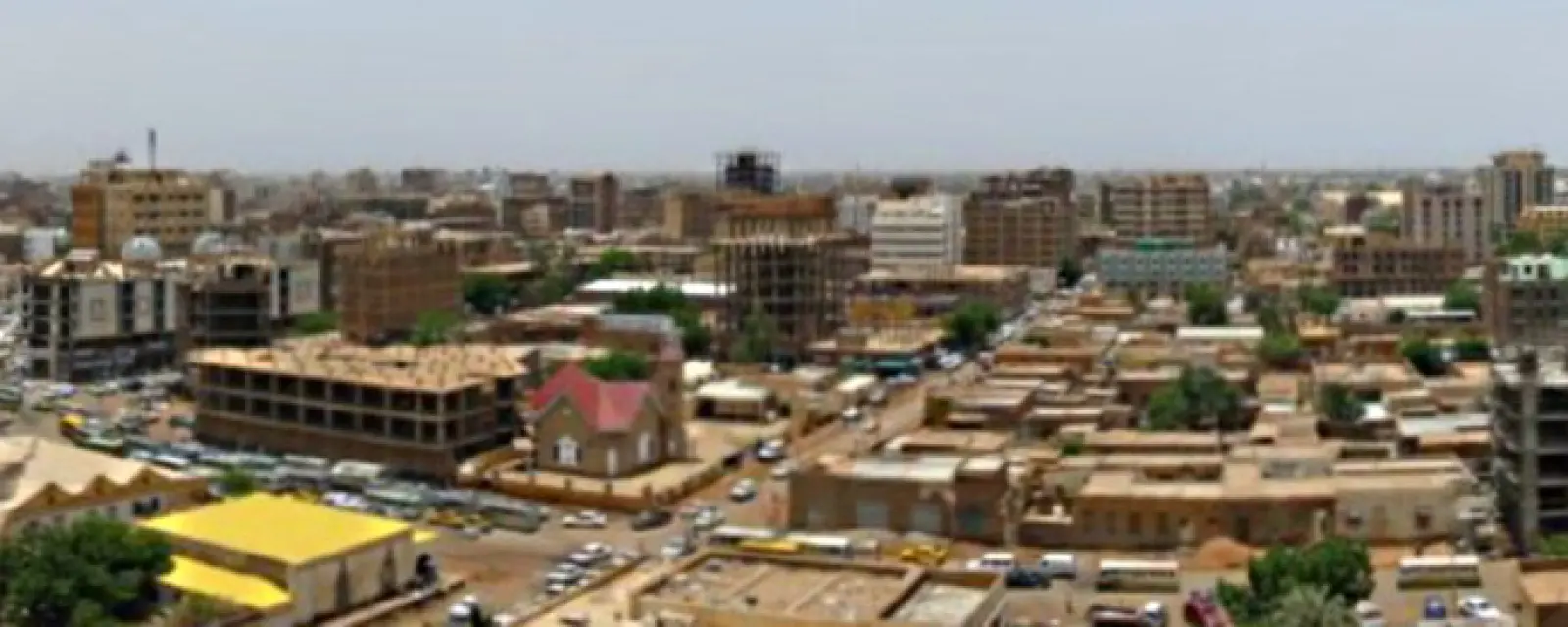
Overview
Sudan holds a rank-85 passport reaching 39 destinations without a prior visa. Its population is around 50.4 million, the capital is Khartoum, and the currency is the Sudanese pound (SDG).
Sudan has no citizenship-by-investment programme.
🔴 Sudan has been in armed conflict since 2023, with a very large humanitarian crisis and millions displaced. 📌 This site states this as fact, and says plainly: this is no place to consider any relocation or investment plan at present.
🔴 The nineteenth mechanism — losing nationality to a new border
📌 This is Sudan's nationality contribution, and it adds a mechanism the previous eighteen articles lacked: STATE SUCCESSION.
The events, stated as facts:
- 📌 On 9 July 2011 South Sudan separated from Sudan and became an independent state following a referendum.
- 🔴 Immediately afterwards Sudan's nationality law was amended: anyone deemed to have "acquired South Sudanese nationality, de jure or de facto" AUTOMATICALLY lost Sudanese nationality.
- 🔴 The problem lay in how "acquired South Sudanese nationality" was determined — by ethnic and tribal origin, not by residence or the person's own choice.
- 🔴 The consequence: 🔴 very many people born in the north, who had lived their whole lives in Khartoum and never set foot in the south, were treated as South Sudanese and lost Sudanese nationality. 🔴 But many of them also lacked the documents to register as South Sudanese — leaving them with no nationality at all.
- 📌 International bodies have documented this and both countries have taken some steps, 🔴 but it is not fully resolved, and the conflict since 2023 has made obtaining documents harder still.
✅ Why this mechanism differs from the previous eighteen
📌 This library's table now holds nineteen mechanisms. This one differs in an important respect:
🔴 The other eighteen all required a DECISION aimed at a group of people — a census (Kuwait), a change in documentation standards (Bhutan), a terminated treaty (Turkmenistan), a political doctrine (Côte d'Ivoire), an impossible procedure (Zimbabwe).
✅ Here the cause is A NEW BORDER. 📌 Nobody was targeted. A state split in two, and the question "who belongs to which side" had to be answered for tens of millions of people at once — by a single criterion, applied wholesale.
🔴 And any wholesale criterion will be wrong for some people. 🔴 In Sudan the criterion was ethnic origin — so it was wrong precisely for the most integrated: southern-origin people who had lived their whole lives in the north.
📌 The broad lesson, usable beyond Sudan: ✅ when a state changes shape — splits, merges, changes regime — everyone's nationality must be RE-DETERMINED, and that re-determination always uses a crude rule. 🔴 Those who fall through are the ones whose real lives do not fit the crude rule.
✅ This library has recorded similar events in the former Soviet Union and former Yugoslavia, and Sudan is the most recent case. 📌 It shows this is not a last-century matter but a live risk.
🔴 For readers, the practical part: ✅ if you or your family have any connection to a country that has split or merged, check your nationality records BEFORE you need them. 🔴 Very many people discover a problem only when applying for a passport to travel — that is, at the latest possible moment.
📌 Sudan in the Nile picture
📌 Sudan sits between Ethiopia upstream and Egypt downstream on the Nile — 🔴 the only one of the three in the MIDDLE.
📌 That position means Sudan's interests align with neither side: ✅ an upstream dam helps regulate floods and supplies cheap power to Sudan; but it also gives another country control over the flow reaching its fields. 📌 The clearest example I have that "standing in the middle" is not a neutral position but one carrying two kinds of risk at once.
Geography & economy
Sudan borders Egypt, Libya, Chad, the Central African Republic, South Sudan, Ethiopia and Eritrea, with a Red Sea coast to the east.
📌 Sudan has more pyramids than Egypt — 🔴 the Meroë pyramids of the Kingdom of Kush, a UNESCO site, and far less known.
Economy: gold, agriculture (sesame, groundnuts, cotton, livestock), 📌 and gum arabic — Sudan is the world's largest source of this ingredient, present in a great many soft drinks, confectionery and pharmaceuticals.
🔴 Disadvantages: 🔴 ongoing conflict and humanitarian crisis; 🔴 loss of most oil revenue when South Sudan separated; 🔴 very high inflation and currency instability; and 🔴 heavily damaged infrastructure.
As always: tax obligations here do not replace those in your country of residence.
Immigration routes & citizenship
🔴 Not applicable in present circumstances. 📌 This site includes Sudan for the value of its nationality facts, not as a destination.
🔴 If anyone offers you "Sudanese citizenship by investment", stop. No such programme exists.
Who should consider Sudan
🔴 In present circumstances this site does not propose Sudan for any personal relocation or investment purpose. 📌 This article exists to record an important nationality mechanism, and because Sudan deserves full presence in a library of 199 countries.
The point to carry away: ✅ Sudan gives the nineteenth mechanism, and the only one where nobody targeted anybody.
📌 A new border appeared, and the nationality of tens of millions had to be re-determined by a single rule. 🔴 That rule was ethnic origin — so it cut precisely through the most integrated people, those whose origins and actual lives no longer coincided.
✅ The immediately usable lesson: 📌 if your family has any connection to a country that has split or merged, check your nationality documents while you do not yet need them. 🔴 Discovering a problem while applying for a passport is discovering it too late.