Overview
Bolivia holds a rank-56 passport reaching 72 destinations without a prior visa. Its population is around 12.4 million and the currency is the boliviano (BOB).
📌 Bolivia has two capitals, and this is not trivial: Sucre is the constitutional capital and seat of the highest court, while La Paz houses the government and legislature. 📌 La Paz and the adjoining city of El Alto sit above 3,600 m — the highest administrative centre of any country in the world.
Bolivia has no citizenship-by-investment programme, but permits dual citizenship.
🔴 Losing the sea in 1884 — and never ceasing to seek it
This is the most rewarding section, and it says a great deal about how states remember.
The events, stated as facts:
- At independence, Bolivia had a Pacific coastline in the Atacama region.
- 🔴 In the War of the Pacific (1879–1884) between Chile and Bolivia with Peru, Bolivia lost its entire coastal region to Chile.
- A treaty in 1904 confirmed that position, with Chilean commitments on transit rights for Bolivian goods through Chilean ports.
📌 And here is the unusual part:
- 🔴 Bolivia still maintains a navy, operating on Lake Titicaca and the river system.
- 📌 23 March each year is "Día del Mar" — the Day of the Sea, a national observance commemorating the lost territory.
- 📌 The claim to sea access remains in Bolivia's constitution, and has been a standing theme of its foreign policy for more than a century.
📌 In 2013 Bolivia brought the matter to the International Court of Justice, arguing that Chile was obliged to negotiate sovereign access to the sea. 🔴 In 2018 the court ruled that Chile is under no legal obligation to do so. Bolivia accepted the ruling while stating it had not abandoned the political claim.
🔴 Why this belongs on a site about nationality and migration:
This library has recorded many countries defined by geography — Uzbekistan doubly landlocked, Mongolia with only two neighbours, Turkmenistan with gas but no route out, Laos landlocked, Armenia with two closed borders.
📌 Bolivia differs from all of them: it is the only country in this library that has NOT accepted its geographic position as settled. One hundred and forty years, generations, a navy without a sea, a national day, a constitutional clause and an international case.
🔴 The transferable lesson, and it is not an optimistic one: Bolivia did everything possible by peaceful and lawful means — and still did not recover it. For readers of this site, that is a reminder that some conditions cannot be changed, and wisdom lies in distinguishing what can be changed from what can only be worked around. The Mongolia article shows the other side: if the map cannot change, change the list of partners.
✅ The 2009 constitution — a "plurinational" state and 36 languages
This is the second thing setting Bolivia apart, and it bears directly on this site's subject.
📌 The 2009 constitution names the country the "Plurinational State of Bolivia" — Estado Plurinacional de Bolivia — and that is the official name, not a slogan.
Specifically:
- ✅ The constitution recognises 36 languages as official languages of the state — Spanish plus 35 Indigenous languages, of which Quechua, Aymara and Guaraní have the most speakers.
- ✅ It recognises the autonomy and distinct justice systems of Indigenous communities within defined bounds.
- ✅ It recognises Indigenous peoples' rights to land and resources through constitutional mechanisms.
🔴 Why this deserves comparison with what this library has recorded:
Myanmar — the 1982 nationality law defines citizens by a list of recognised national groups, and those absent from the list are outside. Bolivia — ✅ the constitution also lists peoples, but in order to include: recognising languages, recognising rights, and naming the state after that plurality.
📌 The same instrument — a list of ethnic groups in the highest legal text — used in opposite directions. In Myanmar that list produced hundreds of thousands of stateless people. In Bolivia it is a basis for recognising rights.
🔴 For completeness: what is written in a constitution and what happens in practice are not the same — disputes continue over land, over mining on Indigenous territory, and over the substance of autonomy. But the framework itself remains among the clearest recognitions of plurinationality anywhere in the world, and deserves recording as such.
🔴 Lithium — enormous reserves, very little extraction
📌 The Salar de Uyuni in southwestern Bolivia is the largest salt flat in the world, and lies within the "lithium triangle" with Chile and Argentina. 📌 Bolivia is believed to hold among the largest lithium reserves in the world.
🔴 But after more than a decade of effort, Bolivia's commercial lithium output remains very small compared with its two neighbours. The documented reasons:
- 🔴 Geology: the Uyuni brine has a high magnesium-to-lithium ratio, making extraction harder and costlier than at Chilean deposits.
- 🔴 Higher rainfall in the area makes natural evaporation — the cheapest method — less effective.
- 🔴 Policy requiring a leading state role has complicated attracting foreign capital and technology, and several partnership projects have been cancelled or stalled.
📌 This is the eighth variant of the resource paradox this library tracks, and it is closest to Afghanistan:
🔴 Reserves underground are not wealth until they can be extracted, transported and sold. In Turkmenistan the barrier was pipelines; in Afghanistan infrastructure and security; in Bolivia geology, climate and the investment model. 📌 Three different causes, one result: a reserve figure in a report that does not convert into money in the budget.
🔴 For readers interested in investment, this is the point to remember: when you see that "country X has the world's largest reserves of Y", the next question must be "how much has actually been extracted, sold to whom, and at what cost". Bolivia is the clearest illustration of the gap between those two sentences.
📌 Potosí — the mountain that funded an empire
This is a historical section, and worth knowing because few outside Latin America grasp the scale.
📌 Cerro Rico at Potosí is a mountain containing one of the largest silver deposits in human history. From the sixteenth century, silver from here was shipped to Spain in enormous quantities.
- 📌 Potosí was at one point among the most populous cities in the world, larger than many contemporary European cities.
- 📌 Spanish has the expression "vale un Potosí" — "worth a Potosí" — meaning extraordinarily valuable. It remains in use.
- 📌 Many economic historians hold that the silver from Potosí and other American mines affected the global monetary system, including flows of silver into Asia via the Manila trade route.
🔴 But the other half must be told, or the history is written wrongly: extraction rested on the mita forced labour system applied to Indigenous communities, alongside enslaved labour. The death toll in the mines and in mercury-based ore processing across centuries was very large, and Potosí is among the most cited places in discussions of the human cost of colonial extraction.
📌 Potosí is a UNESCO World Heritage site, and 🔴 has been placed on the list of heritage in danger owing to the hollowing of the mountain after centuries of mining.
📌 Why this belongs here: because it is the oldest example in this entire library of the resource paradox — a place that generated wealth on a scale that altered the world economy, and which today remains among the poorest regions in South America.
Geography & climate
Bolivia borders Brazil, Peru, Chile, Argentina and Paraguay, and is landlocked — see the opening section.
The terrain divides into three very different zones:
- 📌 The Altiplano in the west, above 3,500 m, containing La Paz, Oruro, Potosí and Lake Titicaca — the highest navigable lake in the world, shared with Peru.
- Central valleys around Cochabamba and Sucre, temperate in climate.
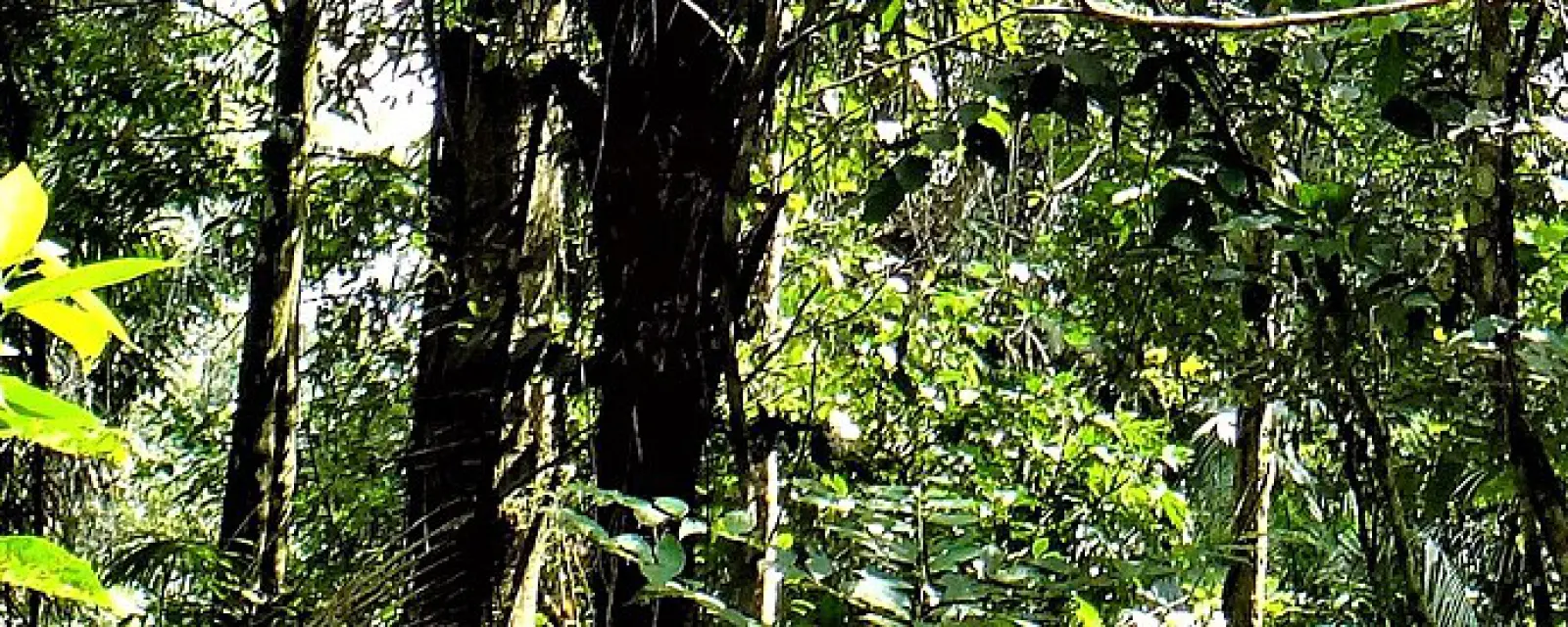
- 📌 The eastern lowlands — most of the country's area, comprising Amazon forest and the Chaco plain. Santa Cruz there is now the largest economic centre in the country, a notable shift from the period when the highlands dominated.
🔴 Altitude is a genuine health issue for newcomers. La Paz sits above 3,600 m and El Alto airport higher still — altitude sickness is common and can be serious. 📌 Anyone with cardiac or respiratory conditions should consult a doctor before travelling, and everyone should allow at least one or two days to acclimatise before strenuous activity.
🔴 Environmental risks: Andean glacier loss affects water supply for highland cities; forest fires in the lowlands have occurred at large scale in some years.
📌 The 2000 "water war" — a case studied worldwide
📌 In 2000 at Cochabamba, transferring the city water system to a private consortium, together with price increases, produced large-scale protests. 🔴 The outcome: the contract was cancelled and the system returned to public management.
📌 The episode has been widely studied internationally as a case on the limits of privatising essential services, and it influenced water policy debates in many other countries.
🔴 For readers interested in infrastructure investment, this is a fact worth remembering: a lawful contract, properly signed, can still be cancelled if it touches something a population regards as non-negotiable. This library has recorded comparable cases in Kyrgyzstan (the Kumtor mine) and Mongolia (Oyu Tolgoi) — institutional risk is not theoretical.
History
The highlands were the centre of the Tiwanaku civilisation, and later part of the Inca empire.
Spanish conquest came in the sixteenth century, and the region became Upper Peru — home to Potosí. Independence came in 1825, taking its name from Simón Bolívar.
🔴 Bolivia's modern history includes many changes of government and territorial losses in several conflicts with neighbours — beyond the coast lost to Chile, the Acre region was ceded to Brazil and Chaco territory lost after war with Paraguay in the 1930s.
📌 The 1952 revolution brought land reform, mine nationalisation and expanded suffrage — among the largest social transformations in twentieth-century Latin America.
📌 In 2006 Bolivia had its first president of Indigenous origin, and the plurinational constitution of 2009 emerged in that period. 🔴 From 2019 onward there have been electoral disputes, changes of government and political volatility. This site states these at the level of facts.
Economy
1. Natural gas. The largest export earner for many years, sold chiefly to Brazil and Argentina. 🔴 Output has declined and major fields are depleting, making replacement revenue urgent — which is why so much hope attaches to lithium.
2. Minerals. Silver, tin, zinc and gold — a long tradition.
3. Agriculture. Soya around Santa Cruz; 📌 quinoa — the highland grain of which Bolivia is a principal producer, where surging international demand transformed highland rural economies.
4. Remittances. Large Bolivian communities in Argentina, Spain, Brazil, Chile and the United States.
🔴 Disadvantages to state: commodity dependence; a very large informal sector; and pressure on foreign exchange reserves with difficulty accessing dollars documented in recent years — for a business, this is capital transfer risk of the same class recorded in Laos and Lebanon.
As always: tax obligations here do not replace those in your country of residence.
Culture & people
Spanish is the common language, alongside Quechua, Aymara, Guaraní and many other Indigenous languages — see the constitutional section above.
📌 Bolivia has among the highest proportions of Indigenous population in the Americas, and this shows in daily life rather than only in documents: dress, markets, the festival calendar and community organisation.
📌 The Carnaval de Oruro is UNESCO intangible cultural heritage and among the largest festivals in South America.
📌 The coca leaf holds a distinct cultural and legal position in Bolivia: chewing coca leaf and its ceremonial use are lawful and widespread, and Bolivia has campaigned internationally to distinguish this from narcotics production. 🔴 Know this clearly: taking coca leaf or coca products out of Bolivia is illegal in most other countries, including coca tea. Visitors frequently breach this unknowingly.
The Vietnamese community in Bolivia is very small.
Immigration routes
No investment programme exchanging for citizenship.
Categories existing in law include employer-sponsored work permits, residence tied to investment or business activity, residence through marriage, and a retirement category based on stable income.
📌 Bolivia is an associate member of Mercosur, with regional residence arrangements available to nationals of member states.
Citizenship
- ✅ Dual citizenship permitted under the 2009 constitution — it was not before.
- By birth and by descent.
- Naturalisation requires a statutory residence period, reduced for certain categories such as marriage to a Bolivian citizen or service in the armed forces.
🔴 If anyone offers you "Bolivian citizenship by investment", stop. No such programme exists.
Everyday life
Living costs are very low — among the lowest in South America.
Healthcare: the public system is limited; private hospitals in La Paz, Santa Cruz and Cochabamba serve foreigners. 🔴 Complex cases typically go to Chile, Brazil or Argentina. International insurance is necessary, and 📌 check whether your policy excludes activity at high altitude — a frequently overlooked clause.
Education: a broad public system; international schools in the major cities.
Connectivity: international airports at La Paz, Santa Cruz and Cochabamba, connecting to South American countries, Panama, Miami and Madrid. 📌 Santa Cruz has better international connections than La Paz.
Internet: reasonable urban infrastructure; limited in rural and highland areas.
Safety: caution by area is warranted, particularly in the larger cities; 🔴 strikes and road blockades are a common form of protest in Bolivia and can disrupt travel for days — build in contingency.
Who should consider Bolivia
It may fit if:
- You work in mining, energy or large-scale agriculture — or in the lithium industry, with a correct understanding of the difficulties above.
- You want a very low-cost base in South America and can manage altitude.
- You research anthropology, Indigenous languages, Andean archaeology or plurinational policy — Bolivia is among the world's richest settings for these.
Not a fit if:
- 🔴 You are offered "Bolivian citizenship by investment": no such programme exists.
- 🔴 You or your family have cardiac or respiratory conditions and intend to live at altitude — a genuine medical issue, not an inconvenience.
- You need easy capital repatriation or specialist healthcare on the spot.
- You need uninterrupted domestic travel.
The point to carry away: Bolivia is the only country in this entire library that has not accepted its geography as settled — one hundred and forty years, a navy without a sea, a national day, a constitutional clause, and a case before an international court.
🔴 And the result: it was not recovered. That is the honest half of the story.
📌 But at the same time Bolivia did something very few countries manage: it wrote a list of 36 languages into its constitution in order to RECOGNISE them, while in Myanmar a comparable list is used to EXCLUDE. The same legal instrument, opposite directions — and that is a choice, not a fate.