Quick Summary: Newly arrived families are safest when they do not sign long-term rental contracts in their first month, visit neighborhoods at various times of day, and treat all calls demanding payment "to process paperwork" as scams until they can verify otherwise. Most scams targeting newcomers do not use violence but exploit urgency and anxiety about residency documents. Knowing the common scenarios in advance is enough to avoid most of them.
When people move to developed countries from Southeast Asia, they often worry about street crime and robbery. In reality, among the families we support, the largest losses almost never happen on the street, but through phone calls and screens: deposits for non-existent rental properties, "visa processing fees" sent to people impersonating officials, down payments for used cars purchased online.
The reason is simple: newly arrived people have three vulnerabilities at once—they do not yet understand how government agencies contact residents, they are worried about residency documents, and they need to accomplish many things in just a few weeks. Scammers target all three vulnerabilities. This article covers choosing where to live and specific scam scenarios.
Choosing a neighborhood: do not finalize from your home country
The most common mistake is signing a one-year lease based only on photos and maps. A neighborhood that looks quiet at 10 a.m. may be very different at 11 p.m. on a Friday.
Here is what families who settle in successfully do:
- Spend your first month in short-term rental accommodation (serviced apartments, monthly rentals) near your target neighborhood.
- Walk around the area at three different times: weekday mornings, Friday evenings, Sunday mornings. Observe who is around, which shops are open, whether street lighting is adequate.
- Try the route from the nearest transit station or bus stop to home in the evening. This is the route your children and elderly relatives will travel most frequently.
- Check crime data by neighborhood published by local police or government authorities. Many developed countries have publicly available crime maps by district.
- Ask parents at your child's school—they know best which neighborhoods are safe and which routes to avoid.
One overlooked sign: neighborhoods with many short-term vacation rentals for tourists tend to have constant turnover, neighbors do not know each other, and pickpocketing, burglary, and theft concentrate in areas with high tourist traffic. Residential neighborhoods with schools, parks, and elderly people walking in the mornings tend to be more stable.
We cover rental agreements, deposits, guarantors, and related details in a separate article on renting your first home abroad.
Common scams targeting newcomers
The scenarios below are repeated in most countries where people relocate. The names of agencies impersonated differ, but the methods are the same.
| Scenario | Warning Signs | What to Do |
|---|---|---|
| Rental property at unusually good price; landlord is "overseas"; demands deposit to secure the unit | No direct home viewing, pressure to decide quickly, only accepts wire transfer or digital wallet | Do not send money until you see the property in person and verify ownership or authorization documents |
| Caller claiming to be from immigration, tax, or police saying "your file has issues" and demands immediate fine payment | Threatens deportation or arrest; demands payment via gift card, cryptocurrency, or wire transfer | Hang up, then call the official number from the agency's official website |
| Person claiming to "know an official" offering to expedite visa extension, residence card, or work permit for a high fee | Promises to speed up processing, no written contract, no professional license | Only work with licensed attorneys or official representatives; verify the license number |
| Text message saying "It's me, new number, need money urgently" or impersonating a family member | Unknown number, text rather than voice call, pressure to send money | Call the original number of the family member to confirm |
| Text about package delivery, customs holding a parcel, demands small fee via a link | Suspicious link, small fee to obtain payment information | Do not click the link; track the package number directly on the carrier's official website |
| Job posting for good-paying work, but demands training fee or application fee | Hiring without interview, demands payment upfront | Legitimate employers never charge applicants fees |
| Buying used car or furniture online; seller demands deposit before viewing | Low price, "busy, will arrange shipping" | Only pay after seeing the item in person and verifying all documents match |
| Acquaintance offers favorable money exchange rates or helps transfer money to your home country | Accepts only cash or upfront transfer, no transaction documentation | Use banks or licensed money transfer services |
All scams share one common element: pressure and urgency. Government agencies in developed countries almost never call demanding money during the call itself and do not accept gift cards or cryptocurrency. If someone calls saying "you must pay within an hour," it is almost certainly a scam.
Scams from people of the same nationality
This is difficult to discuss, but important. Many large losses for newly arrived families come from Vietnamese acquaintances: referrals to buy existing businesses, requests to invest in ventures, offers to "handle paperwork." Not because Vietnamese people are bad, but because with people from your own community, everyone skips the verification step. We cover this in detail in the article Vietnamese communities in a new place.
Safety on the street: what actually happens
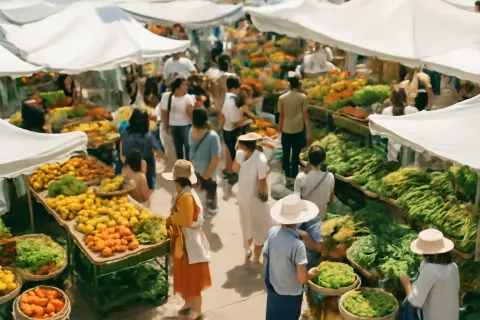
In most cities in Europe, North America, and Australia, the most common street risks newcomers face are pickpocketing and snatching in tourist areas: public transit, bus stations, central squares, tourist trams. Newcomers are targeted because they appear unfamiliar with their surroundings, carry phones out to check maps, and carry large bags.
A few simple habits help:
- Keep your phone in your pocket while standing near transit doors. Thieves often snatch during door-closing moments.
- Wear bags in front when in crowded areas.
- Do not carry passport, residence card, and bank cards in the same wallet.
- Withdraw cash at ATMs inside banks or supermarkets, shield your PIN entry.
- At the airport, use only official taxi stands or app-based ride services.
In Asian and Middle Eastern countries, street crime is often lower but has distinct patterns: unlicensed taxis, street money changers, "volunteer guides" directing you to shops. In small Caribbean communities, tight-knit neighborhoods mean security depends heavily on living in the right area and having local connections.
Emergency numbers and first-week tasks
Adults and children in the household should memorize the emergency number for your new location in your first week.
| Location | Primary Emergency Number |
|---|---|
| European Union (Portugal, Greece, Germany, France, etc.) | 112 |
| United States, Canada | 911 |
| United Kingdom | 999 (112 also works) |
| Australia | 000 |
| New Zealand | 111 |
| Malaysia | 999 |
| Thailand | 191 (police), 1669 (ambulance), 1155 (tourist police) |
| UAE | 999 (police), 998 (ambulance) |
For other countries, check the basic information in that country's wiki page on QuocTich.com (for example, Portugal's wiki), or ask during your first official appointment.
First-week tasks:
- Register as a citizen with the Vietnamese embassy or consulate in your new country, to have a point of contact if you lose documents or experience emergencies.
- Take and save digital copies of your passport, residence card, visa, and driver's license, stored in two separate locations (phone and email).
- Disable international transactions on your Vietnamese bank cards when not in use, and enable notifications for all transactions.
- Purchase renter's insurance if common in your new location. Premiums are usually small compared to losses from theft.
- Ask your landlord whether the locks were changed after the previous tenant.
Disadvantages and risks to know in advance
Anxiety about paperwork is your biggest vulnerability. People waiting for visa extensions or residence cards are prone to believing calls claiming "your file has problems." Know exactly which agency handles your case, which communication channels they use, and trust only those channels. The article five years in Lisbon illustrates how a real immigration authority contacts applicants.
Language barriers make people hesitant to ask questions. Many do not fully understand phone calls but are reluctant to ask, and they proceed anyway. Rule for the whole family: if you don't understand, don't do it. Schedule a callback after consulting family members or a lawyer.
Elderly family members and teenagers are targeted separately. Elderly parents home alone during the day are most vulnerable to scam calls; teenagers are targeted through online games and social media. Have conversations with each household member, not just spouses. The article elderly parents accompanying children abroad has additional guidance.
Recovering money lost through wire transfer is almost impossible. In many countries, banks refund money only in limited cases. Reporting to your bank and police within the first few hours is your only realistic chance.
Safety checklist for newly arrived families
- [ ] Rent short-term in your first month; do not sign a one-year contract from your home country
- [ ] Scout your target neighborhood at three different times of day
- [ ] Everyone in the household memorizes the emergency number; post it on the refrigerator
- [ ] Register as a citizen with your country's diplomatic mission
- [ ] Keep digital copies of documents in two locations
- [ ] Agree as a family: do not send money when pressured, do not act if you don't understand
- [ ] Write down the phone number and official communication channels of the immigration agency handling your case
- [ ] Enable transaction alerts on all bank cards
- [ ] Ask your landlord about locks and renter's insurance options
What's next
In the week before you travel, sit down with your whole family for fifteen minutes and read the scam table above together. Each person needs to remember one sentence: government agencies do not call demanding immediate payment.
And if your family is still choosing a country, safety should be on the comparison table alongside cost and paperwork. You can compare your options using the comparison tool before you decide.