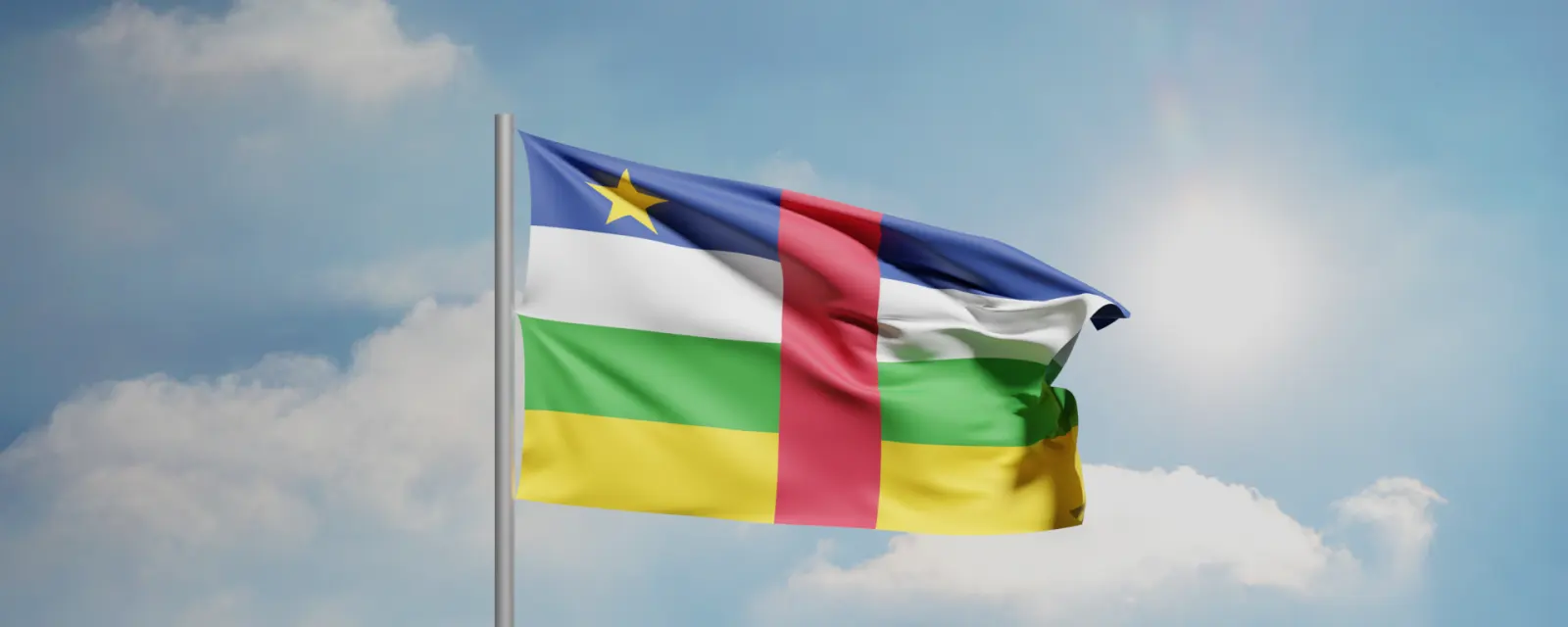
Overview
The Central African Republic holds a rank-77 passport reaching 50 destinations without a prior visa. Its population is around 5.7 million, the capital is Bangui, and the currency is the Central African CFA franc (XAF).
The Central African Republic has no citizenship-by-investment programme.
🔴 The country has been through prolonged armed conflict with very difficult humanitarian conditions. 📌 This site states this as fact and says plainly: this is no place to consider a personal relocation or investment plan.
🔴 2022 — declaring something the infrastructure could not carry
The facts:
- 📌 In 2022 the Central African Republic passed a law making Bitcoin legal tender — 🔴 the world's second country to do so after El Salvador.
- 🔴 But at that time only a very small share of the population had grid electricity, and internet access rates were among the world's lowest.
- 🔴 The central bank of the monetary zone the country belongs to raised concerns, because 📌 the Central African Republic shares the Central African CFA franc with other countries and does not set monetary policy alone.
- 🔴 Within under two years the legal tender provision was repealed.
✅ Three lessons, all applying directly to the citizenship industry
One — a state can DECLARE far more than it can DELIVER.
📌 The law passed, the announcement was made, international press covered it. 🔴 But a legal tender currency needs electricity, networks, devices and a banking system to operate — and none of those appear because a statute exists.
✅ Applied to what you are weighing: 📌 a citizenship programme announced in the press, with a law and a handsome website, may still lack the machinery to run it properly. 🔴 Ask about DELIVERY CAPACITY: which agency processes files, how many have they processed, what are actual timelines, who audits them. ✅ This is what the South Sudan article says through civil registration: machinery matters more than text.
Two — not all sovereignty can be exercised alone.
🔴 The Central African Republic belongs to a shared monetary zone, so its monetary decisions touch other countries. 📌 The Côte d'Ivoire article sets out the CFA trade-off; this shows what it means in practice when one member wants to go its own way.
✅ The same lesson applies to citizenship-selling countries: 🔴 Vanuatu, Dominica and others have learned that their nationality decisions touch major blocs' visa policies. 📌 Sovereignty is real, but it operates inside a network.
Three — and this I want to state gently but clearly: ✅ when a very poor country announces a very novel financial initiative, ask who proposed it and who benefits first.
🔴 This is not to suspect the country, but to recognise a pattern: 📌 "leapfrog" initiatives are most often sold to the places least equipped to assess them. ✅ The very same pattern as the Comoros article: a financial idea brought to a small state that lacks the machinery to evaluate it.
📌 Diamonds and a country at the continent's centre
📌 The Central African Republic sits near Africa's geographic centre, 🔴 landlocked, very far from the nearest coast, with very limited road infrastructure.
📌 Manovo-Gounda St Floris National Park and the trinational Sangha area are UNESCO sites — 🔴 primary forest in the Congo Basin, the same system as the Republic of the Congo and Cameroon.
Economy: diamonds, gold, timber, cotton, coffee. 🔴 Its diamond sector has been subject to international export restrictions under the origin certification system described in the Sierra Leone article — 📌 that exact mechanism, applied to another country, many years later.
🔴 Disadvantages: 🔴 conflict and humanitarian crisis; 🔴 landlocked with very weak infrastructure; 🔴 human development indicators among the world's lowest; and 🔴 limited state capacity across much of the territory.
As always: tax obligations here do not replace those in your country of residence.
Immigration routes & citizenship
🔴 Not a realistic path.
🔴 If anyone offers you "Central African citizenship by investment", stop. No such programme exists — 🔴 and for a country in these circumstances, such an offer is doubly suspect.
Who should consider the Central African Republic
🔴 This site does not propose the Central African Republic for personal relocation or investment. 📌 This article exists to record an important fact and to complete the library of 199 countries.
The point to carry away: ✅ This article gives a compact test you can apply to any citizenship programme.
📌 A law making Bitcoin legal tender is a TEXT. 🔴 Electricity, networks, devices and banks are MACHINERY. ✅ A text can exist in a day; machinery takes years — and when the two diverge, the text gets repealed.
📌 So when reading about a citizenship programme, do not stop at the law and the website. ✅ Ask three questions about machinery: which agency processes, how many files have they handled, and who audits them.
🔴 A programme with text but no machinery will eventually follow the path of the Bitcoin statute here.