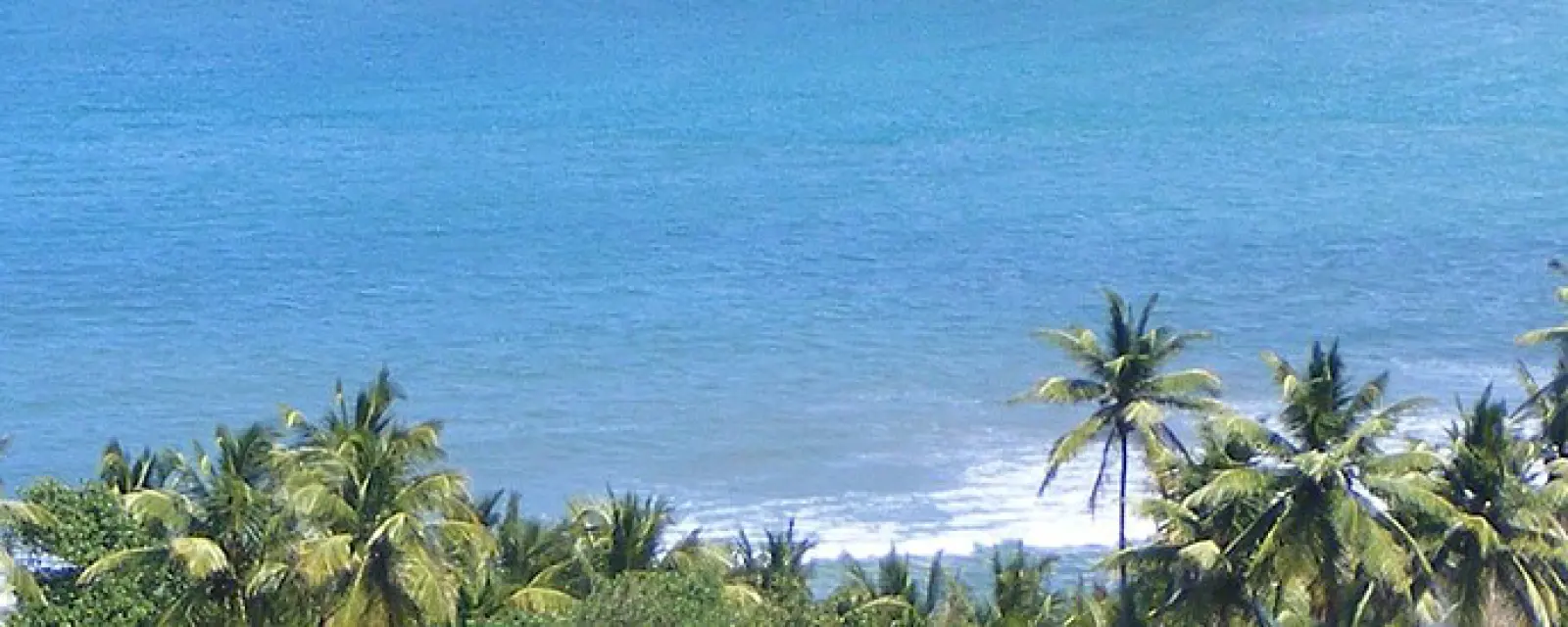
Overview
First, we must clarify a confusion we encounter nearly every week: Dominica is not the Dominican Republic.
- Dominica (pronounced approximately "Dom-in-EE-ka") — a small island nation in the Eastern Caribbean, population 67,000, English-speaking, a member of the Commonwealth. This is the country with a citizenship investment program discussed in this article.
- Dominican Republic — a much larger country on the island of Hispaniola adjacent to Haiti, population over 11 million, Spanish-speaking, with no citizenship investment program.
The two countries are separated by nearly 1,000 km and are entirely unrelated. If you encounter Vietnamese-language materials that confuse these two names, you should question the credibility of the source.
Dominica calls itself the "Nature Island of the Caribbean" — and this is an accurate description, not merely a tourism slogan. The island is covered in pristine rainforest, has 365 rivers, 9 active volcanoes, and the world's second-largest natural boiling lake.
Regarding its investment program, Dominica typically offers the lowest investment threshold in the Caribbean group — a feature that is simultaneously attractive and requires careful consideration.
Geography & Climate
Area of 751 km², measuring 47 km long by 26 km wide. Volcanic terrain with steep and rugged topography—among the most dramatic in the Caribbean. The highest peak, Morne Diablotins, reaches 1,447 m.
This is the greenest island in the region: tropical rainforest covers most of the territory, and Morne Trois Pitons National Park is a UNESCO World Heritage Site. Boiling Lake—a naturally heated lake powered by geothermal activity—attracts hikers from around the world, requiring a 6-hour trek to reach.
Strong geothermal activity also represents genuine economic potential: Dominica is developing geothermal power with the goal of achieving energy independence—something virtually no other Caribbean island has accomplished.
Tropical humid climate, 22–31°C. Significantly higher rainfall than neighboring islands due to mountainous terrain blocking trade winds—some inland areas receive over 7,000 mm of rain annually. Visitors accustomed to tropical climates will find it familiar; those who prefer drier conditions like Antigua may find it humid.
Hurricane risk—this section requires careful attention:
In September 2017, Hurricane Maria, a Category 5 storm, made direct landfall on Dominica. Estimated damage exceeded 200% of GDP—a level of destruction among the most severe in modern history for any single nation. Over 90% of structures were damaged; electrical and telecommunications systems completely failed; agricultural production was devastated.
The government's response afterward was noteworthy: it declared the goal of becoming the world's first climate-resilient nation, with most reconstruction funding sourced from the citizenship investment program itself. Building codes implemented after 2017 were significantly strengthened.
For those considering real estate purchase: ask specifically whether structures were built before or after 2017, and request documentation of hurricane-resistant engineering.
Historical Background
The indigenous Kalinago people inhabited the island long before European contact. Columbus sighted the island on Sunday, November 3, 1493—the name Dominica derives from the Latin dies Dominica, meaning Sunday.
The rugged terrain made colonization far more difficult than on other islands. The Kalinago resisted successfully for centuries, and Dominica remains the only place in the Caribbean where an indigenous Kalinago community exists today—approximately 3,000 people living in the Kalinago Territory, a 15 km² area on the island's east coast, with their own chief and council.
This is a rare cultural detail: nearly all indigenous Caribbean populations were eliminated following European contact.
France and England contested the island throughout the 18th century. England gained control in 1763. Dominica achieved independence on November 3, 1978.
Unlike neighboring nations, Dominica is a republic within the Commonwealth—with a President elected by parliament rather than the British monarch as head of state. The legal system follows English common law.
Culture & People
English is the official language. The population also speaks Kwéyòl—a French-based Creole language, a legacy of the French colonial period—in daily life.
Dominican society maintains stronger connections to the natural environment than tourism-focused islands. Small-scale farming, fishing, and forest-based livelihoods remain prevalent. This is not a luxury resort destination—Dominica has virtually no white sand beaches like Antigua; instead, volcanic black sand and rocky shores predominate.
Catholicism is the dominant religion. Major celebrations include Carnival before Lent and Creole Day in late October, featuring traditional dress and bouyon music.
The Kalinago community maintains traditional basket-weaving and dugout canoe construction—visitors can observe and learn.
The Vietnamese community is nearly non-existent.
Economy & Opportunities
Dominica's economy is small and rests on three pillars:
Agriculture—bananas were once the primary export; the economy has since diversified to include coconut, cacao, citrus, and spice crops. Organic agriculture shows promise due to volcanic soil fertility and minimal industrial pollution.
Ecotourism—Dominica chose a distinct path: rather than pursuing mass tourism, it focuses on hiking, diving, hot springs, and whale-watching. The Waitukubuli National Trail, 184 km of long-distance hiking, is the only trail of its kind in the Caribbean. Dominica is also among the few places worldwide where sperm whales can be observed year-round.
Citizenship investment program—a significant contributor to the budget, particularly crucial during post-hurricane reconstruction.
Geothermal energy represents a noteworthy long-term direction: if successful, Dominica could achieve energy independence and potentially export electricity to neighboring islands—addressing the region's endemic dependence on imported petroleum.
The currency is the East Caribbean Dollar (XCD), fixed at 2.70 XCD = 1 USD.
There is no worldwide income tax on individuals without residency, no inheritance tax, and no capital gains tax. Note: this does not automatically exempt tax obligations in your country of origin.
Residency Program
The program has operated since 1993—among the world's oldest, second only to Saint Kitts. Two principal forms:
Contribution to the Economic Diversification Fund (EDF)—a non-refundable contribution used for infrastructure development, healthcare, education, and disaster reconstruction.
Real estate investment in government-approved projects—primarily resort developments—with minimum holding periods required.
Applications may include spouse, dependent children, parents, and grandparents according to statutory conditions. No residency requirement, no interview, no language test.
Dominica typically offers the lowest threshold in the Caribbean group and processes applications rapidly.
Dominica passport access: visa-free or visa-on-arrival entry to most of Europe including the Schengen area, the United Kingdom, Russia, Singapore, Hong Kong, and numerous Asian and African nations.
Dominica has no E-2 treaty with the United States.
One Point Requiring Careful Consideration
Precisely because of its low threshold and high application volume, Caribbean CBI programs generally—and Dominica specifically—face intensifying international scrutiny from the European Union, the United Kingdom, and the United States, focused on quality of background vetting.
OECS nations have agreed to raise baseline standards and tighten due diligence procedures from 2024 onward, in part to address this pressure.
Viking Global Group believes you should understand clearly: choosing the cheapest program is not always the wisest choice. If your goal is a passport for long-term, stable use, consider program reputation equally with investment amount.
Regarding specific figures: contribution amounts, real estate thresholds, due diligence fees, and processing times change according to regulations in each period. Check the updated parameters on this page or consult a specialist.
Practical Living
Cost of living is the lowest in the Caribbean CBI group. Local produce is abundant and affordable due to fertile volcanic soil—starkly different from Antigua or Saint Kitts, which import nearly everything. Imported goods and electricity remain expensive.
Healthcare: The Dominica–China Friendship Hospital in Roseau is the primary facility, rebuilt after Hurricane Maria. Complex cases are referred to Martinique, Barbados, or the United States. International health insurance is mandatory for long-term residents—on-island healthcare remains more limited than in neighboring nations.
Education: Public schools teach in English following the Caribbean CXC/CSEC curriculum. An international medical school serving North American students operates in Portsmouth.
Transportation: this is Dominica's most obvious weakness. Douglas-Charles Airport has a short runway and does not accommodate wide-body aircraft—no direct flights from North America or Europe. You must connect through Antigua, Barbados, Saint Lucia, or Puerto Rico, then fly onward by smaller aircraft.
From Vietnam, the total journey typically exceeds 30 hours with at least three segments. This is the hardest island to reach in the group. Time zone difference is 11 hours.
Who Should Consider Dominica
Well-suited for you if:
- You need a second passport with the most limited budget in the Caribbean group
- You require quick processing, no relocation requirement, no interview, no language test
- You love pristine nature and forest living—Dominica is the greenest Caribbean island
- You're interested in small-scale organic agriculture or ecotourism
- You view the passport primarily as a backup plan and travel tool, with no intention to relocate
May not be suitable if:
- Your goal is to relocate to the US to operate a business—no E-2 treaty available; consider Grenada instead
- You need frequent access to mainland China—Grenada has a visa waiver agreement; Dominica does not
- You travel frequently and dislike connections—Dominica's airport cannot accommodate large aircraft; this is the hardest island to reach in the group
- You want white sand beach resorts—Dominica features volcanic black sand and rocky shores
- You need specialized healthcare locally for family members with chronic conditions
- You're selecting based solely on lowest cost—given international tightening of due diligence, program reputation deserves consideration equal to investment amount
- You cannot accept elevated hurricane risk—Maria in 2017 caused damage exceeding 200% of GDP
This article provides foundational reference information. Regulations regarding investment, fees, and application requirements change over time, particularly as OECS nations are tightening standards. Please consult with a Viking Global Group specialist before making a final decision.