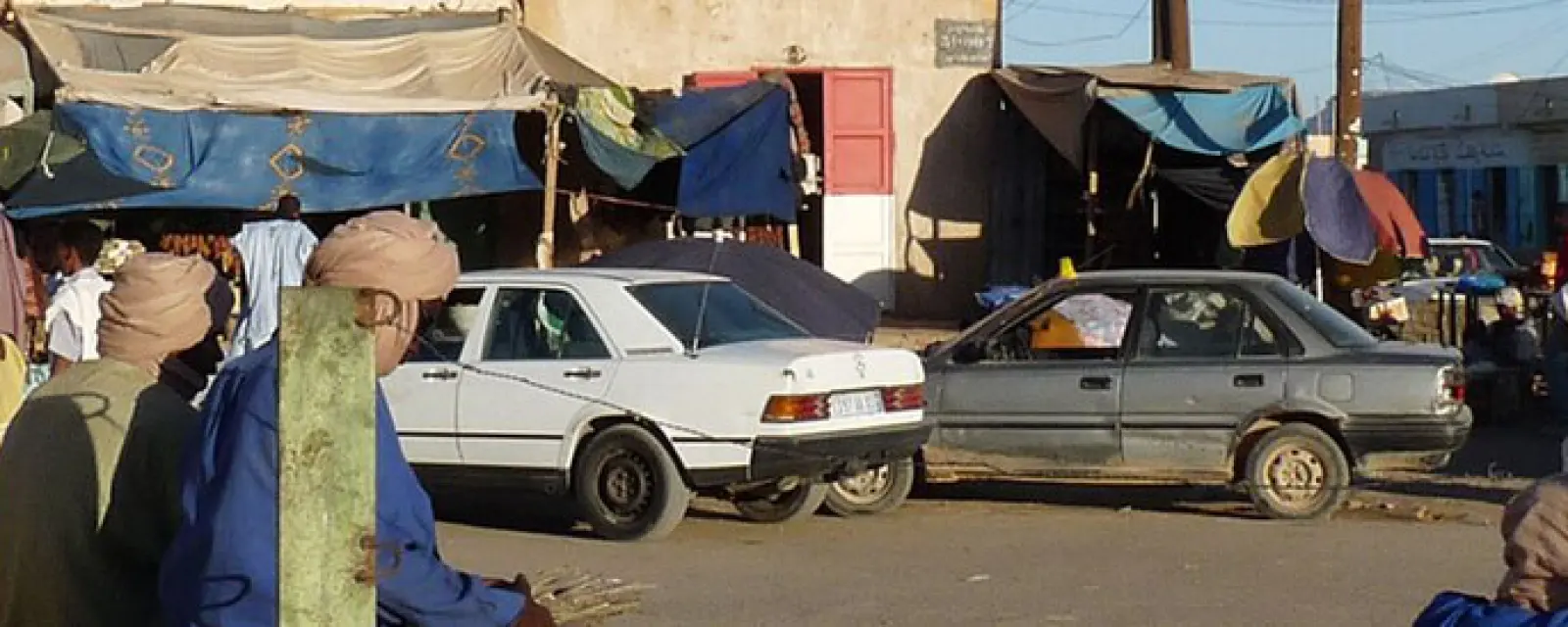
Overview
Mauritania holds a rank-73 passport reaching 54 destinations without a prior visa. Its population is around 5.2 million, the capital is Nouakchott, and the currency is the ouguiya (MRU).
📌 More than three-quarters of Mauritania is Sahara, and 📌 the country sits exactly where Arab North Africa meets sub-Saharan West Africa — 🔴 a position that explains much of what follows.
Mauritania has no citizenship-by-investment programme.
🔴 The last country in the world to abolish slavery
The events, stated as facts:
- 🔴 Mauritania formally abolished slavery in 1981 — 🔴 the last country in the world to do so.
- 🔴 But that abolition carried no criminal penalties. ✅ Only in 2007 did Mauritania enact a law criminalising slaveholding, and ✅ in 2015 it raised penalties and established specialised courts.
- 🔴 International human rights organisations record that hereditary forms of servitude persist in practice in some places, and 🔴 successful prosecutions remain few. 📌 This site states this at the level of facts.
📌 Why this belongs on a nationality site rather than being merely history:
✅ Because its direct legal consequence is a DOCUMENTATION problem. 🔴 People born into servitude typically had no birth registration. 🔴 No birth certificate means no identity card, no identity card means no proof of nationality, and no proof of nationality means the next generation cannot be registered either.
📌 This is exactly the circular structure recorded in Kenya, Nepal, Zimbabwe and Madagascar. 🔴 What differs is the cause at the head of the chain: here it is the legacy of a social order, not of an administrative decision.
🔴 And the eighteenth mechanism — pushed across a border, then papers gone
The events, stated as facts:
- 🔴 Between 1989 and 1991, following tensions with Senegal, tens of thousands of Mauritanians — mainly from black ethnic groups in the Senegal River valley — were forced out of Mauritania into Senegal and Mali.
- 🔴 Very many had documents confiscated or lost in the process.
- 📌 From 2007 an organised repatriation programme returned some of them, with commitments to reissue documents.
- 🔴 But many returnees still struggled to recover documents and property, and 🔴 a subsequent national population registration exercise was raised by civil society as creating difficulties for this same group.
📌 This is the eighteenth mechanism in this library, with a distinctive feature:
🔴 In Bhutan, Turkmenistan, Syria and Zimbabwe, people lost nationality while staying put. ✅ Here people were removed from the territory FIRST, and the loss of documents happened in transit.
📌 The legal consequences differ greatly: 🔴 someone who stayed can still point to neighbours, and records still exist at the local office. 🔴 Someone removed has nothing left behind to cite, and the receiving country has no obligation to record who they are.
✅ The usable lesson, and it applies to everyone: 📌 documents proving nationality are worth something only while an authority still holds the original to check against. 🔴 The paper in your hand is not the nationality — it is a copy of a line in a register somewhere. ✅ For anyone with a second nationality, this is a very practical reason to maintain contact with the registry that issued it, and to know exactly where your original record sits.
Geography & economy
Mauritania borders Western Sahara, Algeria, Mali and Senegal, with a long Atlantic coast to the west.
📌 The fishing grounds off Mauritania are among the world's richest thanks to upwelling, and 📌 fishing rights are a significant budget revenue source through agreements with foreign fleets.
📌 Iron ore is the largest export, and 📌 the ore train from Zouérat to the port of Nouadhibou is among the longest trains in the world.
📌 Mauritania and Senegal are bringing into production an offshore gas field straddling their shared boundary — 🔴 two countries sharing one field is rare and worth watching, because it requires a sharing mechanism that must survive multiple governments on both sides.
🔴 Disadvantages: 🔴 desertification and water scarcity; 🔴 security affected by Sahel instability; 🔴 the documentation and equality issues described above; and 🔴 an economy dependent on iron ore prices and fishing rights revenue.
As always: tax obligations here do not replace those in your country of residence.
Immigration routes & citizenship
Categories existing in law include contract-linked work permits and residence tied to registered business activity.
📌 On citizenship: principally by descent. 📌 On dual citizenship, check the current statute.
🔴 If anyone offers you "Mauritanian citizenship by investment", stop. No such programme exists.
Who should consider Mauritania
It may fit if: you work in fisheries and seafood processing, iron ore mining, gas, or renewable energy — 📌 Mauritania has very large wind and solar potential and announced green hydrogen projects. 🔴 French and Arabic are needed.
Not a fit if: 🔴 you are offered "Mauritanian citizenship by investment"; you are seeking a family relocation destination; or you need reliable water and urban infrastructure.
The point to carry away: ✅ Mauritania offers this library's most practical lesson about documents.
📌 This whole site is about acquiring an additional nationality. Mauritania is the reminder that what you actually hold is not the passport booklet but A LINE IN A REGISTER at some authority.
🔴 The passport is only a copy of that line. Lose the passport and it can be reissued. Lose the register — or be removed beyond its reach — and it cannot.
✅ So for anyone holding or about to hold a second nationality: know exactly which authority holds your original record, keep certified copies, and do not let that link lapse. 📌 It costs an afternoon, and it protects precisely the thing this whole site is selling.