Overview
Montenegro is a small country in the Western Balkans with coastline on the Adriatic Sea. It covers 13,812 km² with a population of approximately 620,000 people — comparable to a mid-sized city.
The first thing to clarify, since consulting firms still mention it:
Montenegro's citizenship-by-investment program CLOSED at the end of 2022. The program opened in 2019 with a limited cap and defined expiration timeline. After several extensions, the government stopped accepting new applications in December 2022, partly due to pressure from the European Union during accession negotiations.
If someone still offers "Montenegro citizenship through investment," stop and ask for written confirmation from your consultant.
So what else does Montenegro offer? Quite a bit — and primarily prospects for EU accession.
Montenegro is the most advanced EU candidate among Western Balkan countries, has opened all negotiation chapters, and is widely assessed as having the best chance of joining first in the region. If that happens, a Montenegro residence permit and citizenship will carry entirely different value.
But this is an expectation, not a commitment. EU enlargement timelines have repeatedly missed their targets. You should not base major financial decisions solely on this assumption.
Geography & Climate
Montenegro has surprising geographic diversity for its small size:
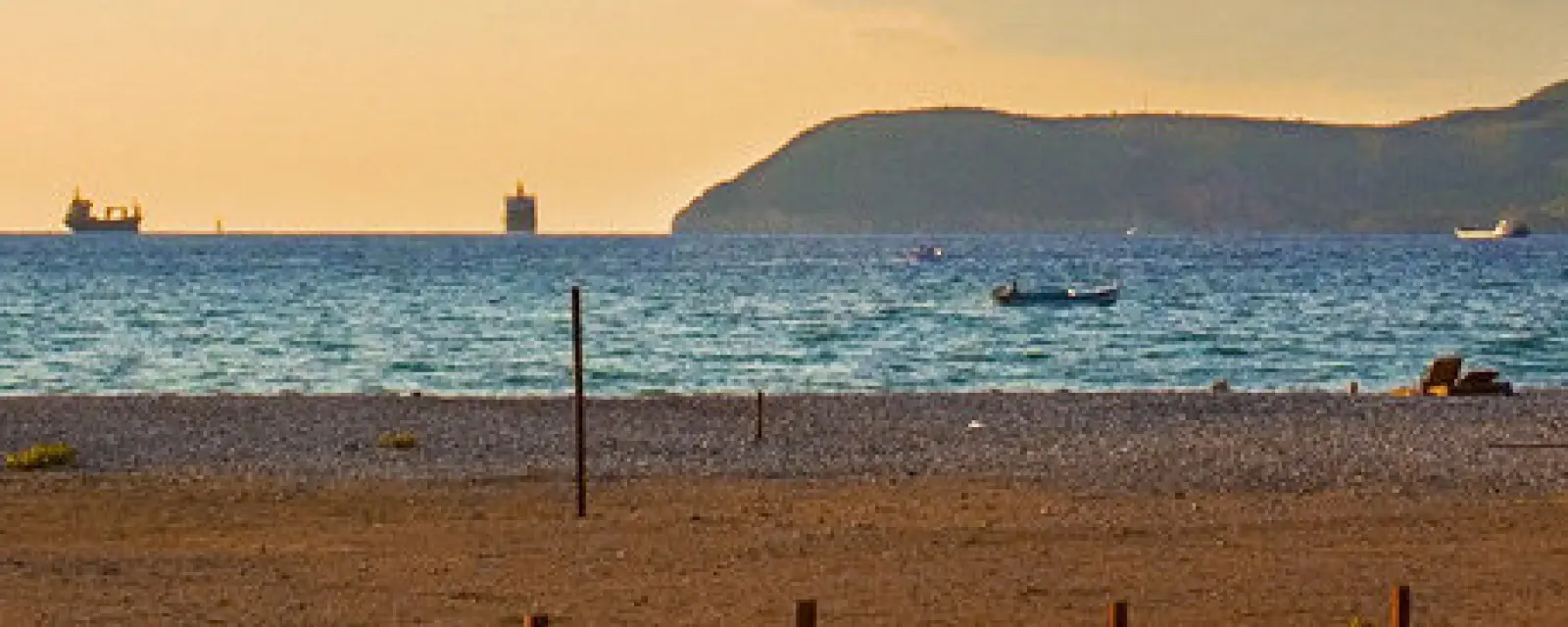
Adriatic Coastal Region — approximately 290 km of coastline with historic towns such as Kotor, Budva, and Herceg Novi. Kotor Bay — a deep, winding inlet surrounded by steep limestone cliffs — is a UNESCO World Heritage Site and is sometimes compared to Norway's fjords for its dramatic landscape.
Northern Mountains — the Durmitor range with national parks and the Tara River Canyon, the world's second-deepest canyon after the Grand Canyon. Alpine skiing is available.
Climate divides into two zones: the Adriatic coast has a Mediterranean climate with dry, hot summers (26–32°C) and mild winters (8–14°C); the mountains have a continental climate with cold winters and significant snowfall.
The coastal region is generally comfortable, especially in spring and autumn.
Risk: Montenegro lies in a seismic zone — the 1979 earthquake caused major damage in coastal areas. Building codes have been tightened since, but when purchasing property, ask clearly about construction year and structural documentation.
Historical Background
Montenegro has a long tradition of independence within the Balkans — its mountainous, difficult terrain helped it maintain considerable autonomy even under Ottoman rule, unlike many neighboring regions.
Recognized as independent in 1878, it became a kingdom and then joined the South Slavic state after World War I.
After Yugoslavia dissolved in the 1990s, Montenegro remained in a federation with Serbia before declaring independence in 2006 through referendum — one of Europe's youngest nation-states.
Two recent milestones:
- Joined NATO in 2017
- EU accession negotiations — began in 2012, all chapters opened, some chapters closed
A notable detail on currency: Montenegro uses the Euro despite not being a Eurozone member or EU member. The country unilaterally adopted the Euro when it was created. This eliminates currency risk but also means no independent monetary policy.
Culture & People
The official language is Montenegrin, very similar to Serbian, Croatian, and Bosnian — speakers understand each other readily. Both Latin and Cyrillic alphabets are used.
English is fairly common in coastal areas and the tourism sector, especially among younger people. Russian is also widely spoken due to significant communities of Russians and Eastern Europeans who have settled and invested over the past two decades.
Eastern Orthodox Christianity is the dominant religion, with substantial Muslim and Catholic communities.
Balkan culture emphasizes family, hospitality, and community bonds — Vietnamese often find it quite familiar. Daily life is slower, especially outside the tourist season.
The Vietnamese community in Montenegro is virtually nonexistent. However, communities of Russians, Serbs, Turks, and British are sizable in Budva and Kotor, so service infrastructure for foreigners exists.
Economy & Opportunities
Montenegro's economy is small and concentrated in:
Tourism — the main pillar, a large share of GDP. The Adriatic coast attracts European visitors, and Montenegro is often described as "Croatia with lower prices." Porto Montenegro in Tivat is a luxury yacht marina attracting high-net-worth individuals.
Real Estate — an active market driven by foreign capital inflows, particularly from Russia and Eastern Europe. Prices have risen significantly but remain much cheaper than Croatia, Italy, or Greece for comparable coastal property.
Energy — hydroelectric power is the main source, with potential for regional electricity exports.
For Vietnamese entrepreneurs: practical opportunities lie in tourism, accommodation services, and seasonal rental property management. The domestic market of 620,000 is too small for large-scale consumer businesses.
On taxation: Montenegro has some of Europe's lowest tax rates — both personal income tax and corporate tax are at low brackets. This is genuinely attractive for small businesses and remote workers.
Residence Programs
Citizenship Program — Closed
The Investment for Citizenship program opened in 2019 with a cap of 2,000 applications, requiring a contribution to a development fund plus investment in an approved real estate project in designated development zones or coastal areas.
Stopped accepting new applications from December 2022. Applications submitted before that date are processed under the previous regulations.
Temporary Residence via Real Estate Ownership
This is the currently functional pathway and a genuine strength of Montenegro: foreigners who own property in Montenegro can apply for a temporary residence permit, renewable annually.
Key advantage: Montenegro allows foreigners to purchase real estate quite freely — including apartments and houses, unlike many countries with restrictions on foreign ownership. There are limitations only on agricultural land and land near borders.
This residence permit does not automatically include work rights — to work you need a separate permit, or you can establish a business and hire yourself.
Residence via Business
Establishing a company in Montenegro and hiring yourself is a common route for those who want both residence and economic activity. Company formation is relatively straightforward and inexpensive.
Path to Citizenship
After 5 years of continuous residence you can apply for permanent residence, and standard naturalization requires approximately 10 years of legal residence, with language testing and integration requirements.
Montenegro generally does not allow dual citizenship for standard naturalization — clarify with a lawyer, as bilateral agreements with some countries may provide exceptions.
Specific figures: property prices, tax rates, and residence permit renewal conditions change over time. Please check the detailed specifications on this site or consult a specialist.
Daily Life
Cost of living is low — among Europe's cheapest. Food, services, and dining out are affordable. Real estate is much cheaper than other Mediterranean countries, though it has appreciated.
Healthcare: the public system is limited compared to Western Europe. The main hospital is in Podgorica; complex cases are typically transferred to Serbia, Croatia, or EU countries. International health insurance is essential for long-term residents. Private hospitals exist but are small.
This is a significant weakness to consider carefully if you have elderly family members or chronic health conditions.
Education: public schools teach in Montenegrin. International schools are very rare — primarily in Podgorica and Tivat, with small enrollments. Montenegro's universities are limited in capacity; most affluent families send children to study abroad.
This is also a notable weakness for families with young children.
Travel: two small international airports in Podgorica and Tivat offer flights to European cities, mainly seasonal. No direct flights from Vietnam — you need at least two connections, typically via Istanbul, Belgrade, or Vienna, totaling 18–24 hours.
Time difference with Vietnam is 5–6 hours depending on the season.
Who Should Consider Montenegro
Well-suited if you:
- Want to relocate to Europe at the lowest possible cost — owning real estate provides sufficient grounds for a residence permit
- Want to buy Adriatic beachfront property at much lower prices than Croatia, Italy, or Greece
- Are willing to take a long-term bet on Montenegro's EU accession — understanding this is an expectation, not guaranteed
- Work remotely or run a small business — among Europe's lowest tax rates
- Are interested in tourism, hospitality, or seasonal rental management
- Prefer a Mediterranean climate and slower pace of life
Not well-suited if you:
- Expected to purchase Montenegro citizenship — the program closed at the end of 2022
- Need high-quality healthcare locally — the system is limited, complex cases go abroad
- Have young children requiring quality international schools — options are very limited
- Need work rights immediately — residence permit from property ownership does not automatically include the right to work
- Want citizenship while keeping your original passport — Montenegro generally does not allow dual citizenship
- Are making decisions solely based on the assumption Montenegro will join the EU — enlargement timelines are unpredictable
This article provides foundational information for reference only. Montenegro's citizenship-by-investment program ended in late 2022; EU accession timelines are not fixed. Please consult with a specialist at Viking Global Group before making major decisions.