Overview
Syria holds a rank-92 passport reaching 28 destinations without a prior visa — near the bottom of the world rankings. Its population is around 23.2 million, the capital is Damascus, and the currency is the Syrian pound (SYP).
Syria has no citizenship-by-investment programme.
🔴 Most countries maintain advisories strictly restricting or against travel to Syria. Check what is in force before making any plans.
📌 Syria has undergone major changes since late 2024 and remains in a transitional period. This site records the markers at the level of facts, does not describe the current situation as though it were settled, and advises readers to follow official sources rather than relying on an article.
🔴 The 1962 census — the world's cleanest example of creating statelessness
This is the most important section, and the reason this article exists on the site.
This library has recorded ten different mechanisms by which people become unable to prove nationality. 📌 Syria adds an eleventh, and it is the simplest of them all: a population count.
The events, stated as facts:
- In 1962, the Syrian authorities of the time conducted a special population census in Hasakah province in the northeast — an area with a large Kurdish population.
- 🔴 The census was carried out in a single day, and residents had to prove they had lived in Syria since before a specified date.
- 🔴 Hundreds of thousands could not meet the proof requirement within that framework — lacking documents, absent that day, or for other reasons — and were excluded from the register of citizens.
The enduring legal consequence divided that population into two categories:
| Category | Status |
|---|---|
| Ajanib — "foreigners" | Issued a document acknowledging their existence, but not citizens. No passport, with restrictions on employment, property ownership, legal marriage and higher education. |
| Maktumin — "the concealed" | 🔴 No documents at all. Administratively, these people do not exist. |
🔴 And because Syrian nationality passes through the father, this status IS INHERITED. A person left without nationality in 1962 has children, grandchildren and great-grandchildren without it too — successive generations born, living and dying on Syrian soil having never been citizens of any country.
📌 **In 2011 a decree allowed the ajanib group to register for Syrian nationality. ✅ This was a real step and resolved matters for a substantial number. 🔴 But the maktumin — those with no documents at all — largely fell outside its scope, precisely because they had nothing with which to begin the chain of proof. The group with the fewest documents was the hardest to help.**
📌 Why this mechanism is worth studying beyond Syria
🔴 No statute declared anyone's nationality revoked. No deportation decree. Only a census and a documentary requirement.
Set beside the other mechanisms this library has recorded:
Myanmar — the law defines recognition by a list, and those absent fall outside. Bhutan — documentation standards changed, and those who could not meet them left. Lebanon — 🔴 no census for over ninety years, because the result would reopen the balance of power. Syria — 🔴 a census was conducted, and the census itself created stateless people.
📌 Placing Lebanon and Syria side by side is the fullest lesson this library has drawn on this subject:
🔴 In Lebanon, not counting preserves the status quo. In Syria, counting in a particular way excluded a group from citizenship. Two neighbours, opposite directions, and both showing that counting people has never been merely a statistical matter.
For readers of this site, a transferable conclusion: when a country announces a census, a document reissue, or a "regularisation of civil records", that is not necessarily a neutral administrative procedure. Keep original documents, register within deadlines, and never let a documentation cycle pass without appearing in it. This is practical advice, and it comes from what actually happened.
🔴 The statelessness risk facing a generation now growing up
This is the most urgent part of the article, and it is happening now.
📌 Syrian nationality law transmits through the paternal line. Children of a Syrian man hold Syrian nationality; children of a Syrian woman and a foreign husband do not automatically.
🔴 With millions of Syrians having left the country since 2011, this rule creates a very concrete risk:
- A great many Syrian children are born abroad — in Türkiye, Lebanon, Jordan and European countries.
- 🔴 If the father has died, gone missing, holds no documents, or the marriage was not formally registered, the mother cannot register Syrian nationality for the child on her own.
- 🔴 And the host country generally does not confer its nationality on children born on its territory to refugee parents.
- The result: a child holding no country's nationality.
📌 UN agencies and many human rights organisations have warned about the scale of this risk in reports over many years.
🔴 This is the third piece in this library's sequence on gender in nationality law, and the one with the most urgent consequences:
Nepal — proof through the mother is harder than through the father. Lebanon — women cannot transmit nationality at all. Syria — 🔴 the same principle meeting displacement of millions, so the consequence multiplies. ✅ Iran (2019) and Iraq (2006) — two neighbours that amended or were already different.
📌 Four countries in one region, two changed, two not. This is the clearest evidence that such provisions are not a fixed feature of the region or the culture — they are a legislative choice, and some countries have chosen otherwise.
🔴 The largest displacement of the twenty-first century
Stated as facts, on UN agency figures:
- Since 2011, conflict in Syria has displaced more than half the pre-war population — 🔴 the largest scale of any displacement crisis of the twenty-first century.
- Several million left the country, concentrated in Türkiye, Lebanon, Jordan, Iraq, Egypt and Germany.
- Several million more were displaced within Syria itself.
- 🔴 Infrastructure, housing, schools and hospitals were destroyed on a very large scale.
📌 The Lebanon article in this library records the effect on the host side: Lebanon has among the highest ratios of refugees to population in the world, and Syrians account for most of that figure.
Geography & climate
Syria borders Türkiye, Iraq, Jordan, Israel and Lebanon, with a Mediterranean coastline.
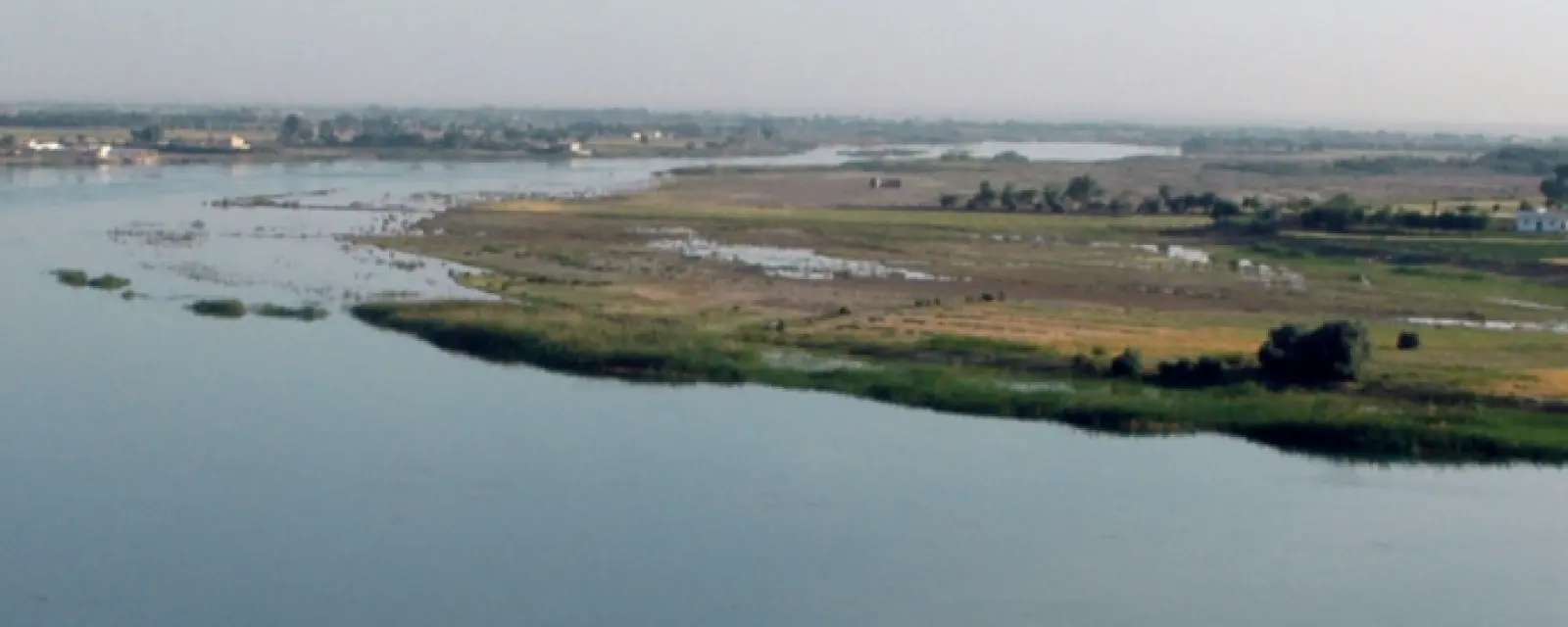
Terrain: a narrow coastal strip, parallel mountain ranges, steppe and the Syrian Desert to the southeast, and the Euphrates valley in the northeast — the main agricultural region.
🔴 Water is again an upstream problem, exactly as in Iraq: the Euphrates enters Syria from Türkiye, and upstream damming affects the volume.
🔴 A severe drought running from roughly 2006 to 2010 heavily affected the northeastern agricultural region, driving many farming families off the land and into the cities. 📌 Numerous studies have examined this drought's role as one of the factors creating social pressure before 2011 — the extent of its contribution remains an academic debate, and this site records that rather than asserting one view.
📌 To whatever degree it holds, this is among the most closely studied examples of a link between climate change and internal migration — belonging to the sequence this library tracks in Mongolia (the dzud) and Bangladesh (erosion and salinity).
History — among the world's longest continuously inhabited places
📌 Damascus and Aleppo both rank among the longest continuously inhabited cities in the world, with traces of settlement over thousands of years.
📌 Ugarit, an ancient city-state on the Syrian coast, is where one of the earliest known alphabets was found — of the same family as the Phoenician script noted in the Lebanon article, and a distant ancestor of the script this article uses.
The land belonged successively to the Egyptian, Hittite, Assyrian, Persian, Greek, Roman and Byzantine empires and the Islamic dynasties — 📌 Damascus was capital of the Umayyad empire in the seventh and eighth centuries, then among the largest empires in the world — then the Crusader states, the Mamluks and the Ottomans.
Modern markers:
- 1920–1946 — French mandate, with independence in 1946.
- 1963–2024 — Baath party rule, with the Assad family leading from 1970.
- 🔴 2011 — protests against the government and their suppression led to widening armed conflict involving many domestic and foreign parties. Civilian casualties were very high, and many international bodies documented serious violations.
- 🔴 2014–2019 — the group calling itself Islamic State controlled substantial Syrian territory before being pushed back. 🔴 Palmyra, a UNESCO site, was partly destroyed in this period.
- 📌 December 2024 — 🔴 the government in place since 1963 came to an end, and Syria entered a transitional period. The situation is evolving; institutional arrangements, the lifting or adjustment of international sanctions, and refugee return are all matters being worked through. This site offers no prediction and does not describe the situation as settled.
📌 🔴 For readers: any information on procedures, documents, visas and travel conditions relating to Syria at this time must be verified from current official sources, not taken from an article.
Economy
🔴 The context must come first: Syria's economy has been devastated by more than a decade of conflict, with destroyed infrastructure, severe currency depreciation and international sanctions. Every sector description below must be read in that light.
The traditional sectors:
1. Agriculture. Wheat, cotton, olives and citrus. 📌 Syria was once self-sufficient in food, and the northeast was known as its breadbasket.
2. Oil. Modest reserves by regional standards; output fell sharply through the conflict.
3. Traditional crafts and manufacture. 📌 Aleppo soap — held to be among the oldest hard soaps in the world — alongside textiles, brasswork and inlaid woodwork.
4. Heritage tourism. Before 2011 Syria had six UNESCO World Heritage sites and was a major archaeological destination. 🔴 All six have been placed on the list of heritage in danger.
🔴 One widely documented matter must be stated plainly: during the conflict, the production and trafficking of the synthetic stimulant captagon was documented by many international and regional bodies as a large financial flow originating in this area, with effects on neighbouring countries. This is widely recorded fact and part of an economic picture any honest description must include.
This site gives no investment advice. 🔴 Any transaction touching Syria must be checked carefully against the international sanctions framework in force — that framework is under review and changing, so it must be checked at the time of acting.
Culture & people
Arabic is the official language. Kurdish is widely used in the northeast, alongside Armenian, Syriac, Turkmen and Circassian within their respective communities.
📌 Syria is among the most religiously diverse places in the Middle East: a Sunni Muslim majority alongside Alawite, Druze and Ismaili communities, and many ancient Christian denominations — Greek Orthodox, Syriac Orthodox, Melkite Catholic and Armenian.
📌 In the village of Maaloula and a few neighbouring villages, a form of Aramaic — the language Jesus is held to have spoken — is still used. 🔴 This is among the world's most fragile linguistic heritages, and the community speaking it has diminished sharply through the conflict.
🔴 Many of Syria's religious and ethnic minority communities have declined very sharply through emigration — the same class of loss recorded in the Iraq article.
There is essentially no Vietnamese community in Syria.
Immigration routes
No investment programme exchanging for citizenship, and no practical residence route for foreigners at present.
🔴 For this site's purposes, stated directly: Syria is not a destination to consider for citizenship, residence, investment or relocation at present.
Citizenship
By paternal descent — see the statelessness risk section above.
🔴 If anyone offers you "Syrian citizenship" or "a Syrian passport" in any form, stop immediately. No such programme exists. 🔴 With millions of refugees and widespread loss of documents, the market in fraudulent documents relating to Syria has been documented by many agencies — this is a serious legal risk, not merely a matter of losing money.
Who should read this article
This article is not written for investment or migration purposes. There is nothing here for those.
It is written for three groups:
- 🔴 Those wanting to understand how a purely administrative procedure creates stateless people. The 1962 census is the world's cleanest example — no denationalisation statute, no deportation decree, only a count and a documentary requirement.
- Those wanting to understand why paternal-line transmission becomes dangerous under displacement. A rule that merely inconveniences in peacetime becomes a generator of statelessness when millions must flee.
- Those in humanitarian or legal work with refugees who need a frame of reference.
The point to carry away: this site is written for people choosing to add a nationality. Syria is a reminder that nationality is not only something that can be added — it is something that can be subtracted, and sometimes subtracted through procedures that look entirely ordinary.
🔴 The most practical advice this article can offer, applying to everyone in every country: keep your family's original civil documents, register your children's births on time and in the right place, and never let a documentation cycle pass without your name in it. For most readers that is a small matter. For hundreds of thousands of people in this article, it was precisely the line between holding a nationality and holding none.