Overview
Burundi holds a rank-79 passport reaching 48 destinations without a prior visa. Its population is around 13.6 million, the political capital is Gitega (the economic centre is Bujumbura), and the currency is the Burundian franc (BIF).
📌 Burundi has among mainland Africa's highest POPULATION DENSITIES, 🔴 is landlocked, and most people live from smallholder agriculture.
Burundi has no citizenship-by-investment programme.
✅ This is the last of the 199 countries — and it closes where it should
📌 The Tanzania article records what I called the ONLY COMPLETED remedy in this library:
✅ Tanzania granted citizenship to more than a hundred thousand refugees — a group present on Tanzanian soil since 1972, with children and grandchildren born there.
🔴 Those people were Burundians.
The facts:
- 🔴 From 1972, hundreds of thousands left Burundi for Tanzania and neighbouring countries following episodes of severe violence. 📌 They lived in settlements for decades; their children and grandchildren were born in Tanzania.
- ✅ From around 2007 Tanzania opened a naturalisation programme for this group and by the mid-2010s had granted Tanzanian citizenship to more than a hundred thousand people.
- 📌 UN agencies describe this as among the largest refugee naturalisation exercises ever conducted anywhere.
- 🔴 Burundi has seen further displacement since, including after 2015, and 🔴 Burundians remain in neighbouring countries, while many have also returned.
✅ Why I placed this article last
📌 Across the previous 198 articles I recorded TWENTY mechanisms leaving people unable to prove nationality: a census (Kuwait), an ethnic list (Myanmar), a terminated treaty (Turkmenistan), one word in a statute (Madagascar), an impossible procedure (Zimbabwe), a political doctrine (Côte d'Ivoire), a new border (Sudan), and a lake getting smaller (Chad).
🔴 And I recorded very few remedies: Iraq by statute, Zimbabwe by constitution, Kenya and Côte d'Ivoire still in progress.
✅ Only ONE was completed. And it is the Burundians' story.
📌 I want to end the 199-country library here, because it answers the heaviest question this whole site raises:
🔴 "Can anything actually be done, or is this only recording?"
✅ It can. Tanzania did it.
📌 And how they did it deserves recording because there was nothing extraordinary about it: 🔴 no international convention compelled them; no court ruled; no enormous fund paid for it. ✅ A state decided that people who had lived on its soil for thirty years were its own, and then processed the paperwork.
🔴 Stated fully, as in every article: 🔴 the process had stalled periods and domestic debate, and Tanzania's policy toward later arrivals is considerably tighter. 📌 But the figure of more than a hundred thousand is real and completed.
📌 Land — the real constraint beneath everything else
📌 Burundi has very high population density and very small cultivated area per head. 🔴 As land is divided among successive generations, each plot grows smaller.
🔴 Research on Burundi commonly identifies land disputes as a source of village-level conflict, 📌 and it is a major issue when returnees come home to find their family's former land farmed by someone else. 📌 Burundi has established mechanisms for handling returnees' land disputes.
✅ Why I record this in the final article: 📌 this whole library discusses documents, law and rights. 🔴 Burundi is the reminder that beneath all of it often lies a very simple material constraint: is there enough land to live on.
📌 The Côte d'Ivoire article shows the same in another form — 🔴 the doctrine of nativeness became dangerous exactly when the economy tightened and land grew scarce. ✅ Nationality law rarely causes a crisis by itself; it is usually the instrument reached for when a material constraint bites.
Geography & economy
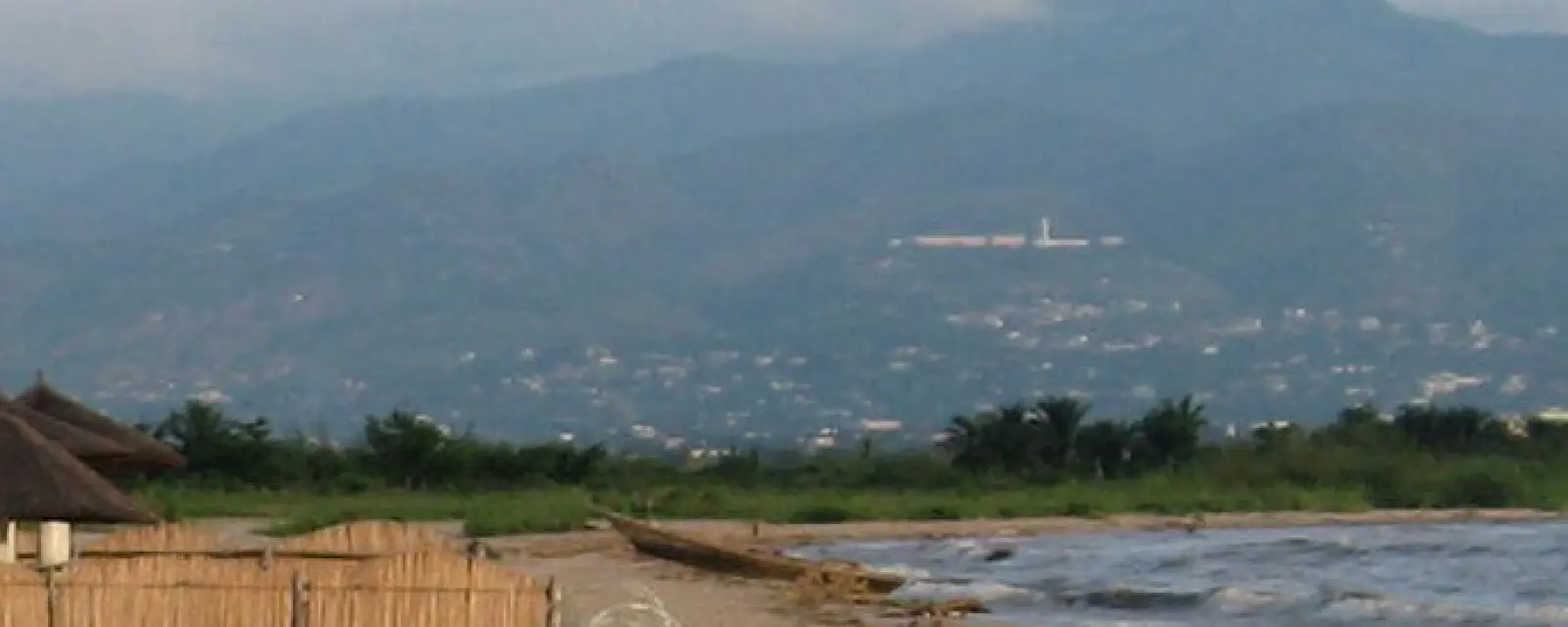
Burundi is landlocked, bordering Rwanda, Tanzania and the Democratic Republic of the Congo, with a shore on Lake Tanganyika — 📌 the world's second-deepest lake, shared with three other countries.
Economy: coffee and tea are the main exports; alongside smallholder agriculture and some minerals. 📌 Burundian coffee is among the highland arabicas well regarded in the specialty market — ✅ the same direction described in the São Tomé article: a small country moving up on quality rather than racing on volume.
🔴 Disadvantages, stated fully: 🔴 income per head among the world's lowest; 🔴 landlocked with very high logistics costs; 🔴 high population density with very small cultivated area per head; 🔴 foreign currency shortages and fuel constraints have affected economic activity; and 🔴 international organisations document concerns about political space. 📌 This site states this at the level of facts.
As always: tax obligations here do not replace those in your country of residence.
Immigration routes & citizenship
Categories existing in law include contract-linked work permits and residence tied to registered business activity. 📌 Burundi belongs to the East African Community (EAC) — 📌 which has movement and labour arrangements between members, worth checking if you already have ties to Kenya, Tanzania, Uganda or Rwanda.
📌 On dual citizenship: check the current statute.
🔴 If anyone offers you "Burundian citizenship by investment", stop. No such programme exists.
Who should consider Burundi
It may fit if: you work in specialty coffee, tea, agricultural processing or development work — 🔴 and accept very high logistics costs and a difficult foreign currency environment. 🔴 French or Kirundi is needed.
Not a fit if: 🔴 you are offered "Burundian citizenship by investment"; you need foreign currency access; or you need a market.
✅ And this is where the 199-country library closes
📌 I began this series to fill out the wiki for all 199 countries. ✅ Ending at Burundi is an accident of ordering, but I think it is the right place, and I want to say why.
🔴 This site sells nationality to people with money. That is lawful and useful, and I have written at length about doing it well: choose programmes with rigorous due diligence, ask about machinery rather than only text, prepare source-of-funds documentation early, and remember that what you buy is a position in a recognition network rather than a booklet.
✅ But across 199 articles I also recorded something this industry rarely says: there is a group many times larger than our customers, and they hold no nationality at all.
📌 Twenty mechanisms produced them. One case was completed.
✅ That case is the Burundians, and it happened because a state decided to do it — not because anyone compelled it.
🔴 I do not write this to make readers uneasy about buying a nationality. ✅ I write it because it tells you exactly how valuable the thing you are buying is: you are buying legal standing, and millions of people in the world stand as evidence that such standing is not naturally occurring.
📌 Anyone who understands that will choose their programme more carefully, keep their documents better, and ask better questions. ✅ That is all I hoped these 199 articles would do.