What Just Happened
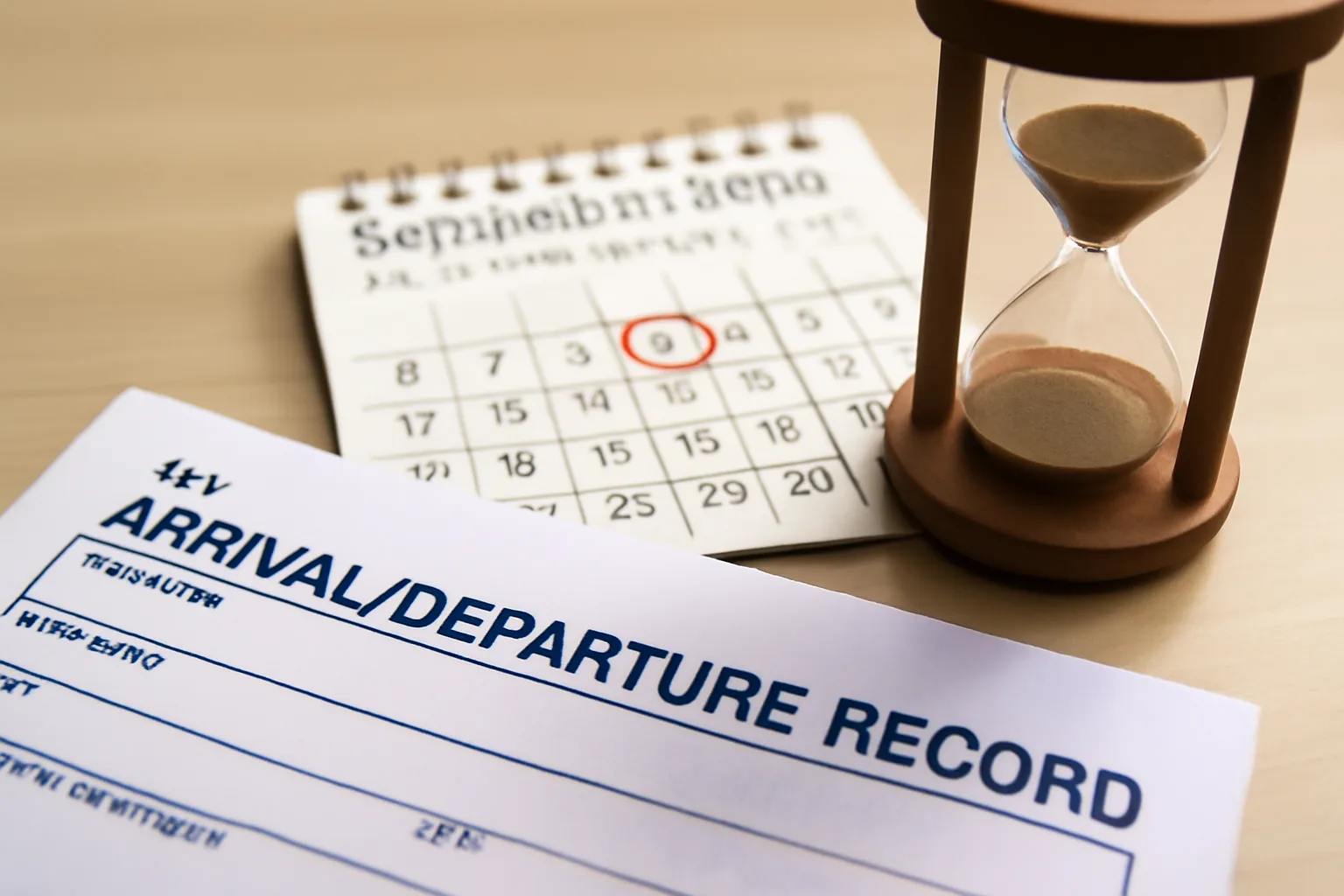
On July 17, 2026, the U.S. Department of Homeland Security (DHS) announced a final rule eliminating "Duration of Status" (D/S) for holders of F-1 (student), J-1 (academic exchange), and I (foreign media representative) visas, effective September 15, 2026.
Previously, F-1 and J-1 students were permitted to remain in the U.S. for the duration of their studies—meaning they could remain lawfully as long as they maintained their status and complied with program requirements. There was no fixed expiration date on their I-94 records.
Going forward, students entering or re-entering the U.S. on or after September 15, 2026, will receive a specific expiration date on their I-94, tied to the end date of their program or four years, whichever is shorter.
With an average of 2 million entries per year (including approximately 1.2 million F-1 students), the impact will be substantial—affecting not only students but also universities and academic exchange program administrators.
Specific Changes
Duration of Stay
F-1 and J-1 students, along with their dependents, will now be admitted until the program completion date listed on Form I-20 or DS-2019, rather than Duration of Status. Regardless of program length, admission is generally capped at a maximum of four years.
If a program extends beyond four years—such as a five or six-year doctorate—students must file an I-94 extension application before their current I-94 expires. Under the previous system, this was not required.
Grace Period
Students will be admitted for the duration of their academic or exchange program, up to a maximum of four years, followed by a 30-day grace period.
Previously, F-1 students had a 60-day grace period after graduation or completion of OPT to prepare to depart the U.S. or transition to another visa. This is now reduced to 30 days.
Impact on OPT
OPT applications must be filed while the student's authorized period of stay remains valid. Under the new rules, if a student's I-94 expires 30 days after graduation and USCIS processing time exceeds that window, the student could lose lawful status before receiving an approval decision.
This is a real risk: USCIS typically processes OPT applications in 90–120 days. If you file on time but your I-94 expires before approval, you may fall into overstay status.
Who Is Affected
This regulation has retroactive application, meaning those already admitted with Duration of Status will receive a "transition period" after the rule takes effect.
If you are currently in the U.S. on an F-1 or J-1 visa before September 15, 2026, you are not immediately required to change your I-94. However, you will receive a new expiration date under the transition rules. USCIS and SEVP are still providing detailed guidance on implementation.
If you enter or re-enter the U.S. on or after September 15, 2026, the new rules apply immediately.
Why DHS Is Doing This
DHS first proposed eliminating Duration of Status on August 27, 2025, arguing that the current framework allows foreign nationals to remain in the U.S. for extended periods without adequate government oversight. According to DHS, replacing D/S with fixed expiration dates will strengthen monitoring of F, J, and I visa holders, improve program integrity, and address national security concerns related to unlimited admission periods.
In other words: the government wants tighter control over how long people can stay.
What You Should Do Now
If you are planning to study in the U.S. or are currently in the U.S. on an F-1 or J-1 visa:
- Verify your current I-94 expiration date by visiting i94.cbp.dhs.gov.
- Plan extension applications early if your program extends beyond four years. Do not wait until your expiration date approaches.
- Recalculate your OPT timeline—if you plan to apply for OPT after graduation, file as early as possible within the 90-day window before graduation.
- Meet with your DSO (Designated School Official) at your institution. They will have the most current guidance from SEVP.
- If you plan to transition to another visa category (H-1B, O-1, EB-2 NIW, etc.), begin preparing your application well in advance. A 30-day grace period is insufficient for processing complex cases.
Important Considerations
This regulation does not make studying in the U.S. "impossible," but it removes a safety buffer that international students have relied on for decades.
Previously, if you needed additional time to complete a thesis, find employment, or await H-1B approval, D/S allowed you to remain as long as you maintained valid status. Now you must track hard expiration dates, file extensions on time, and accept the risk that USCIS processing delays could jeopardize your status.
This is one of the most significant changes to the U.S. international student and academic exchange system in decades.
If you are considering studying in the U.S. as part of a longer-term relocation plan, factor in that timelines are now tighter, and you may need to transition to another visa category (such as H-1B or EB-2/EB-3) faster than previously expected. Do not rely on the extension periods that were previously available.