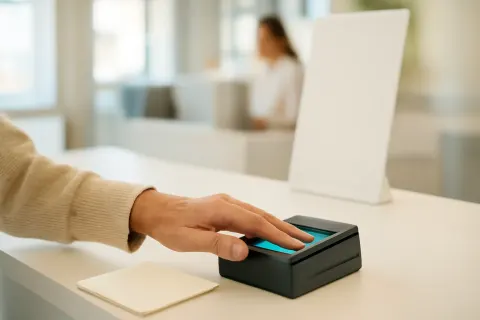
Quick summary: Having a second passport doesn't make opening a foreign bank account much easier. Banks ask where you live, where you pay taxes, and where your money comes from—your passport is just an ID document. Declaring all your nationalities and places of residence truthfully is the only way to keep an account from being closed after a few months.
Imagine someone who just received a Grenada passport, then flies to an Asian country to open an account. They bring their new passport, a savings statement, and a reference letter from their home country bank. The bank employee's first question isn't about the passport—it's: "Where do you actually live, and whose name is on your electricity bill?"
That's something many people aren't told beforehand. To a bank, a second citizenship is just another line of information, not an extra privilege. What matters is where you live, your tax residence, and your money's source—three things your new passport cannot change.
Why a Second Passport Doesn't Automatically Open Bank Doors
Since the OECD's Common Reporting Standard (CRS) became widely enforced, banks in over one hundred jurisdictions must identify an account holder's tax residence and exchange account information with the tax authority there. Citizenship isn't the primary criterion. Where you actually live is.
In 2018, the OECD published a list of citizenship and residency-by-investment programs considered high-risk for CRS evasion, including many Caribbean programs. Since then, compliance departments at many banks have been instructed to ask harder questions when a client presents an investment-based passport while claiming residence in the country that issued it.
The practical result: if you live in Vietnam, hold a Grenada passport, and claim to live in Grenada, the bank will almost certainly dig deeper—and if it discovers the discrepancy, your account may be closed and your information will still be reported to your actual tax authority. We analyzed this in detail in our article on second passports and tax obligations.
What Banks Ask When You Have Two Nationalities
The account-opening questionnaire (KYC) is fairly similar across international banks. For someone with two nationalities, these are the questions most closely scrutinized:
- All current nationalities. You must disclose all of them, including Vietnam. Hiding one nationality is misrepresentation from the start.
- Habitual residence and corroborated address. Utility bills, internet bills, or bank statements sent to that address within the last three months.
- Tax residence and tax ID. Someone tax resident in Vietnam provides their personal tax identification number; from mid-2025, the national ID number can be used in place of the tax ID for individuals, so check with the bank which one they accept.
- Source of wealth and source of funds. Where your assets came from (salary, business, asset sales) and where incoming transfers come from.
- Purpose of the account. School fees for your child, spending while traveling, investing, receiving dividends—each purpose implies a different expected transaction level.
- Anticipated monthly transaction volume. How much money typically moves in and out each month, which countries it comes from and goes to.
Question six sounds harmless but is crucial. If you state a few thousand USD monthly, then transfer in several hundred thousand the next week, your account's monitoring system will flag it, and it may be frozen pending investigation.
Where to Open an Account: Six Common Options
There's no single "best" place for everyone. The right choice depends on what you plan to use the account for. The table below summarizes options our clients typically consider.
| Option | Usually Requires | Suits | Key Limitations |
|---|---|---|---|
| Bank in the citizenship-issuing country (e.g., Grenada) | In-person presence, reference letter, address documentation | Someone wanting financial ties to that jurisdiction | Limited international services, high fees for overseas transfers |
| Bank where you'll be living (UAE, Portugal, Malaysia…) | Residency card, local address | Someone already living there or about to move | Must obtain residency first; very difficult to open remotely |
| International branch of your current Vietnamese bank | Existing customer file, internal reference letter | Long-term customer of that bank | Not all banks provide this for retail clients |
| Private bank (Singapore, Switzerland…) | High minimum deposit, extensive source-of-wealth documentation | Someone with large liquid assets needing investment management | High entry threshold, management fees, due diligence takes weeks |
| Retail bank in financial hub (Singapore, Hong Kong) | Usually residency card or work permit | Someone employed or with a business there | Nearly impossible without local residency |
| Multi-currency fintech provider | ID, address, online verification | Small transactions, receiving international transfers | Not a bank; deposit insurance and limits differ significantly |
Looking at the "Usually Requires" column, you'll notice your second passport barely appears as a deciding factor. It helps if you already have residency rights where you're opening the account, or if it makes traveling there easier for an in-person visit.
For example, if you plan to live in Dubai, your first step should be securing residency; see residency options at UAE. With a residency card in hand, a bank account follows fairly quickly.
Same Person, Different Names on Two Passports: A Small Detail That Freezes Accounts
This detail only stands out to those who've processed many applications. A Vietnamese passport prints the name without diacritics in surname–middle name–given name order. A foreign passport may split "surname" and "given names" differently, or place middle names elsewhere.
When you open an account with one passport but send money from an account registered under your name as it appears on your Vietnamese passport, name-matching systems may flag a mismatch. Your transfer gets held pending clarification—sometimes for days, sometimes weeks.
Prevention is simple: submit both passports when opening the account, ask the bank to note both name formats on file, and keep a brief written explanation, signed by you, stating that both names refer to the same person.
Risks You Should Know
An account can be closed without detailed explanation. Banks have the right to end the relationship if their risk assessment changes. Someone with an investment-based passport, sending funds from exchange-control jurisdictions, or showing unusual large transactions—each adds risk points in the compliance department's eyes.
Money can be frozen during review. When an account is temporarily frozen for verification, you cannot withdraw until the process is complete. If that account is your only place to hold your child's tuition or a rental deposit, your timeline could break.
Misrepresenting your tax residence is legal risk, not just banking risk. A tax residency self-certification form is a signed document. Misrepresenting it can expose you to legal action under the laws of the jurisdiction where you opened the account. On choosing where to declare tax residence when holding foreign documents, see tax residence with foreign documents.
Sending money out of Vietnam must follow legal channels. Transfers into foreign accounts must go through permitted channels for permitted purposes under foreign exchange regulations. We have a separate piece on legally sending investment funds abroad.
Exchange rates and fees erode silently. Every currency conversion and international transfer carries a spread and fees. Many accounts also charge maintenance fees if balances drop below a minimum. Our article foreign exchange risk covers this in depth.
This article reflects practical experience, not tax advice or financial advice. Decisions about structuring your assets should be made with a licensed tax professional in your jurisdiction of residence.
What NOT to Do When Opening an Account
- Don't use a virtual office address or agent address in the passport-issuing country as your residence.
- Don't hide your Vietnam citizenship or where you actually live.
- Don't send large transfers in the first week without notifying your account manager first.
- Don't open multiple accounts across different institutions at once "to be safe"—each account is a file you must maintain.
- Don't put someone else's name on the account, even a family member.
Documents to Prepare in Advance
Having these ready makes an account-opening visit efficient:
- [ ] Vietnam passport and second passport, both valid for at least six more months.
- [ ] National ID card or document showing your personal ID number.
- [ ] Address verification from the last three months (utility bill, internet bill, bank statement).
- [ ] Reference letter from your current bank, in English.
- [ ] Source-of-wealth documentation: business license, financial statements, asset purchase/sale contracts, tax returns.
- [ ] Brief description of account purpose and anticipated monthly transaction volume.
- [ ] Copy of naturalization certificate or residency permit (if applicable) explaining how you obtained the second nationality.
- [ ] Written explanation of any name differences between passports, if applicable.
Before submitting, ask the bank five questions: What is the minimum balance, what are the monthly maintenance fees, do they accept Vietnam tax residents, can you operate the account remotely after opening, and how long does due diligence take.
Next Steps
Start by answering "what is this account for," not "which bank is easiest." If the goal is to prepare for living somewhere specific, secure residency first—our recommendation tool helps you narrow down countries. If you only need to receive and spend foreign currency, an account at the international branch of your current bank often moves faster.
And once you hold a Grenada passport or another Caribbean passport, think of it as a travel tool. Clean financial documentation and honest declarations are what truly open bank doors.