Quick Summary: A strong Schengen visa application from a foreign national is not one with the largest bank balance, but one where every document tells the same story: where you're going, what you'll do, who's paying, and why you'll definitely return. A large sum deposited into savings just days before submitting usually causes more harm than good.
The most common complaint we hear from Schengen visa applicants who were denied is: "I have several billion in savings and still got rejected." It's not unusual. Case officers don't ask if you're wealthy; they ask if you're being truthful about your trip and if you have a reason to come back. Bank balance is just one piece of the puzzle.
This article describes what a strong Schengen visa application looks like from the case officer's perspective: document order, details that make an application credible, and common "application-polishing" habits that are actually red flags. Fee and timeline information below reflects Schengen regulations as of 2026; check your consulate's website before applying.
Which Consulate to Apply At: The Main Destination Rule
The first mistake often happens at the selection stage. Under Schengen visa law, you apply at the consulate of your main destination—where you'll spend the most time or where your trip's primary purpose lies. If you spend equal time in multiple countries, apply at the consulate of your first entry point.
Many applicants choose a consulate rumored to be "easier," then adjust their itinerary on paper to match. Experienced case officers spot this immediately: flight into Paris, seven nights in Paris hotels, but the application submitted at a country visited for only two nights. An inconsistent main destination can result in rejection on jurisdictional grounds alone.
A geography note: the Schengen Area does not align with the European Union. Switzerland, Norway, Iceland, and Liechtenstein are Schengen members but not EU members; Ireland and Cyprus are EU members but have separate visa rules. Use a visa checker tool to verify any country pair.
A Strong Application Tells One Coherent Story
Imagine a case officer reviewing your application in a few minutes. They want to see five answers that align:
| Case Officer's Question | Document That Answers It | Where Applicants Often Diverge |
|---|---|---|
| Where are you going and for how long? | Day-by-day itinerary, return flight bookings, accommodation confirmations | Itinerary says Rome; hotel is booked in Milan |
| What is the purpose of your trip? | Invitation letter (if visiting family or on business), detailed itinerary | Purpose listed as "tourism" but invitation letter is from a business partner |
| Who is paying? | Bank statements of your account, or financial guarantee letter with sponsor's bank statements | Applicant is homemaker with no stated income; unclear who covers expenses |
| Why will you definitely return? | Employment contract, business registration, property deed, child's school documents in home country | Casual leave request with no stated return-to-work date |
| Travel history? | Passport with visa stamps and entry/exit records from previous trips | Old passport left at home as "not relevant" |
A principle we follow: each document should answer at least one question in this table. Documents that answer none should not be submitted.
Proving Financial Capacity: Cash Flow Matters More Than Balance
How Many Months of Bank Statements?
Most consulates request statements covering three to six recent months. Case officers don't just look at the final balance—they examine the rhythm of deposits and withdrawals: regular salary deposits, normal living expenses, a balance sufficient for your trip without depleting the account.
Why Does a Newly Opened Savings Account Look Suspicious?
In many countries, applicants open large savings accounts—often with borrowed money—just before submitting. Case officers see the opening date and understand. A large sum appearing suddenly without documented source raises suspicion about your entire financial picture.
If you genuinely received funds from selling property or dividend payments, include supporting documents: asset sale contracts, profit-sharing statements. This mindset parallels residency applications requiring proof of funds—just less rigorous. We detail this in our article on rejected applications due to fund source issues.
How Do Self-Employed Business Owners Prove Income?
This is the most challenging group because actual income often doesn't flow through a bank account. Submit your business registration certificate, recent tax payment records (whether fixed or declared), business account statements, and a brief explanatory letter describing your operation's scale. A truthful letter with figures matching your tax filings is far more persuasive than a hastily opened savings account.
Ties to Your Home Country: The Section Most Applicants Weaken
The case officer must believe you will return. For mid-career and retired applicants with assets, ties are often very strong but poorly presented. Documents showing ties include:
- Employment contract with a leave request specifying your return-to-work date, signed and stamped by your employer.
- Business registration certificate with recent tax filings or financial reports if you own a business.
- Property deed or land-use certificate in your name.
- School enrollment letter for a child remaining in your home country, if applicable.
- For retirees: retirement decision paperwork, pension statement, or bank records showing regular pension deposits.
Translations of these documents should be done by a reputable translation service; ensure names of persons and companies are consistent across all documents. Our article on translation, notarization, and consular legalization provides guidance.
Travel History and Building Passport Credibility Over Time
Foreign passports requiring visas for most European destinations benefit from strong travel history. An applicant who has visited Japan, South Korea, and Australia and returned on time presents a different profile than a first-time international traveler.
Submit copies of visa pages and entry/exit stamps from your previous passport. A prior Schengen visa used correctly and within its validity period is a significant advantage and may lead to a longer visa on your next application. Conversely, any overstay—even by one day—is recorded. Our article on the 90/180 Schengen day rule explains how to avoid exceeding your allowance.
Fees, Processing Time, and Application Center Procedures
Under Schengen regulations, the standard visa fee for adults is 90 euros as of June 2024. Children aged 6–12 pay a reduced rate; children under 6 are exempt. Application centers charge additional service fees. You may apply as early as six months before your departure and no later than 15 days before; standard processing takes 15 calendar days but may be extended for additional checks.
Travel insurance must cover a minimum of 30,000 euros for medical expenses and repatriation, valid across the entire Schengen Area for your entire trip. We don't recommend specific insurance products; read the exclusions carefully.
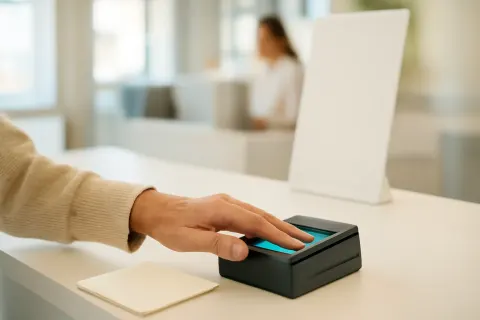
On your first application, you'll provide fingerprints at the application center. During peak season—March through August—appointment slots can be booked weeks in advance, so reserve early.
Checklist for a Strong Schengen Application
- [ ] Applying at the correct consulate for your main destination
- [ ] Itinerary aligns with flight bookings and accommodation
- [ ] Bank statements covering three to six months with no unexplained large deposits
- [ ] Employment or business documents showing return-to-work date
- [ ] Property deeds, family documents, or dependent records showing ties to home country
- [ ] Previous passport with visa stamps and entry/exit records
- [ ] Travel insurance covering minimum 30,000 euros across Schengen Area
- [ ] Consistent translations with matching names across all documents
- [ ] Brief explanatory letter if anything is unusual (self-employment, large transfer, financial sponsor)
The Downside: Strong Applications Still Get Rejected
A Schengen visa decision involves case officer judgment, so even a strong application can be rejected. Each consulate operates with different risk tolerance depending on circumstances, and rejection rates for certain nationalities at some locations are not low. If rejected, you'll receive a letter outlining reasons and information on how to appeal under that country's procedures.
One important point: your rejection is recorded in the Schengen visa database that all consulates access. Reapplying immediately at a different consulate with the same documents rarely succeeds; address the stated reasons for rejection first.
If your family travels to Europe frequently for work or because your child studies there, the time and cost of each application are real. This is when families consider a second passport offering visa-free access to Schengen—but it's a major investment decision and should not be made after a single rejection. See our article on how many countries two passports unlock for more perspective.
Next Steps
Before gathering documents, write out the five questions in the table above in two or three sentences each. If you struggle answering any question, that's where your application needs strengthening—typically in financial source or ties to home country. Then schedule your appointment and apply as early as possible within the six-month window if traveling during peak season.
This article is general information, not legal advice or insurance guidance for specific cases.