Overview
Namibia holds a rank-56 passport reaching 72 destinations without a prior visa. Its population is around 2.6 million, the capital is Windhoek, and the currency is the Namibian dollar (NAD), pegged to the South African rand.
Namibia has no citizenship-by-investment programme.
📌 But Namibia holds a fact about documents that almost nowhere else does.
🔴 When the United Nations issued travel documents
This library has repeatedly recorded who is issued documents and who is not — Palestine (documents recognised unevenly), Kosovo (a passport refused by some countries), Yemen (multiple authorities issuing).
🔴 Namibia is quite different: a people whose documents were issued by the UNITED NATIONS itself, because no lawful state existed to do it.
The background, stated as facts:
- 📌 The territory was a German colony from the late nineteenth century, then after the First World War was placed under South African administration by mandate.
- 🔴 The United Nations terminated that mandate in 1966 and declared continued South African administration to be without legal basis. The International Court of Justice confirmed this in a 1971 advisory opinion. South Africa nonetheless continued administering until 1990.
- 📌 During that period the United Nations created the UN Council for Namibia, a body given administrative responsibility for the territory — and 🔴 that body issued travel documents to Namibians, which many countries accepted.
📌 Why this is almost unique: travel documents are in principle issued by a state. Here, an international organisation assumed that role for a people without an independent state — and other countries accepted it.
🔴 The lesson connects directly to Kosovo: there I concluded that a document's value sits with the receiving country, not the issuing one. 📌 Namibia is the strongest evidence for that: a document has value not because of who issued it, but because enough countries agreed to accept it.
Namibia became independent on 21 March 1990 — among the last African countries to do so. 📌 Walvis Bay, its most important port area, was transferred in 1994.
🔴 1904–1908 — and recognition after more than a century
📌 This section is obligatory, and this site states it at the level of facts.
- 🔴 Between 1904 and 1908, German colonial forces conducted campaigns against the Herero and Nama communities, with death tolls very large relative to those communities' populations. Many researchers describe this as the first genocide of the twentieth century.
- 📌 In 2021 Germany formally recognised these events as genocide and reached an agreement with Namibia on reconciliation with financial commitments for development.
- 🔴 Some representatives of the Herero and Nama communities opposed that agreement, on the grounds that they were not fully party to the negotiations and that the form of reparation was inappropriate. The matter remains contested.
📌 For this site's subject: this is another form of the question the Haiti article raises — who negotiates on behalf of a community, and whether an agreement between two states can resolve a specific community's claim.
✅ Community conservation — what Namibia achieved
📌 Namibia's constitution contains provisions on environmental protection and sustainable use of natural resources — 📌 among the few constitutions in the world that do, in the same group as Bhutan.
✅ From that Namibia built a system of "communal conservancies": local communities are granted rights to manage wildlife on their land and receive tourism revenue directly.
📌 The documented result: populations of several large species — including black rhino and desert lions — have recovered, and 🔴 Namibia is among the few countries with an increasing wild black rhino population.
📌 The underlying principle deserves recording: when wildlife generates income for the people living alongside it, protecting it becomes an interest rather than a burden. 🔴 The model remains debated — over benefit sharing and over conflict between animals and farming — but it is among the most studied and replicated approaches in Africa.
Geography & economy
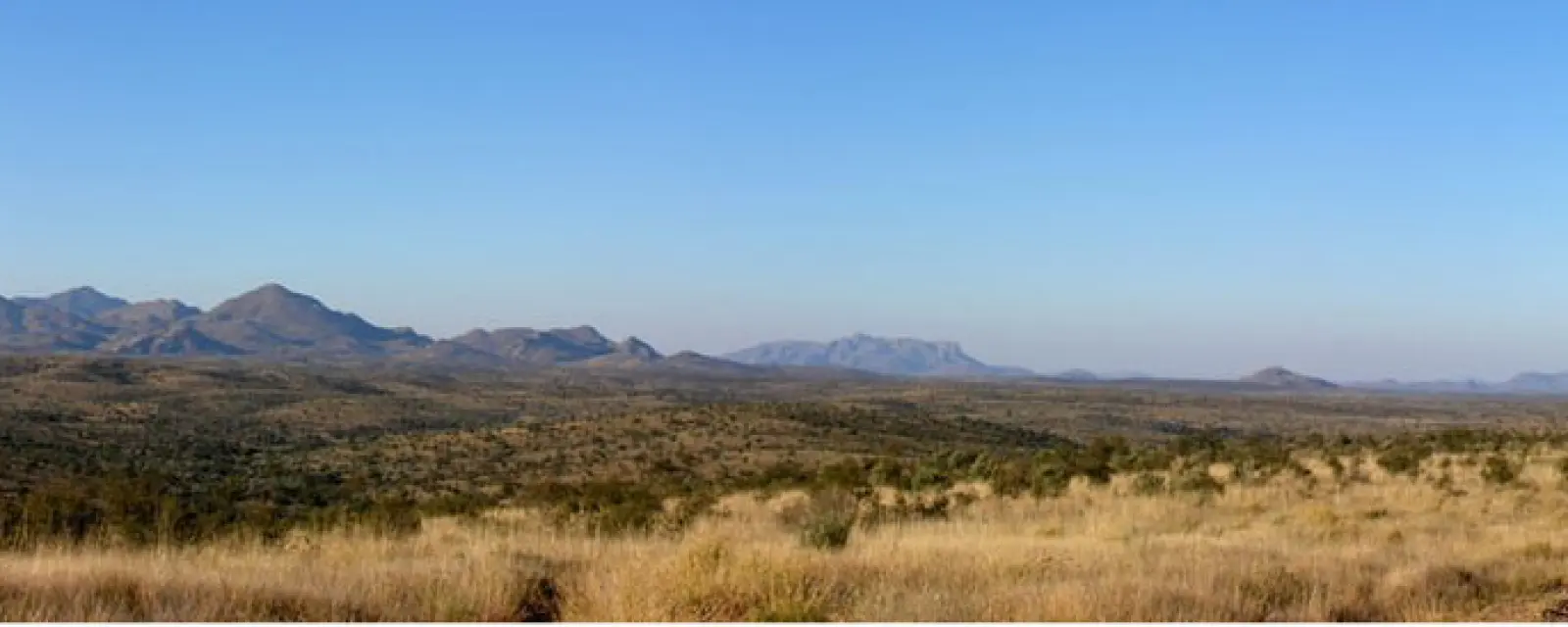
📌 Namibia has the second-lowest population density in the world, after Mongolia. 2.6 million people across an area larger than several European countries combined.
📌 The Namib desert runs along the coast and is held to be the oldest desert in the world. Sossusvlei, with the world's tallest red dunes, is the emblematic image. 🔴 The Skeleton Coast in the north — where desert fog meets the Atlantic — is among the most dangerous coastlines for shipping.
Economy: diamonds, uranium — 📌 Namibia is among the world's largest uranium producers — alongside marine fisheries, livestock and tourism.
🔴 Disadvantages to state: Namibia's income inequality is among the highest in the world, a direct legacy of the pre-1990 economic structure; unemployment is high; and 🔴 water scarcity is structural — Namibia is the driest country in sub-Saharan Africa.
As always: tax obligations here do not replace those in your country of residence.
Immigration routes & citizenship
Categories existing in law include work permits, residence tied to investment, residence through marriage, and a retirement category. 📌 Demand for specialists concentrates in mining, energy, tourism and healthcare.
Citizenship is by descent and by birth under conditions. 🔴 Dual citizenship rules must be verified directly, as this is subject to specific provisions and has been domestically debated.
🔴 If anyone offers you "Namibian citizenship by investment", stop. No such programme exists.
Who should consider Namibia
It may fit if: you work in mining, uranium or renewable energy — 📌 Namibia features prominently in green hydrogen projects given abundant sun, wind and open land — or in high-end tourism and conservation.
Not a fit if: 🔴 you are offered "Namibian citizenship by investment"; you are targeting a large domestic market; or you need abundant water for production.
The point to carry away: before 1990, Namibians travelled internationally on documents issued by an international organisation, not by a state.
📌 That demonstrates more clearly than any other example in this library that a travel document has no intrinsic value. 🔴 It is worth exactly as many countries as agree to accept it — and in one rare case, enough countries accepted a document issued by no state at all.