Overview
Haiti holds a rank-77 passport reaching 49 destinations without a prior visa. Its population is around 11.7 million, the capital is Port-au-Prince, and the currency is the gourde (HTG).
Haiti has no citizenship-by-investment programme, but permits dual citizenship following the 2011 constitutional amendment.
🔴 Most countries currently advise AGAINST travel to Haiti, given the security situation. Check what is in force. This article is not written as a travel or investment guide.
📌 It is written because Haiti contains a fact no other country in the world does, and it sits at the exact centre of this site's subject.
🔴 The price paid for recognition
The Kosovo article immediately preceding concluded with a principle: a passport's value is the sum of decisions other countries make about whether to recognise it.
🔴 Haiti is the most extreme case of that principle ever recorded: a country that had to PAY to be recognised.
The events, stated as facts:
- 📌 In 1804 Haiti declared independence following an uprising of enslaved people — becoming the second independent state in the Americas after the United States, and the first republic in the world founded by formerly enslaved Black people.
- 🔴 But almost no country recognised Haiti for decades. For the powers of the time — most still maintaining slavery — a state born of a successful slave uprising was something they did not wish to acknowledge.
- 🔴 In 1825, France sent a fleet to Haitian waters and set a condition: France would recognise Haiti's independence if Haiti paid an indemnity to French plantation owners for "lost property" — property counted as including the very people who had been enslaved.
- 📌 The initial sum was 150 million gold francs, later reduced to 90 million. To pay it, Haiti had to borrow from French banks, creating a debt layered on top of the indemnity.
- 🔴 Haiti paid this over roughly 122 years, into the mid-twentieth century.
📌 Economic studies have attempted to quantify the effect, and estimates of the figure vary, but all reach the same conclusion: those payments extracted a very large share of Haiti's resources from the country for over a century, precisely when a new state needed capital to build schools, roads and institutions.
📌 In 2025, marking 200 years since 1825, France announced a joint commission with Haiti to study this historical period. 🔴 This is an ongoing development; those interested should follow official sources rather than an article.
📌 Why this belongs on this site
🔴 This whole site is about being recognised: which passport is accepted, which document is stamped, which nationality is acknowledged.
This library has recorded several forms of the recognition question:
Kosovo — partial recognition, with the passport bearing the consequences. Palestine — uneven recognition between countries. Tonga — a document class losing value as countries tightened. Haiti — 🔴 recognition PRICED and sold, under the guns of a fleet.
📌 Nothing like it has recurred anywhere else. And for readers of this site it is the strongest possible reminder of one thing: recognition is not an administrative technicality — it is a power relationship, and whoever holds the decision sets the terms.
📌 1804 — what Haiti achieved that nowhere else did
The scale needs stating, because the section above means nothing without understanding what Haiti did.
- 📌 The French colony of Saint-Domingue was then among the most profitable colonies in the world, producing a very large share of Europe's sugar and coffee, entirely on enslaved labour.
- 🔴 From 1791, enslaved people rose in revolt, and the uprising ran more than a decade, defeating successive military forces sent against it.
- 📌 In 1804 independence was declared.
🔴 This is the only large-scale slave uprising in history to have founded an independent state.
📌 Haiti's early constitutions contained notable provisions on nationality — including the permanent abolition of slavery on its territory, and provisions opening Haitian nationality to people from enslaved groups who came to settle. For a site about nationality, this is among the earliest instances of citizenship being used deliberately as an instrument of liberation.
🔴 Statelessness — and it happened next door
This is the second important section, and it is the piece this library's sequence of thirteen cases lacked: one in the Americas.
The events, stated as facts:
- 🔴 In 2013 the Constitutional Court of the Dominican Republic issued a ruling reinterpreting the rules on citizenship by birth, applied retroactively to 1929, excluding children of people residing without valid documentation.
- 🔴 The consequence: tens of thousands to hundreds of thousands of people born and raised in the Dominican Republic — mostly of Haitian descent, many in the second or third generation — were placed in a position of holding no country's nationality.
- 📌 In 2014 the Dominican Republic enacted a law intended as a partial remedy, creating routes for certain groups to register or naturalise.
- 🔴 International organisations and regional human rights bodies have recorded that the remedy resolved only part of the problem, with a substantial number of people remaining in an unresolved position.
📌 Why this piece belongs in the sequence:
Syria — a census creating statelessness. Myanmar — a list in a statute. Lebanon — political balance. Haiti / Dominican Republic — 🔴 a court ruling applied retroactively across eighty-four years.
🔴 This is the fourteenth mechanism, and it differs from all the others: not executive, not legislative, but JUDICIAL — and it removed nationality from people who had held it all their lives, by reinterpreting an old provision.
📌 The transferable lesson: when assessing how secure a nationality is, do not look only at the law in force. Ask: how long has this provision been interpreted consistently, and is there any precedent for retroactive reinterpretation? This is a class of risk no ranking measures.
Geography & natural disasters
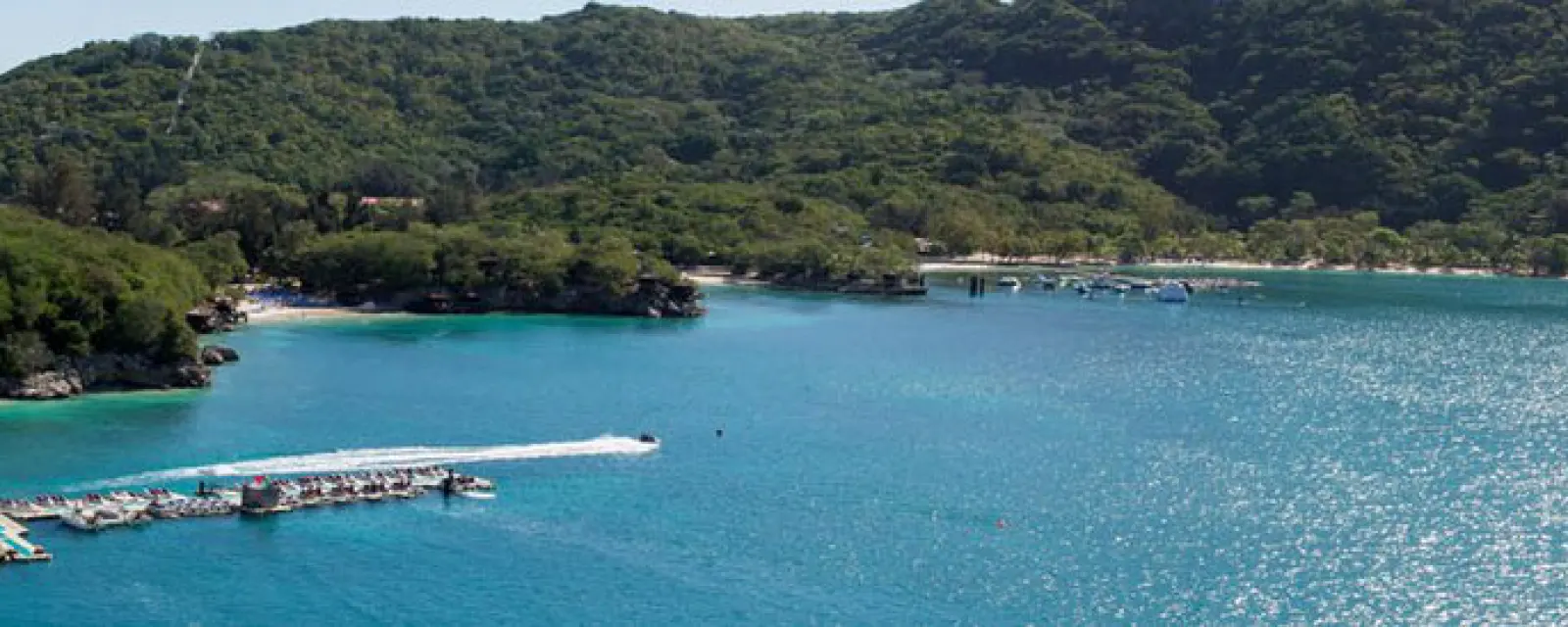
Haiti occupies the western portion of the island of Hispaniola, shared with the Dominican Republic. 📌 It is one of few islands in the world divided between two sovereign states.
The terrain is largely mountainous — the country's name in the Indigenous Taíno language means something close to "mountainous land".
🔴 Haiti sits on a tectonic fault zone and within the Atlantic hurricane belt — two compounding risks:
- 🔴 The 2010 earthquake near Port-au-Prince was among the deadliest natural disasters in modern history, with death toll estimates varying widely between sources but running into the hundreds of thousands. The capital was extensively destroyed.
- 🔴 A cholera outbreak followed the earthquake and ran for years with a very large death toll. 📌 The United Nations subsequently acknowledged its role in the episode and apologised.
- 🔴 A further major earthquake struck in 2021 in the south.
- Tropical cyclones have caused repeated damage.
🔴 Deforestation is the most serious environmental problem, with forest cover falling sharply over decades through charcoal demand and agricultural expansion. 📌 The border between Haiti and the Dominican Republic is visible from satellite imagery because of the difference in forest cover on either side — an image frequently cited when discussing the effects of environmental policy.
🔴 The direct consequence: forest loss increases landslides and flash flooding, making every storm more damaging than it would otherwise be.
🔴 The present situation — stated at the level of facts
📌 This site states events and delivers no political judgment.
- 🔴 From 2021 to the present, Haiti has experienced a severe security and institutional crisis, with armed groups controlling large areas of Port-au-Prince and surrounding regions.
- 🔴 Hundreds of thousands of people have been displaced within the country, and UN agencies have documented severe food insecurity.
- 📌 From 2024, a Kenyan-led multinational security support mission has been deployed under UN Security Council authorisation.
- 🔴 The situation remains ongoing. Any information on procedures, documents and travel must be verified from current official sources.
🔴 For those with relatives in Haiti: civil documentation and passport procedures have been disrupted in many places, and enquiries should be made directly with the Haitian mission in your country of residence.
📌 The diaspora — and a relationship across the French-speaking Caribbean
📌 Haiti's community abroad is very large, concentrated in the United States, the Dominican Republic, Canada — particularly Quebec — France, Chile, Brazil, the Bahamas and other Caribbean countries.
🔴 Remittances form a very large share of Haiti's economy — among the most remittance-dependent in the world.
📌 This library has recorded the large-diaspora pattern in Armenia, Lebanon, Guyana, Suriname and Kosovo. Haiti belongs to the same group, with one difference: much of the recent outflow has occurred under emergency conditions rather than by plan.
✅ The 2011 constitutional amendment permitted dual citizenship — it was not permitted before. 📌 The change was driven by the scale of the community abroad, the same logic the Armenia article describes: nationality law written to match the real population.
🔴 But one limit is worth knowing: Haiti's constitution restricts holders of another nationality from certain public offices. 📌 This is the same class of restriction this library recorded in Guyana — where a dual-national MP once triggered a political crisis — and in Kyrgyzstan. "Permits dual citizenship" almost never means "with no restrictions".
Culture & language
📌 Haiti has two official languages: Haitian Creole and French.
🔴 An important point to state correctly: Haitian Creole is spoken by essentially the entire population, while French is used fluently by a far smaller proportion. 📌 Haitian Creole was only recognised as an official language in the 1987 constitution — before that, although it was the mother tongue of the whole country, it held no official status.
🔴 This is a fact worth reflecting on for this site's subject: for nearly two centuries, the language of the whole population was not the language of documents, courts and schools — and that in itself was a barrier to accessing rights.
📌 On religion: Christianity is the majority religion. 📌 Vodou has been officially recognised as a religion in Haiti since 2003. 🔴 This needs stating clearly to correct a very widespread misconception: it is an organised belief system formed from the combination of West African religious traditions and Catholicism, with its own liturgy, structure and ethics. The image Western cinema created of Vodou is a distortion, and it has caused real prejudice against Haitians for decades.
📌 Haitian art — particularly painting and sculpture from recycled materials — holds its own place in the international art market. 📌 The Citadelle Laferrière, a fortress built after independence against a possible French return, is a UNESCO World Heritage site and among the largest military structures in the Americas.
Economy
🔴 The context must come first: Haiti has the lowest income per head in the Western Hemisphere, and conditions have deteriorated severely since 2021.
Revenue sources:
1. Remittances. 🔴 The largest by far, exceeding total export earnings.
2. Garments. 📌 The principal export sector, chiefly to the United States under preferential tariff arrangements for Haiti. 🔴 The sector has been heavily affected by the security situation.
3. Agriculture. Mangoes, coffee, cocoa and vetiver — 📌 Haiti is among the world's largest producers of vetiver essential oil, used in fine perfumery. This is little known.
🔴 Disadvantages: very limited power and transport infrastructure; security conditions disrupting supply chains and ports; and most food must be imported, leaving prices sensitive to external shocks.
This site gives no investment advice, and in the present context there is no recommendation to give.
Immigration routes
No investment programme exchanging for citizenship, and no practical residence route for foreigners at present.
🔴 Stated directly: Haiti is not a destination to consider for citizenship, residence, investment or relocation at present.
Citizenship
- ✅ Dual citizenship permitted since the 2011 amendment, with restrictions on certain public offices.
- Chiefly by descent.
- 📌 Arrangements exist for people of Haitian origin abroad — those affected should enquire directly with a Haitian mission.
🔴 If anyone offers you "Haitian citizenship" or "a Haitian passport" by investment, stop immediately. No such programme exists. 🔴 With administrative systems disrupted, the risk of invalid documents is real and constitutes a serious legal problem.
Who should read this article
This article is not written for investment or migration purposes. There is nothing here for those, and this site says so plainly.
It is written for three groups:
- 🔴 Those wanting to understand what international recognition actually is. The Kosovo article shows recognition determining what a passport can do. Haiti shows recognition once being priced in money, and a country paying that price for 122 years.
- 🔴 Those wanting to understand one more mechanism producing statelessness: not a statute, not a census, but a court ruling reinterpreting an old provision and applying it retroactively.
- Those with Haitian family needing a frame of reference on documents and nationality.
The point to carry away:
📌 In 1804 Haiti achieved what nobody had: an uprising of enslaved people founding a nation. 🔴 In 1825 the world set a price for acknowledging it.
🔴 This entire site rests on the assumption that a nationality is something with a price — people pay for investment programmes, pay filing fees, pay lawyers. Haiti is a reminder that there was once a time when the very EXISTENCE of a nation was priced, and those paying were not buying anything at all — they were paying to be acknowledged as already free.