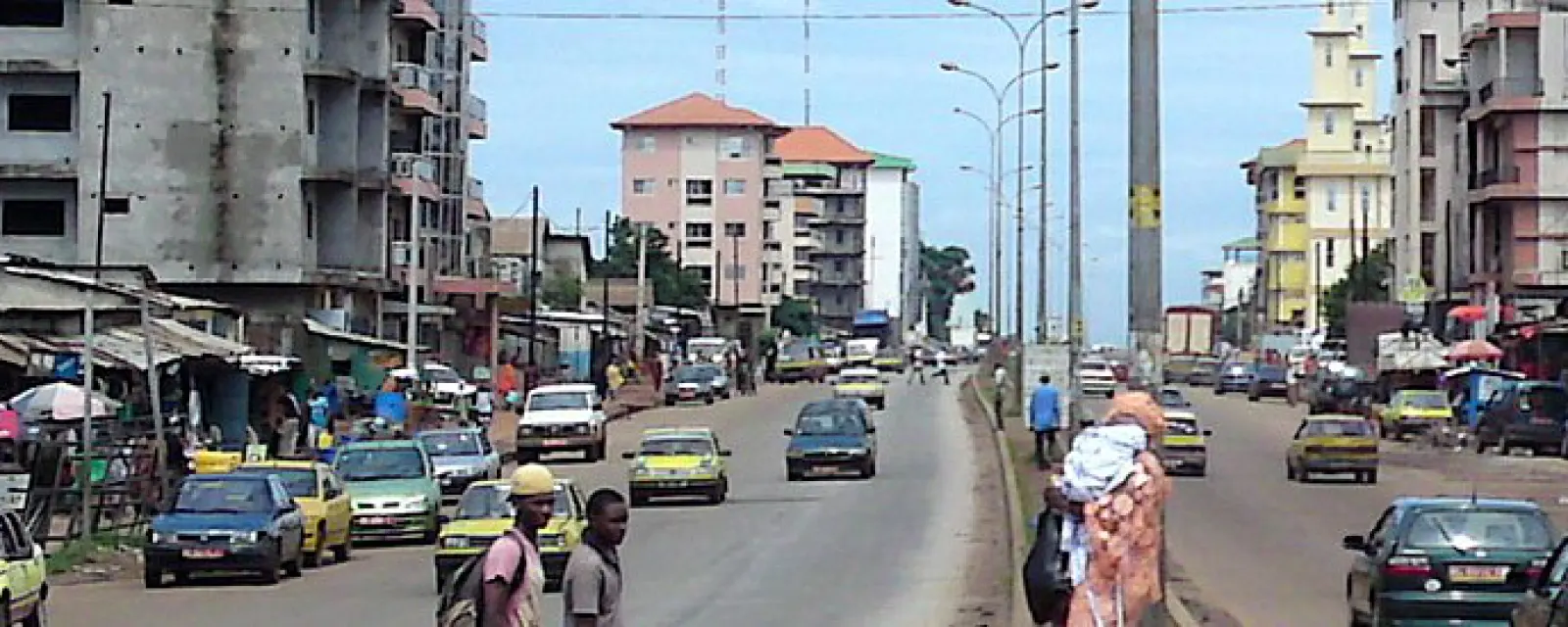
Overview
Guinea holds a rank-72 passport reaching 55 destinations without a prior visa. Its population is around 14.8 million, the capital is Conakry, and the currency is the Guinean franc (GNF) — 📌 one of few West African countries NOT using the CFA franc.
Guinea has no citizenship-by-investment programme.
📌 1958 — the only colony to vote no
The facts:
- 📌 In 1958 France held referendums in its African colonies: join a French-led community, or take immediate independence.
- 🔴 Guinea was the ONLY colony to vote NO. ✅ It became independent that same year.
- 🔴 France withdrew very rapidly afterwards, and the withdrawal is documented as taking away almost all administrative personnel, equipment, records and financial support. 🔴 Guinea began its independence with nearly nothing in terms of state machinery.
- 📌 Guinea also left the CFA franc zone and issued its own currency — 🔴 standing outside a system most of the region remains in today.
✅ Why this is worth reading here
📌 This whole site is about CHOOSING a nationality, a status, a position. ✅ Guinea offers an extreme example of choosing IMMEDIATE SOVEREIGNTY over an arranged transition — and the price attached.
🔴 Three conclusions, all usable beyond Guinea:
One — legal independence and operational independence are different things. 📌 Guinea held full sovereignty from 1958 but took a very long time to rebuild administrative capacity. ✅ Exactly what the South Sudan article records in another form: a new state needs a REGISTER and machinery, and neither arrives with the flag.
Two — leaving a monetary system is a very large and near-irreversible decision. 📌 The Côte d'Ivoire article sets out the CFA trade-off: exchange rate stability for no independent monetary policy. ✅ Guinea chose the other side — autonomy with volatility. 🔴 Sixty years on, both choices are still debated regionally, with no clear winner.
Three — and this is what I want to say to readers weighing a nationality: ✅ a "clean break" sounds decisive and appealing, but its costs usually arrive at once and persist. 📌 An "arranged transition" sounds less bold and is usually far cheaper.
🔴 Applied practically: 📌 if you are considering renouncing a nationality to naturalise somewhere, do not act on the appeal of decisiveness. ✅ Sequence it: secure the new status FIRST, confirm every retained right, and only then take the irreversible step. 🔴 Guinea had no such option because it was a referendum; you do.
📌 Bauxite — the world's largest reserves
📌 Guinea holds the world's largest proven bauxite reserves — 🔴 bauxite is the raw material for aluminium, and aluminium is in nearly everything: aircraft, vehicles, electronics casings, packaging.
🔴 But this is a textbook case of RAW EXPORT: 🔴 most bauxite leaves as raw ore, while refining into alumina and then smelting into aluminium — where most of the value is created — happens elsewhere.
📌 The Gabon article records the remedy: ban raw exports to force domestic processing. 🔴 With aluminium it is much harder, because smelting requires enormous quantities of cheap ELECTRICITY — 📌 exactly what Guinea lacks, despite significant hydropower potential.
✅ The usable point: 📌 "moving up the value chain" is not only a policy decision — it has physical preconditions. 🔴 Guinea does not lack will; it lacks power. ✅ For operators, that is the question to ask before any processing project anywhere: is the energy infrastructure here sufficient for the step I intend.
📌 Beyond bauxite, Guinea holds very high-grade iron ore at Simandou, 🔴 one of the world's largest undeveloped iron deposits, with a very large associated infrastructure project.
Geography & economy
Guinea borders Guinea-Bissau, Senegal, Mali, Côte d'Ivoire, Liberia and Sierra Leone, with an Atlantic coast.
📌 Guinea is called "West Africa's water tower" — 🔴 the Niger, Senegal and Gambia rivers all rise in Guinea's Fouta Djallon highlands. ✅ Meaning the drinking and irrigation water of several neighbours begins here.
📌 This is the seventh water variant in this library — 🔴 and the case of one country sitting upstream of THREE rivers at once.
Economy: bauxite, gold, diamonds, iron ore (under development), agriculture.
🔴 Disadvantages: 🔴 severe power shortfalls; 🔴 low income per head despite large resources; 🔴 several periods of political instability; and 🔴 lasting consequences of the mid-2010s Ebola epidemic.
As always: tax obligations here do not replace those in your country of residence.
Immigration routes & citizenship
Categories existing in law include contract-linked work permits and residence tied to registered business activity. 📌 Guinea belongs to ECOWAS.
📌 On dual citizenship: check the current statute.
🔴 If anyone offers you "Guinean citizenship by investment", stop. No such programme exists.
Who should consider Guinea
It may fit if: you work in bauxite or iron ore mining, mining equipment, port and rail infrastructure, or hydropower — 🔴 with trusted local partners. 🔴 French is needed.
Not a fit if: 🔴 you are offered "Guinean citizenship by investment"; you need reliable power; or you need a predictable institutional environment.
The point to carry away: ✅ Guinea offers two things.
📌 One — a "clean break" is a decision with a price, and the price arrives at once. ✅ For you the lesson is concrete: do not renounce an existing nationality before the new status is firmly in hand and every retained right is confirmed in writing.
📌 Two — "moving up the value chain" has physical preconditions, not just political will. 🔴 Guinea holds the world's largest bauxite reserves and still exports raw ore, because smelting needs power it does not yet have. ✅ Before any processing project anywhere, ask about electricity before you ask about tax.