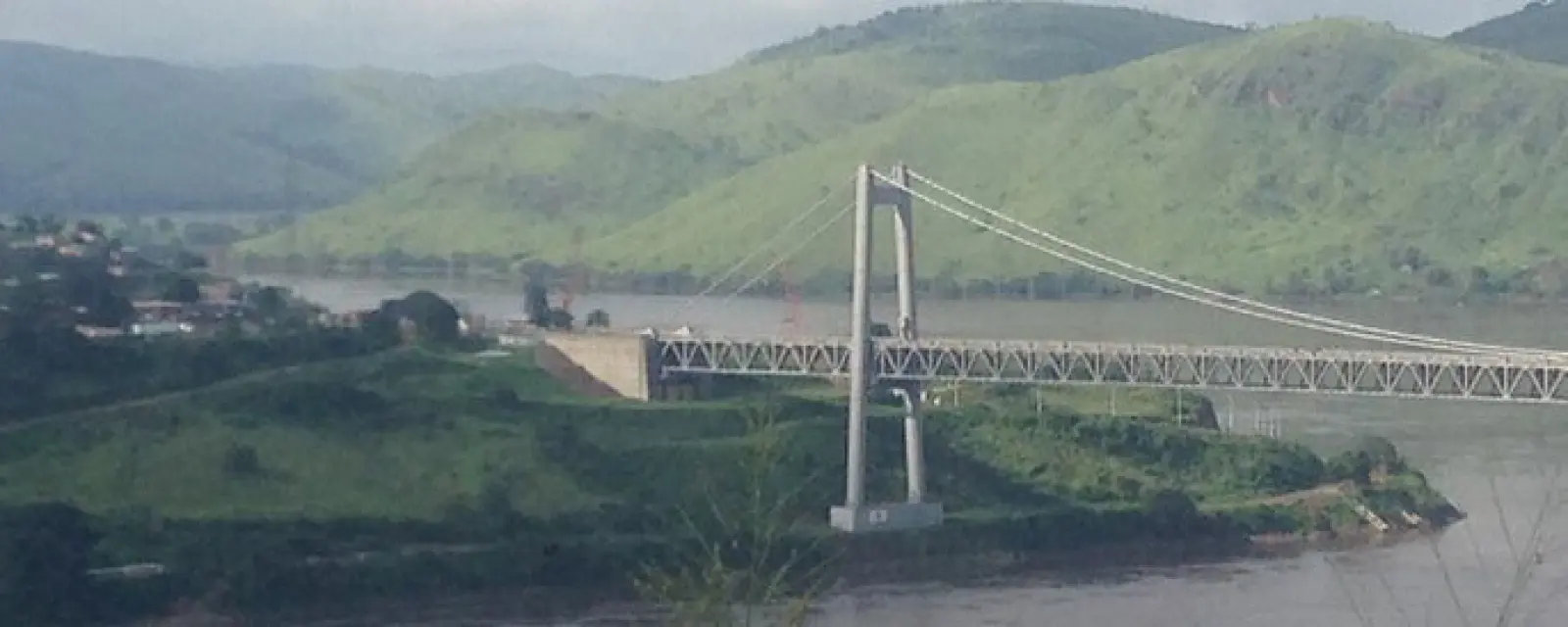
Overview
The DR Congo holds a rank-83 passport reaching 45 destinations without a prior visa. Its population is around 112 million — 📌 Africa's fourth largest — the capital is Kinshasa, and the currency is the Congolese franc (CDF).
📌 It is Africa's second-largest country by area, and 📌 Kinshasa is among the world's largest French-speaking cities.
The DR Congo has no citizenship-by-investment programme, and 🔴 bans dual citizenship outright.
🔴 First — do not confuse the two countries with the same name
📌 There are TWO Congos, adjacent, their capitals facing each other across a river:
| Capital | Population | Note | |
|---|---|---|---|
| DR Congo (this article) | Kinshasa | ~112 million | 🔴 far larger |
| Republic of the Congo | Brazzaville | ~6 million | a separate country |
🔴 Kinshasa and Brazzaville are the world's closest pair of capitals of two different countries — 📌 separated only by the Congo River.
✅ This library already flags a similar confusion: 🔴 the Dominican Republic ≠ Dominica. 📌 Confusing the two Congos in a contract or a visa file is a real error, and nobody will correct it for you.
🔴 Banning dual citizenship — and the cost to a very large diaspora
The rules, stated as facts:
- 🔴 The law provides that Congolese nationality is SINGLE and EXCLUSIVE. 🔴 Citizens acquiring another nationality lose Congolese nationality; those naturalising must renounce their prior one.
- 📌 Relaxing this has been a domestic political debate for years — 🔴 without adoption.
🔴 The consequences are concrete, because the diaspora is very large (Belgium, France, South Africa, the United States, Canada):
- 🔴 A Congolese naturalising in Belgium or France in principle loses Congolese nationality — losing land ownership rights as a citizen, the right to stand for office, and needing a visa to visit home.
- 🔴 Remittances still flow, but INVESTMENT does not, because those abroad no longer hold citizen status to hold assets on that basis.
📌 In this library's six-model dual citizenship table: ✅ the DR Congo sits in the OUTRIGHT PROHIBITION group with Kazakhstan and India.
🔴 But one difference deserves recording: ✅ India bans dual nationality yet created the OCI card to keep ties with those who left; Nepal has NRN; Pakistan has POC; Ethiopia has its own card. 🔴 The DR Congo bans it with NO substitute mechanism at all.
📌 The concrete lesson: ✅ banning dual citizenship is not the problem in itself — the problem is banning it without building another route. 🔴 Those four countries retain capital and expertise from their diasporas; a country with no mechanism loses both.
🔴 For Vietnamese readers: if you do business here, do not plan around naturalisation. ✅ Establish your company's legal status and asset ownership rights as a foreign investor, because that is the route that actually exists.
📌 Cobalt and coltan — supplying the world without capturing the value
📌 The DR Congo supplies most of the world's cobalt — 🔴 the metal in nearly every lithium battery: phones, laptops, electric vehicles, grid storage. 📌 It is also a major source of coltan (for capacitors), copper, diamonds, gold and much else.
🔴 Stated fully, because this is no place to gloss:
- 🔴 Most minerals are exported raw or semi-processed; refining and manufacturing — where most of the value is created — happen elsewhere.
- 🔴 A significant share of cobalt comes from artisanal mining, and international organisations document serious labour conditions problems, including child labour.
- 🔴 Prolonged armed conflict in the eastern provinces has had a very large humanitarian impact, with millions displaced. 🔴 Links between mineral revenues and armed groups are widely documented.
📌 The lesson connects directly to the Sierra Leone article: ✅ the world built an origin certification system for diamonds after learning they funded wars; similar mechanisms are now being built for battery minerals. 🔴 And the same lesson: proving provenance means proving a CHAIN, and commingling is the enemy.
📌 For operators: 🔴 if your supply chain passes through here, traceability requirements will TIGHTEN, not loosen — ✅ preparing your documentation system in advance is far cheaper than catching up.
Geography & economy
The DR Congo borders nine countries and has a very short Atlantic coastline.
📌 The Congo Basin rainforest is the world's second-largest tropical forest block after the Amazon — 🔴 and among the planet's most important remaining carbon sinks. 📌 Its peatlands hold very large quantities of carbon.
📌 Virunga National Park is Africa's oldest national park and home to mountain gorillas. 📌 The Congo River has the world's second-largest discharge after the Amazon — 🔴 and its hydropower potential is among the planet's largest, mostly undeveloped.
🔴 Disadvantages, stated fully: 🔴 conflict in the east; 🔴 transport and power infrastructure very limited relative to the country's size; 🔴 low income per head despite enormous resources — 📌 the textbook case of the resource paradox; and 🔴 a complex business environment.
As always: tax obligations here do not replace those in your country of residence.
Immigration routes & citizenship
Categories existing in law include contract-linked work permits and residence tied to registered business activity. 📌 There are mechanisms for foreign investors to register projects — 🔴 and that is the realistic route, not naturalisation.
🔴 Dual citizenship is banned outright, as set out above.
🔴 If anyone offers you "DR Congo citizenship by investment", stop. No such programme exists.
Who should consider the DR Congo
It may fit if: you work in mining and mining services, industrial equipment, energy or logistics — 🔴 with a security assessment and trusted local partners. 🔴 French is needed.
Not a fit if: 🔴 you want an additional nationality while retaining Vietnamese; 🔴 you are offered "DR Congo citizenship by investment"; or you need stable infrastructure and legal environment.
The point to carry away: ✅ The DR Congo gives a clear lesson about BANNING without building another route.
📌 India, Nepal, Pakistan and Ethiopia all ban dual citizenship, yet all four created a card so those who left keep rights to land, inheritance and travel. 🔴 The DR Congo bans it with nothing in its place — so with a very large diaspora, remittances come home but capital and expertise do not.
✅ The usable point for readers: 📌 when researching a country, do not stop at "does it allow dual citizenship". ✅ Ask on: if not, is there another mechanism preserving rights for those abroad? 🔴 The answer to the second question is what tells you how that country actually treats the people who left.