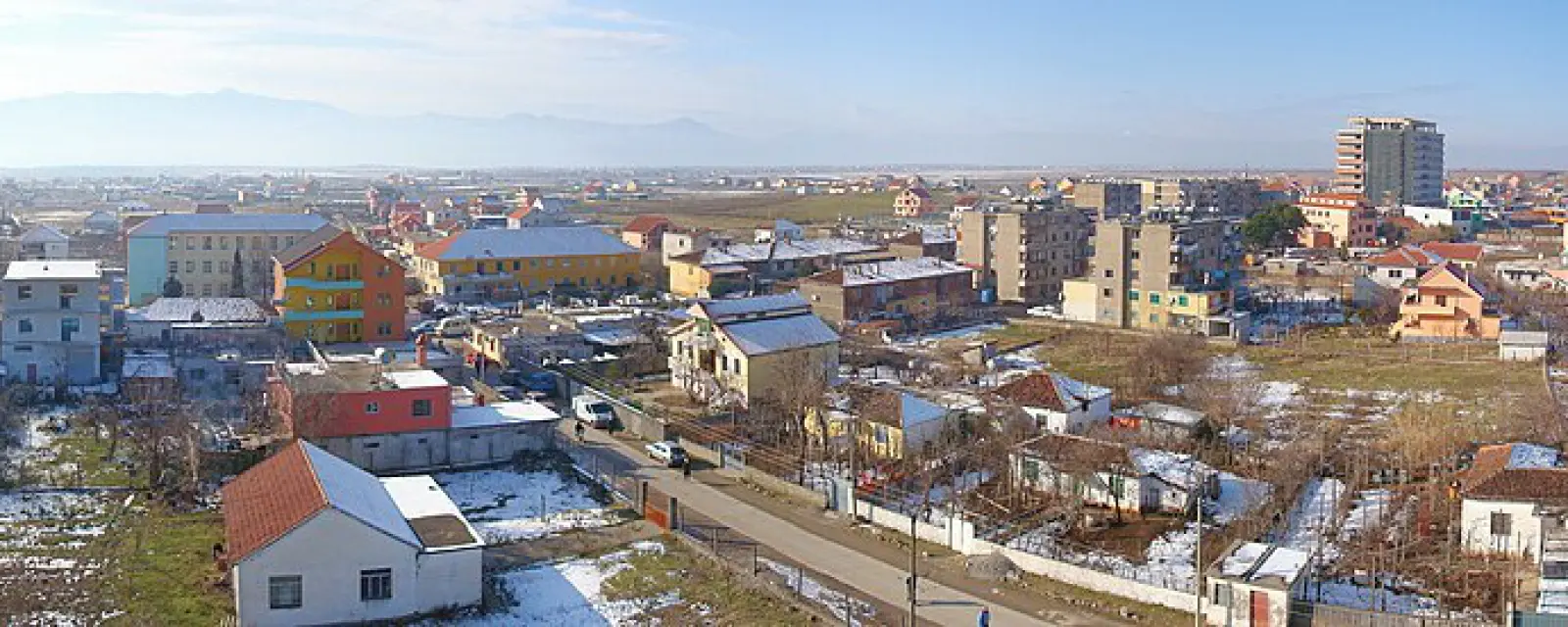
Overview
Albania holds a rank-40 passport with 108 destinations reachable without a prior visa, including visa-free access to the Schengen area since 2010. It is a small western Balkan country of around 2.8 million people, and an EU candidate, with accession negotiations opened.
Albania is notable for a combination of conditions few people are aware of:
✅ A FIVE-YEAR citizenship path — considerably shorter than Czechia and Slovakia (around ten years), Estonia (eight), Slovenia and Switzerland (ten).
✅ Dual citizenship permitted — no renunciation of your original nationality.
✅ Among the lowest living costs in Europe.
✅ A notably liberal visa policy — Albania admits citizens of many countries visa-free for unusually long stays, in some cases up to a year. This makes trying it out before deciding far easier than in most European countries. Terms vary by nationality, so check current rules for your passport before travelling.
But two counterweights must be stated immediately:
🔴 Albania is NOT an EU member, and accession is a multi-year process without a guaranteed timeline. The Albanian passport allows short-stay Schengen travel visa-free; it does not confer the right to live and work in the EU.
🔴 Albania has no citizenship-by-investment programme. Those five years are five years of genuine residence.
Geography & climate
Albania lies in the western Balkans, bordering Montenegro to the north-west, Kosovo to the north-east, North Macedonia to the east and Greece to the south, with a long coastline on the Adriatic and Ionian seas.
The terrain is predominantly mountainous — around three-quarters of the country — with a western coastal plain holding most of the population.
The capital, Tirana, sits centrally. Durrës is the main port, and Vlorë and Sarandë in the south are gateways to the Albanian Riviera — a coastline that has become one of Europe's fastest-growing tourist destinations in recent years.
The coastal climate is Mediterranean — hot dry summers, mild sunny winters. The mountains are considerably colder, with winter snow.
For anyone wanting to live in Europe while keeping sunshine and a coastline, Albania's climate is far easier than the Nordics or Central Europe — a real practical advantage.
Albania generates nearly all its electricity from hydropower, thanks to mountainous terrain and steep rivers.
History
Albanians identify as descendants of the ancient Illyrians. The territory came under Roman and Byzantine rule, then the Ottoman Empire for roughly five centuries — longer than most Balkan countries, and the root of today's religious composition.
Albania gained independence in 1912.
The period that shaped modern Albania was Enver Hoxha's rule from 1944 to 1985, and it was unusual enough to warrant description because it explains a great deal:
- Albania broke successively with Yugoslavia, then the Soviet Union, then China, ending in near-total isolation — among the most closed countries in the world at the time.
- The government built hundreds of thousands of concrete bunkers across the country against fear of invasion. Many remain and have become part of the landscape.
- In 1967, Albania declared itself an atheist state and banned all religious practice — the only country in the world to have done so constitutionally. The ban lasted until 1990.
That system collapsed in the early 1990s. The transition was very difficult, culminating in the 1997 crisis, when pyramid-style investment schemes collapsed, causing widespread loss of savings and serious unrest.
The lesson from 1997 still bears repeating: it is a textbook case of how vulnerable an economy without a financial supervision framework can be — and a reason anyone investing in an emerging market should ask who supervises what.
Albania joined NATO in 2009 and received EU candidate status in 2014, with accession negotiations opening in 2022.
Culture & people
Albanian is the official language, with a rare characteristic: it forms its own branch of the Indo-European family, with no close relatives — like Greek or Armenian. That means no shortcut from any language you already know. It does use the Latin alphabet.
English is common among young people and in tourism. Italian is also very widespread — a legacy of Albanians watching Italian television during the closed period, and of the wave of emigration to Italy after 1991. Greek is common in the south.
On religion, this differs from common assumptions: Albania has a Muslim-majority heritage alongside Orthodox and Catholic communities, but society is highly secular and religious tolerance is a national characteristic Albanians take pride in. Interfaith marriage is unremarkable, and national identity is placed above religious identity. Part of this stems from the very period of religious prohibition described above.
The practical implication: the social framework in Albania carries none of the religious restrictions found in the Gulf states or the Maldives elsewhere in this series.
Albanians have a strong reputation for hospitality — the concept of besa, roughly keeping one's word and protecting a guest, is a much-cited cultural value.
The Albanian diaspora is very large relative to the domestic population, chiefly in Italy, Greece, Germany, Switzerland and the United States. Remittances are an important source of income.
The Vietnamese community in Albania is very small.
Economy & opportunity
Tourism is the clearest growth driver of recent years. The Albanian Riviera — clear water at prices still below Croatia or Greece — has drawn rapidly rising visitor numbers. This creates genuine opportunity in accommodation, food and beverage, tourism services and coastal property.
The accompanying risk should be stated: rapid growth in tourism and property within a young market typically brings fast price rises, planning that lags behind, and volatility. Investors should account for that rather than extrapolating the trend.
Other sectors: agriculture (olive oil, herbs, fruit), energy through hydropower, mining, garment and footwear manufacturing for Italian brands, and a business process outsourcing and call centre sector serving the Italian market on the strength of language.
Living costs are among the lowest in Europe — the clearest advantage for those with foreign-currency income or remote work.
Also to state plainly: the informal economy remains substantial, affecting both income documentation and the quality of market information. Work with reputable local accountants and lawyers.
As always: Albanian tax obligations do not replace those in your home country.
Immigration routes
No investment programme. The genuine routes:
- The Unique Permit — Albania has merged residence and work permits into a single procedure handled through an online portal. This is a notable administrative reform making the process simpler than in many regional peers.
- Residence for remote workers — a category exists for those working remotely for foreign clients or employers. Check current conditions.
- Residence through business activity — establishing and running a genuine company.
- Residence for the financially self-supporting.
- Study and family reunification.
Citizenship
The main conditions: five years of continuous lawful residence, Albanian language ability, proof of income and lawful accommodation, and a clean record.
✅ Albania permits dual citizenship.
This is a notable combination: five years, keeping your original nationality, low costs, a Mediterranean climate. Within this series, only Peru (around two years) is shorter, while Luxembourg is also five years but demands Luxembourgish and has very high housing costs.
The trade-off: Albanian has no close linguistic relatives, so it must be learned entirely from scratch.
And to repeat the important point: the Albanian passport is NOT currently an EU passport. If Albania joins the European Union in future its value changes, but that is an expectation, not a present fact — do not build financial plans on it.
Everyday life
Living costs are very low — rent, food and services are all cheap by any EU comparison. Tirana is the most expensive but remains comfortable.
Housing: prices in Tirana and along the coast have risen appreciably with tourism; other cities remain cheap. Foreigners can buy property in Albania, but check title documentation carefully — land records still carry unresolved issues from the transition period, and this calls for an independent lawyer, not one recommended by the seller.
Healthcare: the public system is limited; private care in Tirana is of reasonable quality at low cost. Highly specialised cases usually go to Italy, Greece or Türkiye — all nearby.
Education: public schools teach in Albanian; a few international schools operate in Tirana.
Travel: Tirana airport has many low-cost routes to European cities. Ferries run to Italy from Durrës. Travel to Southeast Asia is a multi-leg journey — a weakness compared with Asian options.
Infrastructure: much improved, but mountain roads remain difficult and public service quality is uneven.
Safety: good; street crime is low.
Who should consider Albania
A good fit if:
- ✅ You want citizenship in five years while keeping your original nationality, and accept learning a difficult language — one of Europe's shortest paths.
- You work remotely and want Europe's lowest living costs with a Mediterranean climate.
- You are investing or building a business in tourism, accommodation or food and want to enter a rising market early.
- You want to try living there before deciding — Albania's liberal visa policy makes this far more feasible than in most European countries.
- Your family wants a secular and religiously tolerant environment.
Not a fit if:
- 🔴 You are aiming at an EU passport: Albania is not a member, and accession is a multi-year process without a guaranteed timeline. Do not plan on that expectation.
- You are looking for an investment programme: Albania has none; five years means five years of genuine residence.
- You intend to buy property without carefully checking land title — a specific risk here.
- You need a broad labour market or high local salaries.
- You need to be close to home in Asia: the journey back is multi-leg.