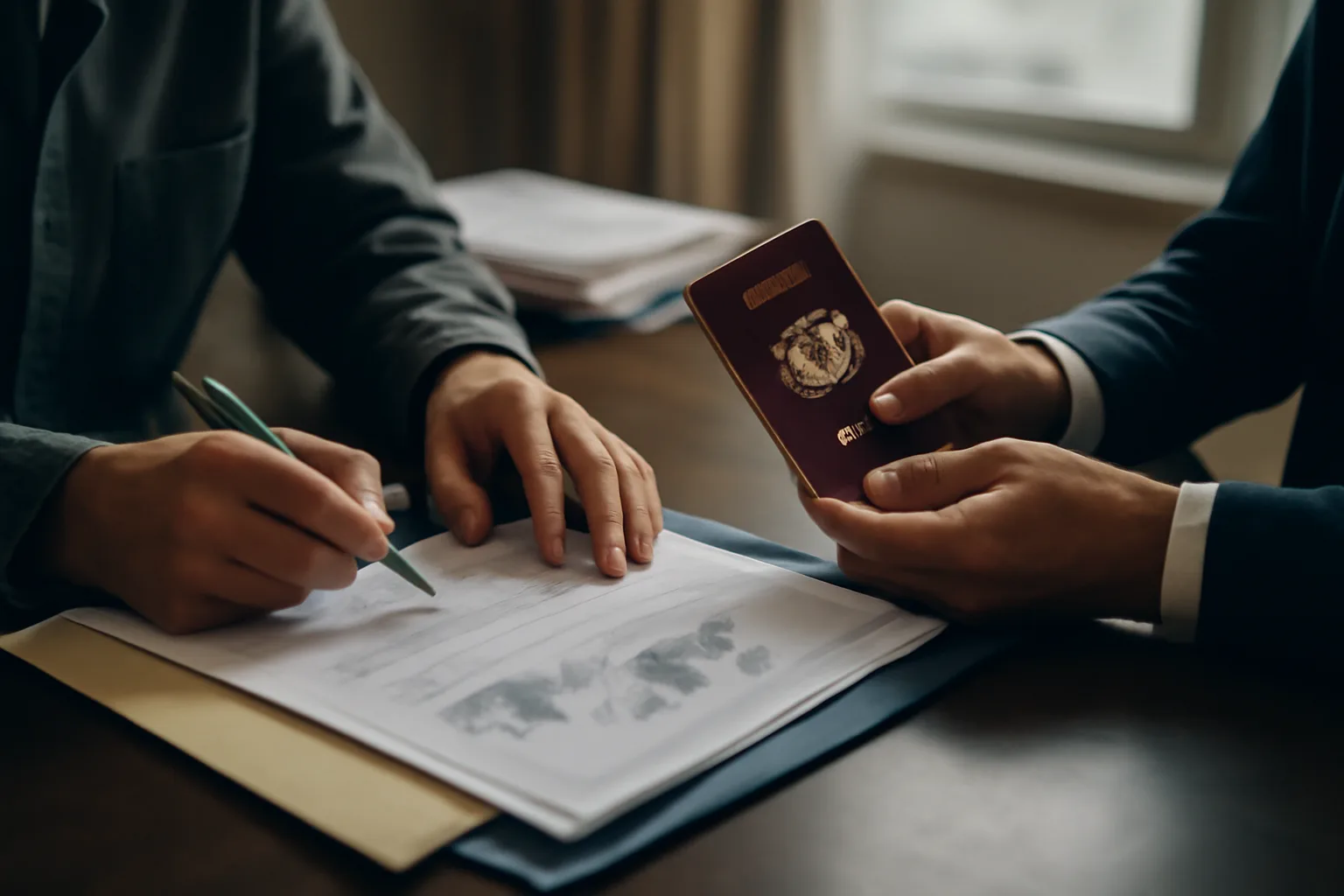
The most common question after choosing a program: how long until I get my passport? The standard answer is four to eight months, and that answer is correct—for clean, complete applications.
Here's what actually happens, and where time gets lost.
Stage 0: Before signing—usually overlooked
This stage doesn't appear in any timeline, but it's often the longest.
Preliminary screening. A reputable consultant will ask about your background, source of funds, and visa history before discussing which country to choose. Finding problems here is cheap; finding them after you've already paid the due diligence fee is expensive.
Self-audit your source of funds. See the separate article on this. Getting this part ready beforehand is the only way the four-month timeline makes sense.
For applications involving significant cash, assets in other people's names, or businesses without audited books, stage 0 takes one to three months.
Stage 1: Document collection and application preparation
Around four to eight weeks for straightforward applications; longer if there are complications.
Personal identification documents for all participating family members. Criminal background certificates from Vietnam and every country where you've resided for six months or longer. Source of funds documentation. Medical certificates. Photos to specification.
Everything must then be professionally translated and certified by the appropriate consular authorities. This step is often underestimated—it takes an additional one to three weeks and cannot be rushed.
Where time gets lost: one document that doesn't meet standards requires redoing everything from scratch, including translation and certification.
Stage 2: Application submission and due diligence
Around three to six months. This is the longest stage and no one can interfere with it.
The application is submitted through a licensed agent—direct submission is not possible. Due diligence fees are paid at this stage, with separate fees for each person over 16, and are non-refundable.
During this stage, there's typically at least one request for additional documents. Each round adds several weeks. Thorough preparation from the start means additional requests are brief and straightforward.
Where time gets lost: slow responses to additional document requests. Every week of delay is another week added to the total.
Stage 3: Preliminary approval and investment execution
A few weeks.
Only after you receive preliminary approval do you transfer the investment funds or make the contribution. This is important to clarify: the main investment funds are sent after approval, not before.
To be clear about the distinction: due diligence fees, agent fees, and initial government fees are paid upfront and are non-refundable. Only the main investment portion is transferred after preliminary approval.
Stage 4: Document issuance and passport production
A few weeks to two months.
You receive your citizenship certificate, then apply for your passport. Some programs require an oath—some countries allow this at an embassy or through a notary, while others require you to appear in person.
Where time gets lost: printing time and courier delivery of the passport, plus the schedule of the issuing authority.
Actual total timeline
| Stage | Straightforward application | Complicated application |
|---|---|---|
| Before signing | 2–4 weeks | 1–3 months |
| Document preparation | 4–8 weeks | 2–4 months |
| Due diligence | 3–5 months | 5–9 months |
| Investment and document issuance | 4–8 weeks | 2–3 months |
| Total | 6–9 months | 11–19 months |
The four to eight month figure in quotes typically starts from submission to the issuing authority, not from stages 0 and 1. That's not dishonest, but it's a way of presenting information that can create mismatched expectations.
Four things to ask before signing
When does this timeline start? From when you sign the agreement or from when your application is submitted to the issuing authority?
Which fees are non-refundable if my application is denied? Require this to be stated clearly in the contract.
Who pays for additional document requests if there are multiple rounds?
What happens if I'm rejected? What does the contract say about that scenario? A consultant who avoids answering this question is a red flag.
What we don't promise
No one can speed up the due diligence phase. Anyone claiming there's a special channel to do it faster is either overstating their abilities or describing something you shouldn't get involved with.
The only genuine way to shorten the overall timeline is to prepare stages 0 and 1 thoroughly—the parts you have complete control over.