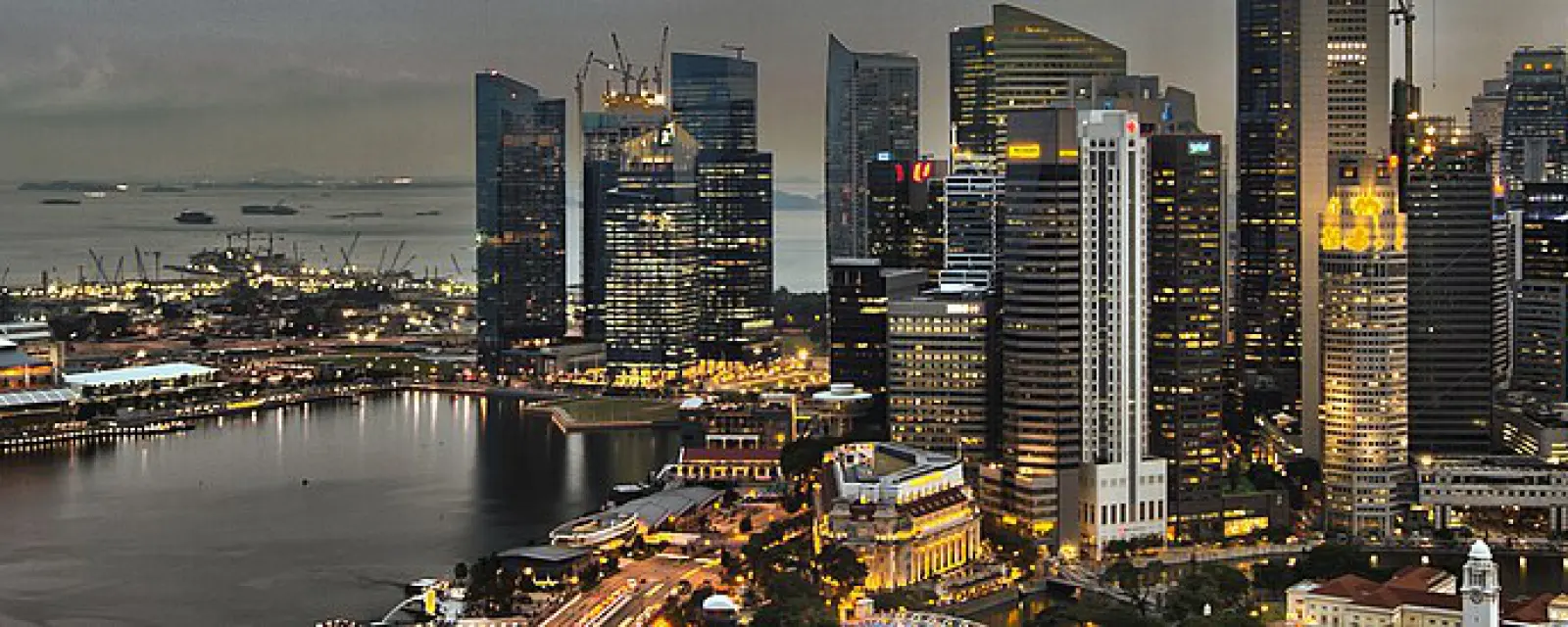
Overview
Singapore is an island city-state at the southern tip of the Malay Peninsula. With an area of just 735 km² and a population of approximately 6 million, it ranks among the world's highest in per capita GDP.
Singapore offers an investment residency program: the Global Investor Programme (GIP), which grants permanent residency directly to qualifying investors. However, this is among the world's most stringent and expensive programs — eligibility thresholds have increased significantly since 2023, and applications are evaluated based on business track record, not assets alone.
Two points that must be stated clearly before you consider this path:
1. Singapore DOES NOT permit dual citizenship. Those who naturalize must renounce their original citizenship. 2. Male permanent residents or citizens must fulfill National Service (NS) — approximately two years of full-time service upon reaching the required age, plus subsequent reservist obligations.
The second point is a factor many families are inadequately informed about. If you have a young son and obtain Singapore permanent residency for him, he will be subject to mandatory military service as an adult. Relinquishing permanent residency status to avoid this carries long-term consequences for future reentry into Singapore.
This is not a reason to exclude Singapore from consideration, but it is something you must understand beforehand.
Geography & Climate
One main island and over 60 smaller islands, almost entirely urbanized. The terrain is flat, with the highest point at just 164 meters. Singapore has continuously reclaimed land to expand its territory since independence.
Equatorial climate: warm and humid year-round at 25–33°C, with no distinct seasons, frequent rain showers, and consistently high humidity.
For those from Vietnam's southern regions, this climate is nearly identical — minimal adjustment needed.
Natural disaster risk is minimal: no typhoons, no significant earthquakes, no volcanic activity. Singapore ranks among the world's safest places from a natural disaster perspective. The primary environmental concern is seasonal haze from forest fires in neighboring countries, which varies annually.
Historical Background
Once a fishing village and small trading post, Singapore became a British trading center from 1819 under Stamford Raffles. Its strategic location at the Strait of Malacca made it a crucial regional maritime hub.
Occupied by Japan during World War II, it later returned to British administration, joined the Federation of Malaysia in 1963, and gained independence in 1965 — under circumstances widely regarded as undesirable and given little prospect of survival.
From that point forward, under the long leadership of the People's Action Party marked by Lee Kuan Yew's imprint, Singapore transformed from a developing nation into a global financial and commercial center within a single generation.
The Singapore model: efficient governance, low corruption, strict rule of law, large-scale public housing schemes, and complete openness to international trade.
Culture & Society
Four official languages: English, Mandarin Chinese, Malay, and Tamil. English is the language of administration, education, and business — a significant advantage for Vietnamese nationals compared to those from Japan, Korea, or mainland China.
Multiethnic society: ethnic Chinese form the majority, alongside Malays, Indians, and a substantial expatriate community. Policies on ethnic and religious harmony are strictly managed.
Society emphasizes order, efficiency, and academic achievement. Public safety ranks among the world's highest.
Important psychological preparation: Singapore's legal system is very strict. Violations considered minor in many places — littering, importing chewing gum, traffic violations — carry heavy penalties. Drug-related offences carry exceptionally severe punishments. You and your family must fully understand this.
The Vietnamese community in Singapore numbers in the tens of thousands, working in finance, technology, services, and as students.
Economy & Opportunities
Finance — a leading financial center in Asia, strong in wealth management, private banking, and investment funds.
Logistics and Maritime — Singapore's port ranks among the world's busiest, serving as a crucial regional transshipment hub.
Technology — home to Asia-Pacific headquarters for most major global technology corporations.
Biomedical and Pharmaceuticals — a priority investment sector over many years.
For Vietnamese entrepreneurs: Singapore is a popular regional headquarters location for conducting business throughout Southeast Asia. Company registration is rapid, the legal system is transparent, and numerous tax treaties prevent double taxation.
Taxation: progressive personal income tax, but with caps substantially lower than Europe. No capital gains tax, no inheritance tax. Corporate tax is competitive. Singapore taxes primarily on domestic source — foreign-sourced income is typically untaxed if not remitted.
This is one of the world's most attractive tax systems for high-net-worth individuals. As stated above: you must separately clarify your tax obligations to Vietnam.
Residency Programs
Global Investor Programme (GIP)
A program granting permanent residency to investors, administered by the Economic Development Board.
Main pathways: investment in new businesses or operating businesses in Singapore; investment in approved funds that invest in Singapore businesses; or establishment of a family office managing assets in Singapore.
Application requirements: applicants must demonstrate a track record of successful business operations — company revenue meeting minimum thresholds, management experience, and substantial shareholding. This is not a program requiring only capital.
Thresholds have increased significantly since 2023, and all pathways require commitments to job creation and maintaining real business operations in Singapore.
Other Categories
EntrePass — for entrepreneurs launching innovative ventures backed by approved investment funds or business incubators.
Employment Pass — work permit for specialists with job offers meeting salary thresholds; these thresholds have increased substantially in recent years.
Overseas Networks & Expertise Pass — for individuals with very high income or exceptional credentials; more flexible than Employment Pass.
Permanent residency may be applied for through standard procedures from these categories, but approval rates are not disclosed and are known to be highly selective.
Permanent Residency and Citizenship
Permanent residency: grants the right to live, work, purchase public housing under certain conditions, and does not require renouncing Vietnamese citizenship. However, note — male permanent residents must fulfill compulsory military service.
Singapore citizenship: typically available after several years as a permanent resident, and requires renunciation of original citizenship.
On specific figures: GIP investment thresholds, required company revenue, and salary thresholds for various passes have increased multiple times and continue to be adjusted. Check the detailed figures on the official website or consult with a specialist.
Daily Life
Cost of living — among the world's highest, particularly three major expense categories:
- Housing: foreign nationals and permanent residents are restricted in purchasing public housing (HDB) and face substantial additional stamp duties when buying private property. Rental costs are very high
- Vehicles: you must purchase a Certificate of Entitlement (COE) via auction, often costing more than the car itself. Car ownership in Singapore carries unusually high costs
- International schools: tuition is very expensive
However, public transportation is excellent and affordable, and dining at hawker centres offers very reasonable prices and quality.
Healthcare: quality ranks among the world's best. The system is based on mandatory health savings accounts plus insurance. Costs are not cheap but are efficient with rapid access.
Education: Singapore's public education system ranks among the world's top performers, taught in English. Foreign nationals have limited access to public schools and pay higher fees; international schools are plentiful but expensive.
Academic pressure is substantial — a consideration if you have young children.
Transportation: direct flights from Vietnam — Hanoi, Ho Chi Minh City, Da Nang to Singapore, approximately 2 hours flight time. Changi is among the world's best airports, connecting worldwide.
Time zone difference with Vietnam is 1 hour — minimal difference.
Who Should Consider Singapore
Well-suited if you:
- Have an established business with significant revenue and wish to establish a Southeast Asian regional headquarters
- Have substantial assets and are interested in family office structure, asset management, and the absence of capital gains and inheritance taxes
- Need a fully English-language environment — a major advantage over Japan or Korea
- Need to travel frequently to Vietnam — 2-hour direct flight, 1-hour time difference
- Prioritize safety, administrative efficiency, world-class healthcare and education
- Are comfortable with an equatorial climate, requiring minimal adjustment
May not be suitable if you:
- Have a young son and cannot accept compulsory military service when he reaches age — this requires very serious consideration
- Wish to retain Vietnamese citizenship upon naturalization — Singapore does not permit dual citizenship; consider remaining at permanent residency level instead
- Have limited financial resources — GIP is among the world's most expensive and stringent programs
- Want complete freedom in real estate purchases — foreign nationals face substantial additional stamp duties
- Prefer spacious living, nature, and a slower pace — Singapore is densely urbanized across 735 km²
- Are uncomfortable with very strict rule of law
This article provides foundational information for reference purposes. GIP conditions and pass categories in Singapore have changed multiple times in recent years. Regarding male children's military service obligations, you must research this thoroughly before making your decision. Please consult with a specialist at Viking Global Group.