Overview
Panama sits on the isthmus connecting Central America and South America. Area: 75,400 km²; population approximately 4.5 million.
Panama is famous for the Panama Canal — a shipping route connecting the Atlantic and Pacific Oceans, one of the world's most economically significant engineering projects.
For those seeking a residency solution, Panama offers three concrete strengths:
1. Territorial tax system — Panama taxes only income sourced within Panama. Foreign-sourced income of residents is generally not taxed. This is one of the clearest and longest-established systems in the world.
2. Uses the U.S. dollar — Panama has used USD as its functional currency since 1904. No domestic currency exchange risk.
3. Diverse and relatively accessible residency programs — notably, Qualified Investor grants immediate permanent residency to qualifying investors.
But be clear: Panama is very far from most parts of the world — no direct flights and a 12-hour time difference from Vietnam. This is a deciding factor for many families.
Geography & Climate
The terrain is narrow and elongated, at its narrowest only about 50 km between the two oceans. A mountain range runs along the backbone, with lowlands on both coasts.
Panama City — the capital, a modern metropolis with high-rises on the Pacific coast, the financial center of Central America.
Boquete and Chiriquí — highland region in the west, cool climate, popular with foreign retirees.
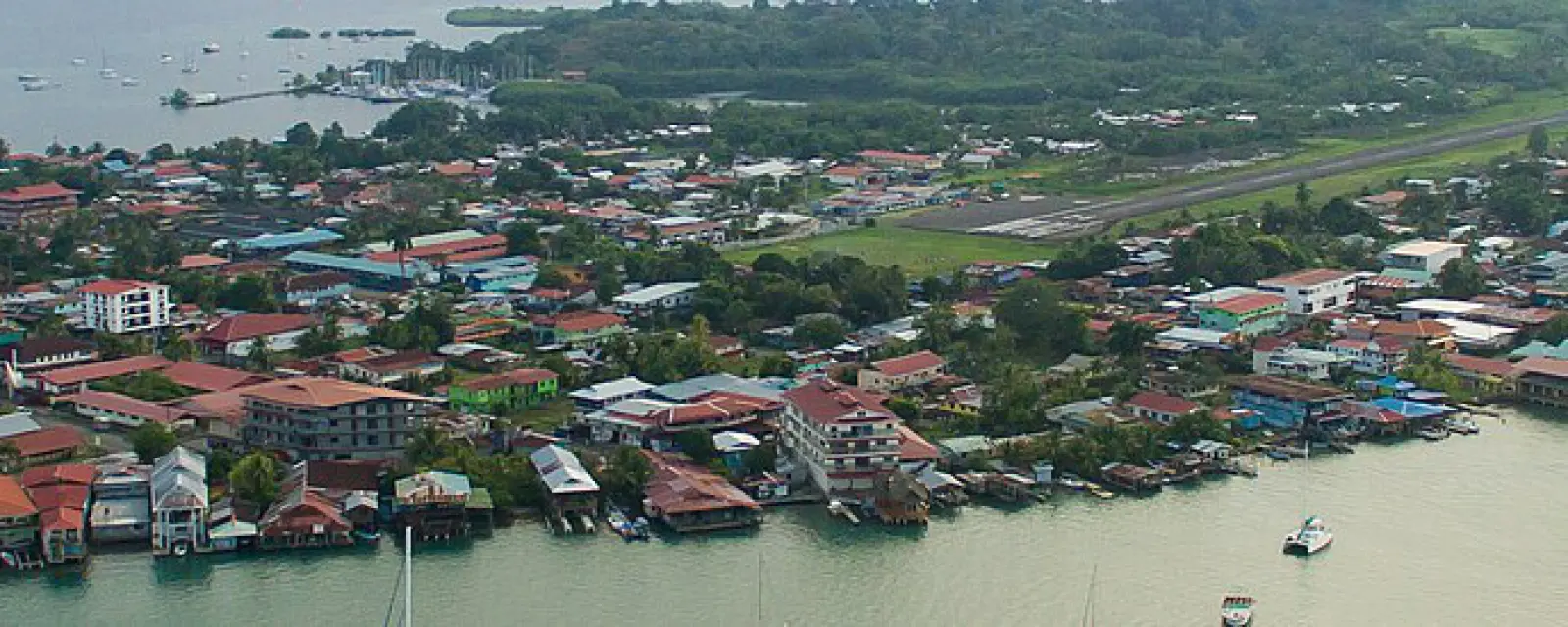
Bocas del Toro and the San Blas Islands — Caribbean coastal area with islands and coral reefs.
Tropical climate: warm and humid 24–32°C year-round in lowlands. Rainy season May–December; dry season January–April.
The Boquete highlands at about 1,200 m elevation have year-round mild weather of 15–25°C — often called "eternal spring," highly popular.
Low natural disaster risk: Panama lies outside the Atlantic hurricane belt — an important distinction from Caribbean islands, and a genuine selling point. Earthquakes occur but are rarely severe.
Historical Background
This territory was part of the Spanish Empire from the 16th century, serving as a transshipment point for gold and silver from South America to Europe.
After Spain's withdrawal, Panama was part of Colombia. In 1903 Panama separated from Colombia with U.S. backing, and shortly after signed a treaty allowing the U.S. to build and operate the canal.
The Panama Canal was completed in 1914 — a massive engineering project with enormous human cost. The U.S. controlled the canal zone as if it were sovereign territory for many decades.
On December 31, 1999, control of the canal was fully transferred to Panama under the Torrijos–Carter Treaty. This is the most important milestone of modern Panama — canal revenues now belong to the country.
The canal was expanded in 2016 to accommodate larger vessels, significantly increasing capacity and revenue.
Culture & People
Spanish is the official language. English is used quite widely in Panama City, in finance, shipping, and expatriate areas — a legacy of U.S. presence. This is an advantage over much of Latin America.
That said, for long-term living and government dealings, learning Spanish is still necessary.
Panamanian society is diverse: people of Spanish descent, indigenous peoples (including the well-known Guna community in San Blas with autonomous governance), Afro-Caribbean populations, and a long-established Chinese community dating from canal construction.
The foreign retiree community is very large — primarily from the United States and Canada, concentrated in Boquete, Coronado, and Panama City. Service infrastructure for foreigners is well-developed accordingly.
Latin American culture is open and relaxed, with emphasis on family and ease of living.
The Vietnamese community in Panama is virtually nonexistent.
Economy & Opportunities
The canal and logistics — major government revenue sources, with associated ecosystems of seaports, warehousing, and cargo transshipment.
Colón Free Trade Zone — one of the world's largest free trade zones, a distribution gateway for goods into Latin America.
Financial services — Panama City is Central America's banking center. This sector has undergone multiple rounds of international regulatory tightening regarding transparency and anti-money laundering, and current standards are much stricter than before.
Ship registry — Panama has the world's largest merchant fleet by tonnage.
Real estate and retirement tourism — steady demand from foreign retirees.
For Vietnamese entrepreneurs: realistic opportunities lie in trade and cargo transshipment into Latin American markets — Panama is the natural gateway. Additionally, real estate rental serving the retiree community.
On taxation — the core strength:
- Taxes only income sourced within Panamanian territory
- Foreign-sourced income of residents is generally not taxed
- No capital gains tax on assets held outside Panama
- No inheritance tax
Reminder: this does not automatically eliminate your tax obligations in your home country. You need tax advisors for both jurisdictions.
Residency Programs
Panama offers the region's most diverse residency visa system. Three most relevant categories:
Qualified Investor Visa
The strongest option: grants immediate permanent residency to qualifying investors, without a temporary residency phase.
Options include: investment in real estate above a threshold, or securities investment through a Panamanian brokerage firm, or fixed deposits at a Panamanian bank — each option has its own threshold and minimum holding period.
Strengths: relatively fast process, no prior residence requirement before application, includes family members.
Friendly Nations Visa
Panama's most famous category, for citizens of countries on Panama's official Friendly Nations list.
Critical note: Vietnam is NOT on this list. Vietnamese citizens do not qualify for this visa category using a Vietnamese passport.
This category is only relevant if you already hold a second citizenship from a country on the list — for example, certain European or Latin American nations.
Additionally, this category was tightened in 2021: it now requires a genuine economic tie to Panama — property ownership above a threshold, or fixed deposits, or an employment contract in Panama — rather than merely demonstrating financial means as before.
Pensionado — Retiree Category
A world-renowned program for those with lifetime retirement income above a threshold from reliable sources.
Unique strength: cardholders enjoy a government-mandated discount system — discounts on airfare, hotels, restaurants, medical consultations, medicines, and utilities. This is the world's most comprehensive senior citizen benefit program and applies to foreign nationals holding the card.
This category is excellent for those already retired with stable pension or lifetime income.
Path to Citizenship
After 5 years of permanent residency, you may apply for naturalization, which requires Spanish language proficiency and knowledge of Panama's history and constitution.
Panama generally requires renunciation of your original citizenship upon naturalization. You should clarify this with a Panamanian attorney before setting citizenship as a goal.
On specific figures: investment thresholds for each option, required retirement income levels, and the Friendly Nations list change with regulations from time to time. Please see the parameter table on this page or consult a specialist.
Practical Life
Cost of living is significantly lower than North America and Western Europe, though Panama City has seen price increases. Highland areas like Boquete are very affordable. Imported goods are expensive; local produce and seafood are cheap.
Healthcare: good quality compared to the region. Panama City has international-standard private hospitals, some with U.S. healthcare system affiliations, and many doctors trained in the U.S. and English-speaking. Costs are far lower than the U.S. Outside the capital, services are more limited.
Private health insurance is necessary.
Education: Panama City has international schools teaching U.S. and IB curricula, with tuition reasonable compared to Asia. Public schools teach in Spanish.
Transportation: Tocumen International Airport in Panama City is the largest aviation hub in Latin America, connecting to most countries in the Americas — a genuine advantage if you do business in the region.
From most countries it is far: no direct flights from many regions; at least two connections via North America, Europe, or the Middle East, with typical total journey time of 28–34 hours.
Time difference is 12 hours — completely opposite day and night. This is a significant disadvantage if you still manage business in your home country.
Who Should Consider Panama
Good fit if you:
- Prioritize a territorial tax system — foreign-sourced income generally not taxed
- Want immediate permanent residency without a temporary phase — Qualified Investor category
- Are already retired with stable lifetime income — Pensionado category with extensive government-mandated discounts
- Work in trade, logistics, and cargo transshipment into Latin American markets — Panama is the natural gateway
- Want to avoid hurricane risk — Panama is outside the Atlantic hurricane belt, unlike Caribbean CBI islands
- Prefer tropical climate similar to southern regions, or year-round mild climate in the Boquete highlands
May not be suitable if you:
- Need to return home frequently — no direct flights, 28–34 hour journey, 12-hour time difference opposite to day/night
- Plan to apply for Friendly Nations Visa using your home country passport — if your country is not on Panama's list
- Want citizenship while keeping your original passport — Panama generally requires renunciation
- Are unwilling to learn Spanish — English works in Panama City but is insufficient for administration and long-term living
- Need specialized healthcare outside the capital — quality drops significantly in the provinces
- Want a Vietnamese community or Vietnamese-language services
This article provides foundational information for reference. The Friendly Nations Visa was tightened in 2021 and the list of eligible countries changes over time. Please consult with a specialist at Viking Global Group before making a decision.