Overview
Nicaragua is Central America's largest country by area — approximately 130,000 km² — with roughly 6.8 million people, located between Honduras and Costa Rica.
It is home to the lowest income thresholds and cost of living among Central American countries with residency programs.
The Critical Factor to Consider First
We place this section before advantages because it matters more.
Nicaragua experienced severe political instability beginning in 2018, with prolonged consequences for international relations, the legal environment, and migration of part of the population. Many countries and international organizations have implemented measures in response.
We do not express political opinions and do not forecast the situation. But for someone considering spending money and potentially relocating, this is a factor you must research thoroughly from multiple sources, and must weigh against low costs when comparing.
Low costs are not automatically a good deal if the legal environment is unpredictable.
Geography and Climate
Two large lakes — Lake Nicaragua and Lake Managua — with a chain of volcanoes running along the Pacific coast. Coastlines on both the Pacific Ocean and the Caribbean.
Lake Nicaragua is Central America's largest freshwater lake and contains Ometepe Island with two volcanoes rising from the middle — a distinctive landscape feature of the country.
Tropical climate, dry season from November to April, rainy season from May to October. Hot year-round in lowlands, cooler in highlands such as Matagalpa. Similar to tropical Southeast Asian climates.
Risk of earthquakes and active volcanoes, plus hurricane season on the Caribbean side.
History and Culture
Spanish colony, independence in 1821. The 20th century was a series of upheavals: prolonged dictatorship, revolution in 1979, civil war in the 1980s.
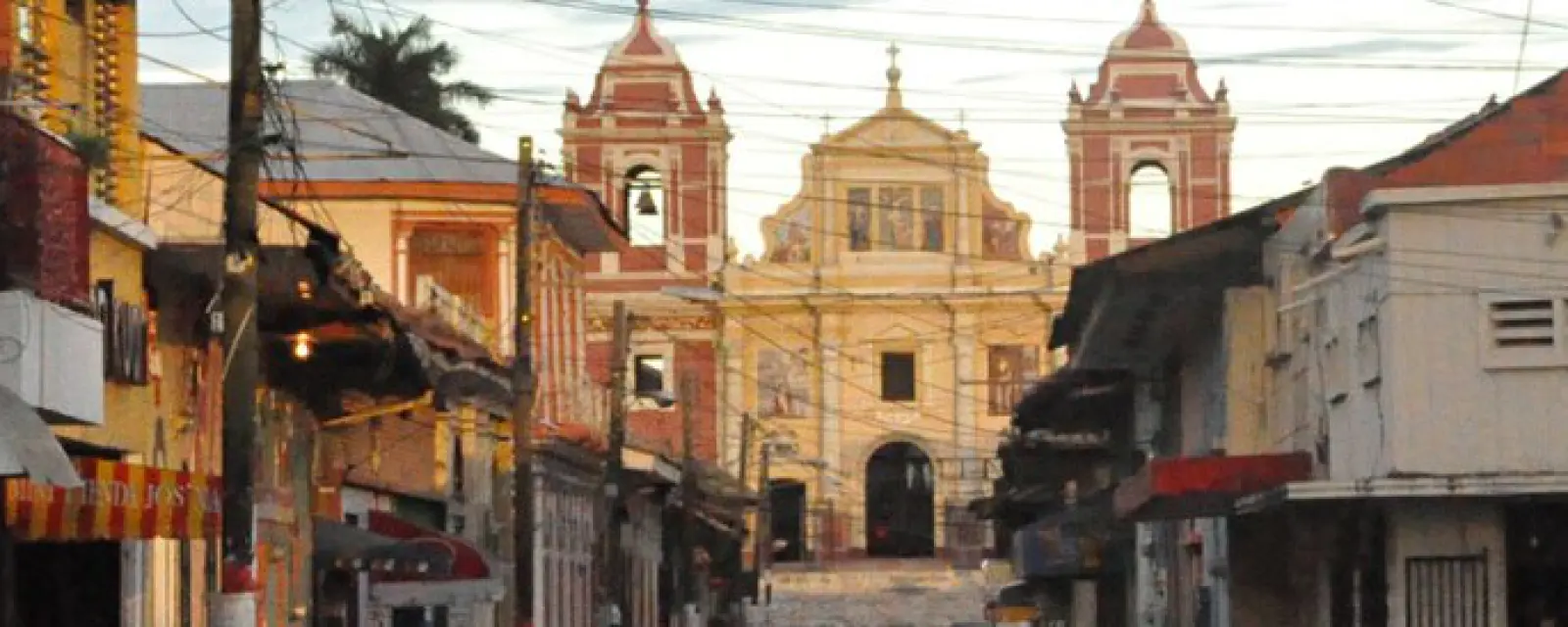
Granada and León are two colonial cities with well-preserved architecture and are where most foreign residents are concentrated.
Spanish is the main language. The Caribbean coast has communities speaking English Creole. English is not widely spoken in the Pacific coast region where most of the population lives.
Economy and Taxation
Economy based on agriculture — coffee, beef, sugar, tobacco — along with textiles and remittances.
One of the lowest average income countries in the Western Hemisphere. This means cost of living is very low for those earning foreign currency, but the domestic market is small and purchasing power is weak.
Residency Program
Income-based residency — pensionado or rentista: requires proof of regular income from abroad, with thresholds in the lowest group in the region.
Strengths:
- Low income threshold
- Very low cost of living
- One-time import tax exemption for personal belongings and vehicles — this has real value when relocating
- Low residency requirements
- Relatively straightforward procedures
Disadvantages:
Political stability and legal environment concerns — mentioned at the start of this article, and this is the largest disadvantage.
Infrastructure and healthcare are limited. Quality hospitals are concentrated in Managua; elsewhere it is limited. Many foreigners travel to Costa Rica or return to their home country for major medical treatment.
Natural disaster risk — earthquakes, volcanoes, hurricanes.
Weak domestic market.
Distance from Vietnam — requires connecting flights, approximately 30 hours.
We have not processed applications for this route, and for this country we strongly advise particular caution. Conditions can change — verify with competent authorities and read current news.
Who Should Consider Nicaragua
May be suitable for those with stable foreign currency income, seeking the lowest possible cost of living, who have thoroughly researched the current situation and accept legal risks.
Not suitable for those viewing this as a place to invest assets long-term or as insurance documentation — such purposes require a predictable legal environment.
Not suitable for those who need quality healthcare near their residence.
If low costs are the only attraction, compare Nicaragua alongside Paraguay or Ecuador, evaluating stability factors as well, not just numbers.
This information is for reference only, not legal or investment advice. We do not express political opinions and do not forecast the situation — please research from multiple sources.