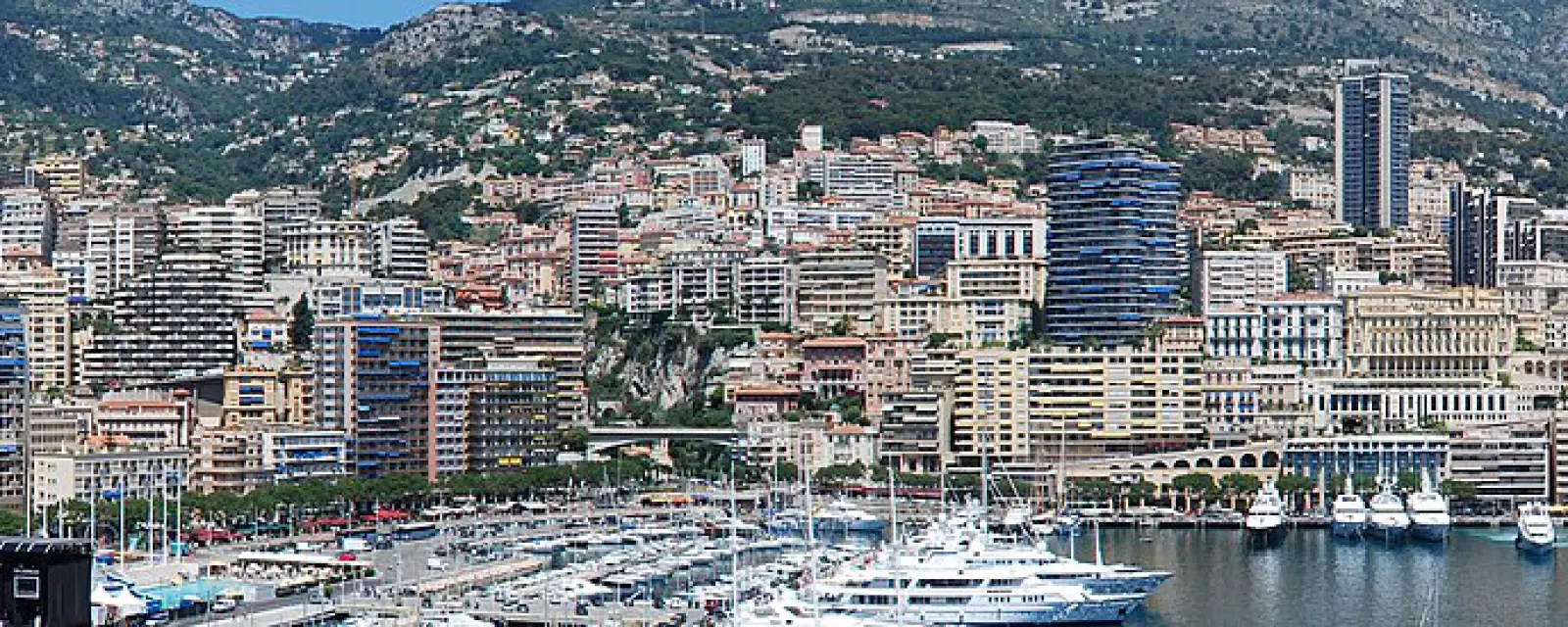
Overview
Monaco is the world's second-smallest sovereign state after Vatican City — with an area of just 2.08 km². Its population is around 39,000 people, nestled between France and the Mediterranean on the Côte d'Azur.
Monaco has no citizenship-by-investment program. Monaco citizenship is extremely difficult — subject to the sole discretion of the Sovereign Prince, usually requires many years of residency, and mandates renouncing your original citizenship. In practice, it is very rarely granted to foreigners without family ties to Monaco — only about one-quarter of Monaco's population holds Monaco citizenship.
What Monaco does offer is a residence permit — and this is what makes it famous worldwide:
Monaco imposes no personal income tax on residents (except French citizens under a bilateral treaty between the two countries). No capital gains tax, no wealth tax, no direct-line inheritance tax.
This is the most attractive tax system in the world for people with very substantial assets.
But let's be direct: Monaco is a destination for a very narrow group. Real estate here is the most expensive in the world per square meter, and financial proof requirements are very high. For most families, this is not a practical choice.
Geography & Climate
Monaco stretches about 3 km along the coast, with its widest point less than 1 km. The terrain slopes from mountains to sea, so the city is built in tiers, connected by public elevators and tunnels.
Main districts: Monte Carlo (casino, hotels, most exclusive area), La Condamine (Hercules Port), Monaco-Ville or "Le Rocher" (old town on a rocky outcrop, home to the Prince's Palace), Fontvieille (a landfill district).
Monaco has expanded its territory by about 20% through land reclamation since the 1960s — expansion continues today.
Mediterranean climate is very pleasant: summers 24–29°C, dry and sunny; winters 8–14°C, mild. About 300 sunny days per year. This is one of Europe's most livable climates, especially for older adults.
Natural disaster risk is virtually nonexistent.
Historical Background
The Grimaldi family has ruled Monaco since 1297 — one of the world's longest-reigning dynasties, over 700 years.
Monaco was once larger but lost most of its territory in the 19th century. To compensate the budget, in 1863 Monaco opened the Monte Carlo Casino — a decision that shaped the entire nation's destiny. Casino revenues became so large that in 1869 Monaco abolished personal income tax, a system maintained to this day.
Today the casino contributes only a small portion; main revenue comes from financial services, luxury tourism, real estate, and value-added tax.
Monaco has a special relationship with France: bilateral treaties govern many areas, including defense and some tax matters. Monaco is not an EU member state, but uses the Euro and is effectively within the Schengen travel area through its open border with France.
The wedding of Sovereign Prince Rainier III to Hollywood actress Grace Kelly in 1956 brought Monaco's image to the world — that image legacy remains today.
Culture & People
French is the official language. English and Italian are widely used due to a large international community. Monégasque, the local language, is taught in schools as cultural heritage.
The population is highly distinctive: only about one-quarter are Monaco citizens; the rest are foreigners from over 100 nationalities — most numerous are French, Italian, British, and many others.
Monaco society is discreet and values privacy. Security ranks among the world's highest — camera surveillance and security personnel density per capita is very high; crime is negligible.
Two events put Monaco on the world stage annually: the Monaco Grand Prix F1 race run through city streets, and the Monaco Yacht Show — the world's largest superyacht exhibition.
The Vietnamese community in Monaco is virtually nonexistent.
Economy & Opportunities
Financial services and private wealth management — private banking, family offices, investment management for ultra-high-net-worth clients. This is the pillar of Monaco's modern economy.
Real estate — the world's most expensive market per square meter, stable due to extremely limited supply on 2 km².
Luxury tourism and yachting — Hercules Port is one of the Mediterranean's most prestigious yacht havens, with a supporting luxury maritime services ecosystem.
Events and sports — F1, Monte-Carlo Masters tennis tournament, international events.
Monaco is also developing green economy and technology as new directions, with incentives for businesses in these sectors.
Regarding taxes:
- No personal income tax for residents, except French citizens
- No capital gains tax, no wealth tax
- No inheritance and gift taxes for direct-line heirs (spouses, parents, children); tax rates apply to more distant heirs
- Businesses with over 25% revenue outside Monaco are subject to income tax
- Value-added tax follows the French system
Important note: residency in Monaco does not automatically end your tax obligations in your home country. That depends on whether you legally transfer your tax residence under your home country's law. You need tax counsel who understands both jurisdictions.
Residence Program
Monaco issues a residence permit (carte de séjour) to foreigners meeting the requirements. Three core requirements:
1. Have accommodation in Monaco — purchase or rent real estate, or live in property owned by relatives or your company. The space must be appropriate for household size.
2. Prove sufficient financial means — typically by opening an account at a Monaco bank and depositing a substantial sum, with a bank confirmation letter. Each bank sets its own thresholds and has discretion to decline. Alternatively, prove employment or establish a business in Monaco.
3. Clean criminal record from countries where you have resided.
Process: foreigners outside the Schengen area — including Vietnamese citizens — must first obtain a long-stay visa from France, as Monaco has no separate consular office to issue visas. Only then can you submit a residence application to Monaco.
The residence permit is initially issued for one year, renewed annually for the first three years, then longer periods. After many years, you may apply for an extended residence permit.
Maintenance requirements: you must actually live in Monaco — typically at least three months per year with an initial permit, and authorities conduct real residency checks. This is not a paper permit.
Monaco citizenship: requires many years of continuous residency, is at the sole discretion of the Sovereign Prince, and mandates renouncing your original citizenship. In practice, it is very rarely granted to foreigners without family ties to Monaco.
On specific figures: required bank deposit amounts are not publicly regulated but set by individual banks; real estate prices and rents fluctuate constantly. Consult a specialist for current requirements.
Daily Life
Cost of living — the highest in the world, particularly real estate. Price per square meter in Monaco ranks among the world's highest, and rents are correspondingly high. This dominates any budget.
Other expenses — dining, services — are also very high, though you can shop more cheaply in neighboring French towns.
Healthcare: very high quality. The Princess Grace Hospital Center is the main hospital. Monaco is also close to Nice and Italy, so access to French and Italian healthcare systems is convenient. Appropriate health insurance is essential.
Education: Monaco's public school system follows the French curriculum, is high quality, and free for residents. There are international schools with English-language programs. Class sizes are small and learning conditions are excellent.
Transportation: Monaco has no airport. Nice Côte d'Azur International Airport is about 30 km away — approximately 30–45 minutes by car, or about 7 minutes by helicopter (regular service available). Rail connects Nice to Italian cities.
From Nice, flying throughout Europe is convenient. From Vietnam there are no direct flights — connections typically go through Paris, Dubai, Doha, or Istanbul, totaling around 16–20 hours.
Time difference with Vietnam is 5–6 hours depending on the season.
Who Should Consider Monaco
Well-suited if you:
- Have very substantial assets and make tax optimization your top priority — no income tax, capital gains tax, wealth tax, or direct inheritance tax
- Are genuinely willing to relocate and live in Monaco at least a few months each year
- Value absolute security and privacy — Monaco ranks among the world's safest places
- Want Mediterranean climate with 300 sunny days, especially suitable for older adults
- Work in wealth management, yachting, or international events
- Have comprehensive tax counsel covering both Monaco and your home country
Not well-suited if — and this applies to most people:
- Your goal is a second passport — Monaco virtually never grants citizenship, and if it did, you'd have to renounce your original citizenship
- Your budget is not in the ultra-high category — Monaco real estate is the world's most expensive
- You want to hold a permit without actually living there — Monaco requires real residency with verification
- You need space and nature — the whole country is just 2.08 km²
- You want a Vietnamese community or Vietnamese-language services
- You've only heard "Monaco has no tax" without understanding your home country tax obligations — this is a costly mistake
This article provides foundational information for reference only. Monaco residence requirements depend on individual bank and authority assessments; there are no publicly unified thresholds. Please consult with a specialist before making a decision.