Overview
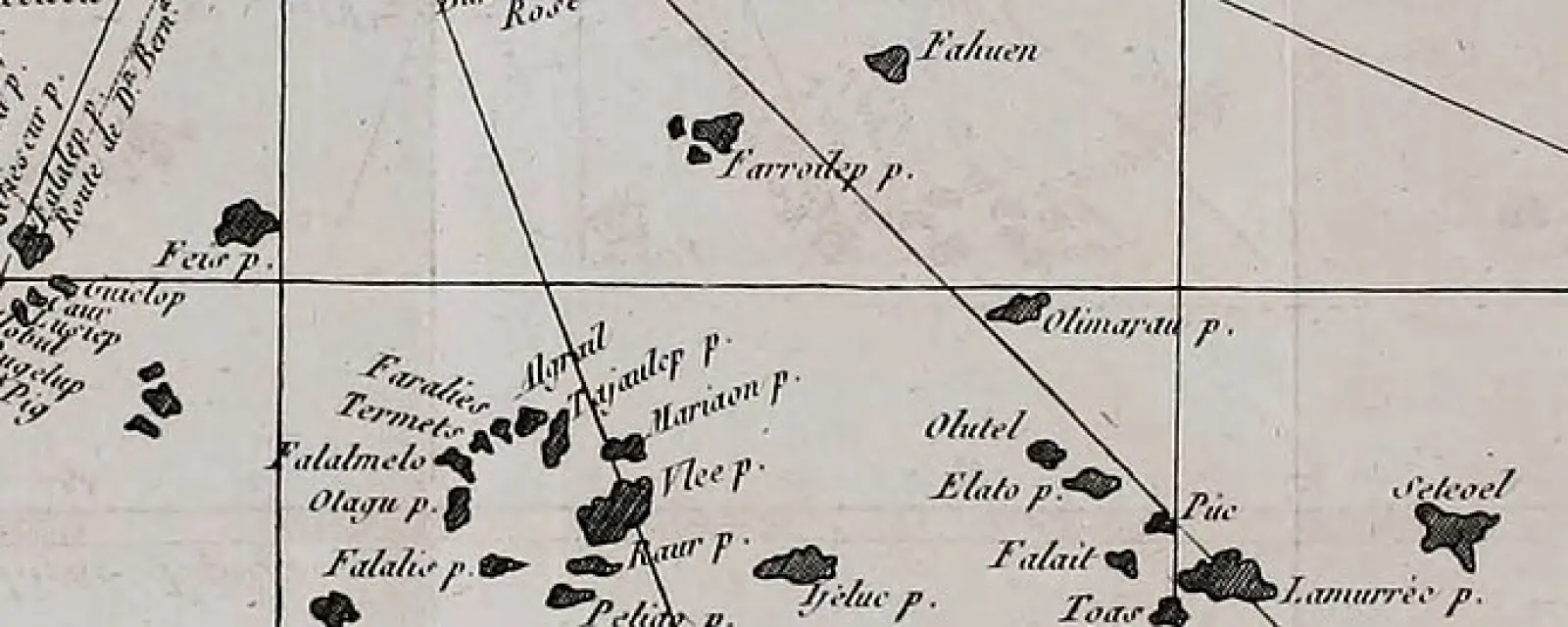
The Federated States of Micronesia — usually FSM — holds a rank-47 passport reaching 107 destinations without a prior visa. Its population is around 110,000, spread across 607 islands scattered over an ocean area nearly the size of the continental United States.
This completes the COFA trio this series has covered: Palau · Marshall Islands · Micronesia. Three countries, three separate treaties with the United States, one core mechanism — and one shared point of abuse.
State it plainly at the outset, because it is the main reason readers arrive here:
🔴 Micronesian citizens may live, work and study in the United States without a visa. But foreigners have no realistic route to becoming Micronesian citizens.
Micronesia has no citizenship or residence programme by investment.
🔴 The COFA treaty — what the mechanism actually is
The Compact of Free Association is a bilateral arrangement between the United States and three Pacific states formerly under US administration. Micronesia signed in 1986, with economic provisions renewed several times, most recently a 20-year package signed in 2023.
The parts that bear directly on readers:
- Micronesian citizens may enter, reside, work and study in the United States without a visa, under "COFA nonimmigrant" status. No time limit, no sponsor required.
- In exchange, the United States holds exclusive military rights in Micronesian territory and waters, including the right to deny access to third-country forces.
- The United States provides multi-year economic assistance, funding much of Micronesia's public budget.
The limits matter, because this is where the picture is most often misstated:
📌 COFA status is not a green card. COFA residents in the US are not permanent residents, do not automatically progress to US citizenship, and the status depends on retaining Micronesian citizenship.
📌 COFA public benefits in the US were once cut and later restored — a 1996 statute excluded them from most federal welfare programmes, and only in 2020–2023 were some restored, including Medicaid. A reminder that treaty-based entitlements are not constitutional ones — the other side's legislature can amend them.
📌 The treaty can be terminated. Either party may withdraw under defined procedures. The probability is low, but that is very different from "permanent".
🔴 Why "Micronesian citizenship for US access" sells something that does not exist
This is the most important section, and it repeats the warning already written for Palau and the Marshall Islands.
Micronesian citizenship is chiefly by descent. The constitution ties citizenship to lineage. Naturalisation for foreigners exists on paper but is extremely restricted, discretionary, and in practice essentially does not occur for people with no ancestral connection.
There is a further layer many are unaware of:
🔴 Micronesia does not permit dual citizenship in naturalisation cases. Even in the hypothetical where someone were naturalised, they would have to surrender their existing citizenship. For anyone seeking "an additional passport", that alone defeats the entire purpose.
Put the three together — descent-based, naturalisation all but closed, no dual citizenship — and the conclusion is unambiguous:
If anyone offers you "Micronesian citizenship to reach the United States", stop immediately and transfer nothing.
It is the same warning sign recorded in the Palau article ("Palauan citizenship for US access") and the Marshall Islands article ("a Marshallese passport into the US"). Three countries, three pitches cut from one pattern. They persist because the COFA mechanism is real and sounds compelling — only the part explaining "how you become a citizen" is invented.
Geography & climate
Micronesia comprises four states, west to east:
- Yap — known worldwide for stone money: enormous limestone discs, some over three metres across, still recognised as valuable by custom. The economically interesting feature: ownership transfers without the stone moving, and the community remembers who holds which. Economists cite this constantly when discussing the nature of money — value resides in a shared communal ledger, not in the object.
- Chuuk — the most populous. Chuuk Lagoon is the world's largest shipwreck graveyard: over 50 Japanese vessels and dozens of aircraft sunk during Operation Hailstone in 1944, now a globally renowned wreck-diving site.
- Pohnpei — home to the capital, Palikir. The island holds Nan Madol, a complex of nearly a hundred artificial islets built from basalt columns, a UNESCO site, constructed from the 12th–13th centuries. Nowhere else in the Pacific has stone construction on that scale.
- Kosrae — smallest, greenest, least visited.
The climate is tropical and very wet. Pohnpei is among the wettest places on earth. Micronesia sits at the edge of the Western Pacific typhoon belt and has suffered severe storms.
Distance needs to be pictured accurately: 607 islands spread over an ocean area nearly the size of the United States. Yap to Kosrae is further than Hanoi to Japan. "One country" here does not mean one place.
History
Micronesians settled these islands thousands of years ago. Nan Madol evidences a society organised enough to mobilise labour at large scale.
Modern history is a sequence of transfers: Spain sold to Germany in 1899, Japan took over after the First World War under a mandate, and turned the islands into a major military base in the Second. Afterwards the region formed the Trust Territory of the Pacific Islands, administered by the United States on behalf of the United Nations.
That trust territory later divided into four separate entities: Micronesia · Marshall Islands · Palau · Northern Mariana Islands. The first three became independent states with COFA treaties; the Northern Marianas chose differently — becoming a US commonwealth, whose people are US citizens.
📌 That last detail is worth remembering, because it explains a common confusion: one trust territory, four political choices, and entirely different citizenship outcomes. People hear "the Northern Marianas confer US citizenship" and infer the same of Micronesia. It does not.
Micronesia adopted its constitution in 1979 and signed COFA in 1986.
Economy
The Micronesian economy stands on four legs, none of them industrial:
1. COFA assistance. It funds much of the public budget. The 2023 renewal runs 20 years and establishes a trust fund to reduce dependence once assistance ends.
2. Fishing fees. Micronesia holds a very large exclusive economic zone with high-value tuna grounds, and sells access to foreign fleets. This is its largest indigenous revenue source.
3. Remittances. Many Micronesians live and work in the United States under COFA — Guam, Hawaii and mainland states — and send money home.
4. Specialist tourism. Wreck diving in Chuuk and diving in Yap are well known within the field, but the scale is small because access is difficult.
Currency: the US dollar. Micronesia uses USD directly with no national currency — so no domestic exchange-rate risk, at the cost of no independent monetary policy.
Within this series, Micronesia belongs to the group of aid- and marine-resource-dependent economies, alongside the Marshall Islands, Palau, Kiribati and Tuvalu. The trust fund created in the 2023 package attempts the path of the Tuvalu Trust Fund of 1987 — using the years of available money to build permanent revenue. It is far too early to judge.
As always: tax obligations here do not replace those in your country of residence.
Culture & people
English is an official language and is used in administration, education and commerce. Alongside it are several indigenous languages quite distinct from one another — Yapese, Chuukese, Pohnpeian, Kosraean and outer-island languages. The four states differ enough in language and custom that "Micronesian culture" cannot be spoken of as a single thing.
Land is tied to lineage and closed to foreign ownership — as in Palau, the Marshall Islands, Tuvalu and most of the Pacific. Foreigners may lease; they may not buy.
Society is traditional with tight community structures, and traditional leadership carries real weight alongside elected government.
There is essentially no Vietnamese community in Micronesia.
Immigration routes
No investment programme. And to be direct: Micronesia is not a migration destination.
Categories existing in law include employer-sponsored work permits, residence through marriage, and certain specialist routes. In a market of 110,000, realistic opportunity is confined almost entirely to specialist roles in development, aid, education or fisheries projects.
Citizenship
By descent. Naturalisation for foreigners is very restricted and discretionary. Dual citizenship is not accepted in naturalisation cases — a notable difference from many other countries in this series, and one that by itself defeats the "additional passport" objective.
🔴 Once more: the COFA right to live and work in the United States belongs to MICRONESIAN CITIZENS. No route exists by which a foreigner relocates to Micronesia and accesses it.
Everyday life
Living costs are high — nearly everything is imported, supply vessels are infrequent, and moving between the four states is itself expensive.
Healthcare: local facilities are limited; specialist cases transfer to Guam, Hawaii or the Philippines. International health insurance with medical evacuation cover is mandatory, not optional.
Education: a basic public system; the College of Micronesia is the main post-secondary institution, with degree study usually meaning Guam, Hawaii or the US mainland.
Connectivity: mainly through Guam, on United's famous "island hopper" linking Honolulu — Majuro — Kwajalein — Kosrae — Pohnpei — Chuuk — Guam. It is among the world's most unusual scheduled services, and for several islands it is the only way out. If that route pauses or reschedules, an entire state is isolated.
Internet: improved by submarine cable, but still limited and expensive on outer islands.
Safety: serious crime is low.
🔴 Long-term risk: much of the population lives on low-lying coast; sea-level rise, saltwater intrusion and intense storms are direct threats. This is the same risk category as the Marshall Islands, Kiribati and Tuvalu — differing in that Micronesia has some high volcanic islands and so does not face the total loss of territory Tuvalu confronts.
Who should consider Micronesia
It may fit if:
- You work in fisheries, oceanography, development assistance or education with a specific project here.
- You are a professional diver or underwater archaeologist — Chuuk and Nan Madol are among the most singular sites anywhere.
Not a fit if:
- 🔴 You are offered "Micronesian citizenship for US access": citizenship is by descent, naturalisation is all but closed, and dual citizenship is not accepted. This is a clear fraud indicator.
- You are looking to settle, work or invest: a market of 110,000 across 607 islands does not provide that.
- You need healthcare, education or connectivity at a developed-country minimum.
But the article is still worth reading even if you never go to Micronesia — because it closes the COFA trio and demonstrates something that recurs throughout this field: a mechanism can be entirely real, attractive and lawful, and still serve as bait, simply by concealing the question of how you would ever qualify for it.