Overview
Mauritius is an island nation in the Indian Ocean, approximately 2,000 km east of southeastern Africa and east of Madagascar. Area: 2,040 km². Population: approximately 1.26 million.
Mauritius is little known in Vietnamese-language advisory circles, yet it is among the most balanced options for families seeking residence in a high-quality-of-life nation without excessive trade-offs:
- Low-standard tax rates for both individuals and businesses; no capital gains tax, no inheritance tax
- Permits dual citizenship — you retain your Vietnamese passport
- Foreign nationals may own real estate within government-approved programs, and purchasing above the threshold includes a residency card for the entire family
- English and French are both working languages
- Political stability, highly ranked for governance and economic freedom in the African region
The main disadvantage is geographic remoteness — no direct flights from Vietnam — and a small domestic market.
Geography & Climate
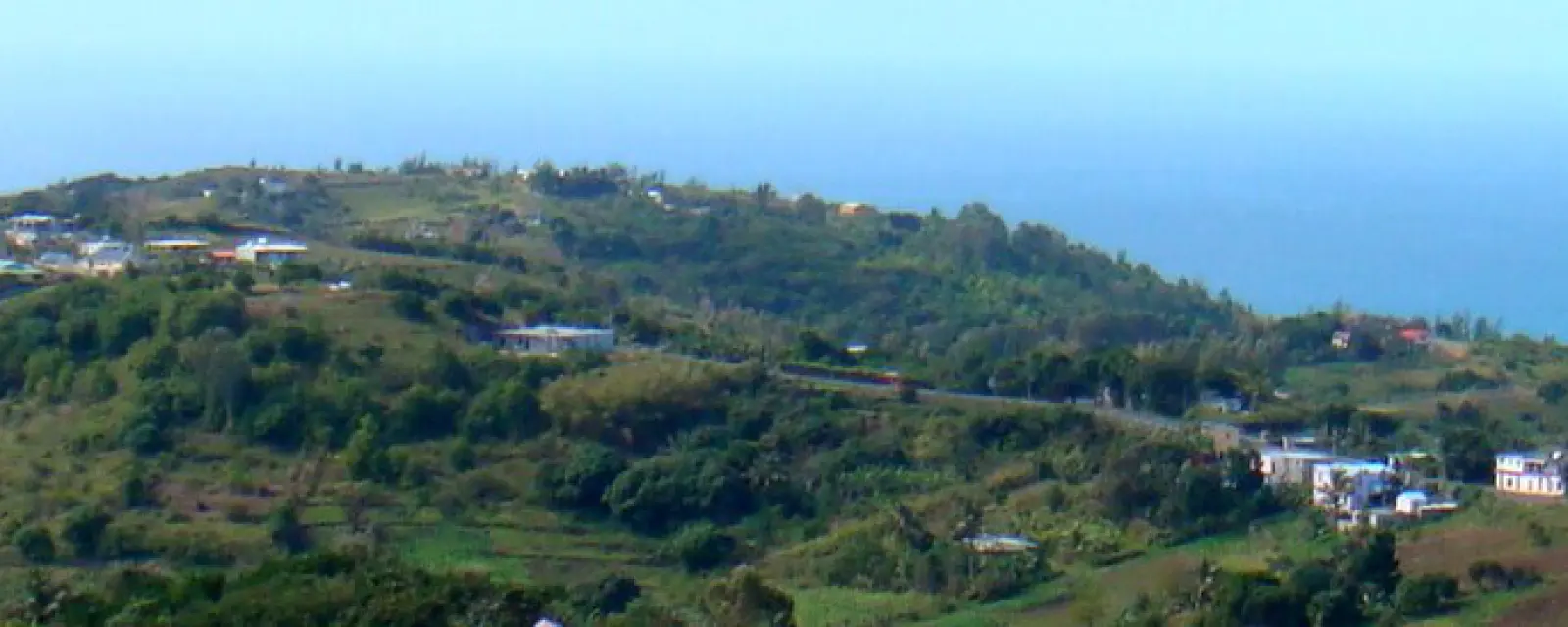
A volcanic island with a central plateau, low mountain ranges, and coastal plains. Nearly the entire island is surrounded by coral reefs creating calm lagoons — the reason Mauritius's beaches are world-famous.
The capital is Port Louis. Major population centers include Curepipe and Quatre Bornes on the plateau, and coastal resort areas such as Grand Baie in the north, Tamarin, and Black River in the west.
Mauritius also administers Rodrigues Island, 560 km to the east.
Tropical maritime climate, moderated compared to its latitude by sea breezes:
- Summer (November–April): 25–33°C, more humid, rainy
- Winter (May–October): 18–26°C, dry, very pleasant
The plateau is several degrees cooler than the coast.
Vietnamese adapt easily — the climate resembles coastal Central Vietnam but is more temperate.
Risk to note: Mauritius lies within the Indian Ocean tropical cyclone belt, with cyclone season running November to April. The island has a good early warning system and building codes suited to cyclones, but strong storms occur periodically. When purchasing real estate, ask about structural standards and insurance.
Historical Formation
Mauritius had no indigenous population — an uninhabited island until Europeans arrived, an extremely rare occurrence.
The Dutch were first and named the island, and they also caused the extinction of the dodo bird — the species symbolizing Mauritius, now existing only in books and on the national coat of arms.
France controlled the island from 1715 and developed sugar plantations using enslaved labor. Britain captured the island in 1810 and held it until Mauritius's independence.
After abolition of slavery, the British brought hundreds of thousands of contract laborers from India to work on plantations. This is why today approximately two-thirds of Mauritius's population is of Indian descent.
Independence on March 12, 1968; became a republic in 1992; remains part of the Commonwealth.
Mauritius's development story is noteworthy: from an economy based solely on sugar, the nation successfully diversified into textiles, tourism, financial services, and technology — regarded by many economists as a rare development model in Africa.
Culture & People
One of the world's most harmonious multicultural societies: Indo-Mauritian (both Hindu and Muslim), Creole, Chinese, French communities coexist with a high degree of harmony.
This is reflected in the calendar: Diwali, Lunar New Year, Eid, and Christmas are all official public holidays. For Vietnamese nationals, having Lunar New Year as a national holiday in a country nearly 6,000 km from Vietnam is quite surprising and pleasant.
Languages: English is the language of administration and legislation; French is common in media and business; Mauritian Creole is the everyday language for most people. Hindi, Bhojpuri, and Chinese are also used within their communities.
For Vietnamese: you can live and work entirely in English — a major advantage.
Mauritian cuisine blends Indian, Chinese, French, and Creole influences — many dishes use curries, seafood, stir-fried noodles, very much suited to Vietnamese tastes.
The Vietnamese community in Mauritius is very small. However, the long-established Chinese community has a familiar culture.
Economy & Opportunities
Financial services — Mauritius is an international financial center serving capital flows into Africa and India, with an extensive double-taxation-avoidance treaty network. This sector has undergone multiple reforms to meet international transparency standards.
Luxury tourism — coastal resorts attracting European, Southern African, and Indian visitors.
Real estate — a developing market boosted by foreign-resident programs.
Information technology and business process outsourcing — a growing sector leveraging English-French bilingual advantages and favorable time zones for both Europe and Asia.
Textiles and agriculture — sugar cane, tea, seafood.
For Vietnamese entrepreneurs: Mauritius has value as a gateway to African and Indian markets — two fast-growing regions where Vietnamese enterprises have limited access. Mauritius's trade agreements and tax network are practical tools for this purpose.
On taxation:
- Personal and corporate income tax at low-standard rates — among the most competitive levels
- No capital gains tax
- No inheritance tax
- No tax on dividends from Mauritian companies for shareholders
Reminder: clarify your tax obligations in Vietnam with a tax attorney.
Residency Programs
Mauritius has a fairly clear licensing system administered by the Investment Promotion Agency.
Residency Through Real Estate Ownership
Foreign nationals may purchase real estate within government-approved programs — developments designated for foreign nationals with various names depending on policy generations.
Core strength: purchasing real estate above the minimum price threshold allows the buyer, spouse, and dependent children to receive a residency card, valid for as long as the property is owned.
This is a clearer and simpler mechanism than many other programs — you do not need to meet complex annual compliance requirements.
Occupation Permit — Work Authorization
Three categories, typically issued for multiple years:
Investor — contributing capital to a Mauritian business meeting thresholds, with minimum revenue requirements.
Professional — holding an employment contract in Mauritius with a salary meeting the threshold.
Self-Employed — operating a service business with revenue transfers to a Mauritian bank account meeting the threshold.
Premium Visa
Long-term visa for individuals working remotely for overseas companies or clients, or those wishing extended stay without economic activity in Mauritius. Conditions are relatively light.
Permanent Residency and Citizenship
Permanent residents may apply after holding an Occupation Permit or real estate residency card for a certain period, or through higher-threshold investment — typically issued for multiple years and renewable.
Mauritian citizenship: may be obtained after several years of lawful residence under the Citizenship Act. Mauritius permits dual citizenship — you retain your Vietnamese passport. This is different from Japan, South Korea, Singapore, and Panama.
A Mauritian passport offers solid travel freedom, including visa-free access to the Schengen zone and many Asian and African countries.
On specific figures: minimum real estate price thresholds, required capital amounts, and revenue requirements for different Occupation Permit categories change with regulations. See the specifications table on this page or consult a specialist.
Living Reality
Cost of living is moderate — higher than Thailand and Malaysia, lower than Singapore, Western Europe, or Australia. Real estate within foreign-resident programs is in the luxury segment, so prices are not cheap; domestic market housing is affordable.
Imported goods are expensive due to the remote island location. Local produce and seafood are abundant and inexpensive.
Healthcare: the public system is free for residents, with basic quality acceptable. Private hospitals are higher quality at reasonable cost, with English- and French-speaking doctors. Very complex cases are typically referred to South Africa, India, or Europe. Private health insurance is necessary for long-term residents.
Education: system follows the British model with Cambridge examinations — qualifications recognized internationally. International schools operate in areas with foreign resident concentrations, with tuition significantly lower than Asia. Some international universities have branches in Mauritius.
Transportation: Sir Seewoosagur Ramgoolam International Airport has flights to Dubai, Doha, Singapore, Kuala Lumpur, Hong Kong, Paris, Johannesburg, and Mumbai.
From Vietnam there are no direct flights — one connection through Singapore, Kuala Lumpur, or Dubai, totaling approximately 13–18 hours. Compared to the Caribbean or Panama, this is actually considerably more convenient.
Time difference with Vietnam is 3 hours (Mauritius is behind) — entirely feasible to work during overlapping business hours with domestic contacts.
Who Should Consider Mauritius
Well-suited if you:
- Want to gain residency through real estate ownership with a straightforward mechanism — purchase above threshold and your entire family receives a card; own property and you keep the card
- Seek citizenship while retaining your Vietnamese passport — Mauritius permits dual citizenship
- Prioritize low-standard tax rates, no capital gains tax, no inheritance tax
- Need an environment where English is fully operational — a major advantage over Japan, South Korea, Italy, Spain
- Conduct business with African and Indian markets — Mauritius is a practical gateway
- Work remotely — Premium Visa has light conditions, only 3-hour time difference from Vietnam
- Prefer temperate maritime climate, a harmonious multicultural society, and Lunar New Year as a national holiday
Not well-suited if you:
- Need direct flights to Vietnam — you must connect, though only one stop and 13–18 hours total
- Want a large domestic market for business — only 1.26 million people
- Require specialized healthcare locally — complex cases require travel abroad
- Expect Vietnamese community and Vietnamese-language services — virtually nonexistent
- Cannot accept Indian Ocean cyclone risk during November–April
- Want a quick passport without actual residence — Mauritius requires several years of genuine residence for naturalization
This article provides foundational reference information. Investment thresholds and licensing conditions in Mauritius change with regulation. Please consult with a Viking Global Group specialist before making decisions.