Overview
Malta is an archipelago in the Mediterranean, located roughly 80 kilometers south of Sicily, Italy, and 290 kilometers north of North Africa's coast. Its territory spans just 316 km² — smaller than the U.S. state of Rhode Island — with a population of around 535,000 people. It is the smallest country in the European Union.
Malta is a member of the EU, the Schengen Area, and the Eurozone. And it possesses one advantage that no other EU country offers at comparable strength: English is the official language, used throughout administration, courts, education, and business — a legacy of 150 years under British rule.
For foreign investors, this removes the largest barrier when relocating to Europe: you do not need to learn a new language to handle paperwork, visit hospitals, or enroll children in school.
But this must be stated immediately: Malta's citizenship-by-investment program faces serious legal uncertainty following a ruling by the European Court of Justice. The section below explains this clearly — this is essential information you must understand before considering this route.
Geography & Climate
The archipelago comprises three inhabited islands: Malta (largest, home to the capital Valletta), Gozo (quieter, more rural), and Comino (nearly unpopulated).
The terrain is low limestone rock with no rivers, no large forests. All freshwater comes from desalination and groundwater — Malta ranks among the world's most water-stressed nations.
Mediterranean climate is pronounced:
- Summer (June–September): 28–35°C, almost bone-dry, intense sun
- Winter (December–February): 12–18°C, concentrated rainfall, strong winds
- Over 300 sunny days per year
Foreign residents typically adjust to temperatures easily, but should note low humidity and constant sea breezes — very different from tropical humidity. Summer offers almost no tree shade because the island is mostly barren.
Population density ranks among the world's highest — over 1,600 people per km². Traffic is congested, parking is scarce, and the sense of crowding catches many newcomers off guard.
Historical Background
Malta's Mediterranean location made it perpetually contested: Phoenicians, Carthaginians, Romans, Arabs, Normans, Spanish powers.
The turning point came in 1530, when Holy Roman Emperor Charles V granted Malta to the Sovereign Military Order of Saint John. The Knights ruled for over two centuries, building Valletta into one of Europe's most magnificent fortified cities — now a UNESCO World Heritage Site. The Great Siege of 1565, when a handful of thousand Knights resisted an Ottoman fleet many times their size, became the defining moment of national identity.
Britain controlled Malta from 1800. During World War II, the island endured one of history's heaviest bombing campaigns — the entire population was awarded the George Cross, the highest civilian decoration in the British honours system.
Malta gained independence in 1964, became a republic in 1974, joined the European Union in 2004, and adopted the Euro in 2008.
Culture & Society
Two official languages: Maltese (the only Semitic language written in Latin script, rooted in Arabic with Italian influence) and English. Maltese people speak English as a strong second native language; many also speak Italian from watching Italian television since childhood.
Roman Catholicism runs deep in daily life. Each village has its own patron saint and hosts a summer festa festival with fireworks, processions, and brass bands — lively celebrations that run through the season.
Maltese society places strong emphasis on family and tight-knit community bonds. Because the islands are small, nearly everyone knows each other through a few degrees of separation — creating warmth but making privacy difficult.
Malta has a very large expatriate community relative to its population — employed in finance, online gaming, maritime, and tourism. The Vietnamese community remains small.
Economy & Opportunities
Malta has transformed from an economy dependent on British military bases into a services hub:
Financial services: investment funds, insurance, asset management — Malta has built EU-standard regulatory frameworks and attracts many institutions.
Online gaming and gambling: Malta is one of the world's largest licensing hubs for this sector, generating tens of thousands of jobs.
Maritime: Malta's ship registry ranks among Europe's largest, leveraging its location and favorable legal framework.
Tourism: attracts over three million visitors annually — six times the population.
Malta's economy has ranked among Europe's fastest-growing for many years; unemployment is very low.
On reputation — plainly stated: Malta was placed on the Financial Action Task Force's enhanced monitoring list in 2021 due to anti-money laundering deficiencies, and was removed in 2022 following reforms. This history means international banks conduct more rigorous due diligence on Malta-related cases than they would for most countries — you will need to prepare comprehensive documentation of fund sources.
The currency is the Euro, eliminating foreign exchange risk.
Residency Programs
Malta offers two fundamentally different program categories, and many people confuse the two.
Category 1 — Malta Permanent Residency Program (MPRP)
The Malta Permanent Residency Program grants permanent residency rights, not citizenship. It combines real estate purchase or rental, government contribution, and charitable donation.
Permits living in Malta and travel within the Schengen Area. Covers spouse, dependent children, parents, and grandparents. This route is legally stable and uncontroversial.
Category 2 — Malta Citizenship by Investment (MEIN)
This is the contested program. Malta grants citizenship to investors after a residency period (12 or 36 months depending on contribution level), providing a full EU passport.
### ⚠ Critical Legal Warning The European Commission has sued Malta before the European Court of Justice, arguing that selling citizenship — equivalent to selling EU citizenship rights — violates EU law. In April 2025, the Court ruled against Malta, determining the program as structured does not comply with EU law. Malta is required to restructure the program, and the future of citizenship-by-investment in its current form is highly uncertain. This is information that must be disclosed to prospective applicants, even though it makes the program less attractive. If you are being pitched "buy a Malta passport," demand that the advisor clearly explain the current legal status and the risk if the program is suspended mid-application. Before considering this route, discuss directly with a specialist to get the latest updates — this is an area undergoing substantial change.
On specific numbers: contribution amounts, real estate values, required residency periods, and due diligence fees change according to regulations in effect at any given time. See the program specifications on this page or consult with a specialist.
Life in Practice
Cost of living sits at average EU levels, higher than Portugal and Greece. Housing prices and rents have risen sharply due to rapid population growth on fixed land. Most food is imported, making it more expensive than other Mediterranean countries. Electricity and water bills are significant because desalination is required.
Healthcare: a genuine strength. Malta's public system ranks well in international assessments; Mater Dei Hospital is modern. Doctors speak English. Residents with a residency card access the public system. Private insurance is also common and affordable.
Education: the entire education system teaches in English — free public schools, quality private and church schools, international schools offering the IB program. University of Malta lectures in English; degrees are recognized across the EU. This is Malta's single biggest advantage for Vietnamese families with school-age children.
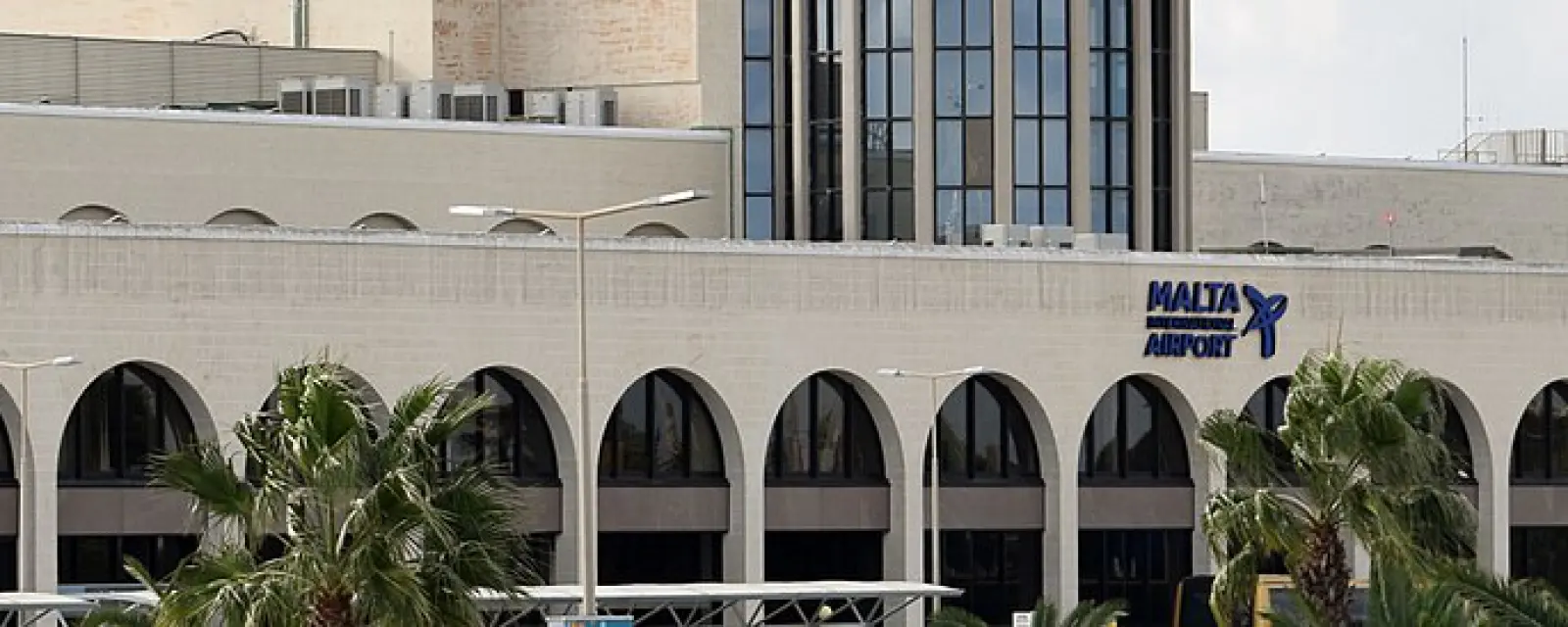
Travel: no direct flights from Vietnam. Connections typically via Doha, Dubai, or Istanbul, then onward; total journey roughly 16–19 hours. Malta Airport connects well throughout Europe.
Time difference with Vietnam: 5–6 hours depending on the season.
What many people don't anticipate: the islands are very small. You can drive the length of the main island in roughly 45 minutes. After a few months, the sense of confinement becomes real for people accustomed to large cities. You should spend an extended period there before committing to permanent relocation.
Who Should Consider Malta
Well-suited if you:
- Need a fully English-speaking environment — for paperwork, healthcare, and especially for children's education
- Have school-age children and want an English-curriculum education without paying premium international school fees
- Value high-quality healthcare delivered in English
- Work in finance, maritime, or online gaming — sectors where Malta has established ecosystems
- Seek EU permanent residency with legal stability → choose the MPRP route, which carries no controversy
Not well-suited if you:
- Your goal is an EU passport through investment — this route faces serious legal uncertainty after the 2025 European Court ruling; the risk is real
- You cannot tolerate confined space and high population density — the islands span just 316 km²
- You expect natural landscapes, green space, mountains, forests — Malta has almost none
- You operate on a tight budget — Malta's costs exceed Portugal and Greece in most categories
- You prefer your financial affairs to receive minimal international banking scrutiny — Malta's history means more thorough due diligence
This article provides foundational information for reference. The Malta citizenship-by-investment program specifically faces shifting legal terrain following the European Court of Justice ruling — you are obligated to consult with a specialist at Viking Global Group to get the latest developments before making any decision.