Overview
Jordan is located in the Middle East, with an area of approximately 89,000 km² and a population of around 11 million. It borders Saudi Arabia, Iraq, Syria, Israel, and the West Bank.
Jordan is one of the few countries outside the Caribbean region that still maintains a citizenship by investment program. Following Europe's closure of citizenship-for-investment schemes — Cyprus in 2020, Bulgaria in 2022, Malta in 2025 — remaining options are scarce, and Jordan is among them.
Geography and Climate
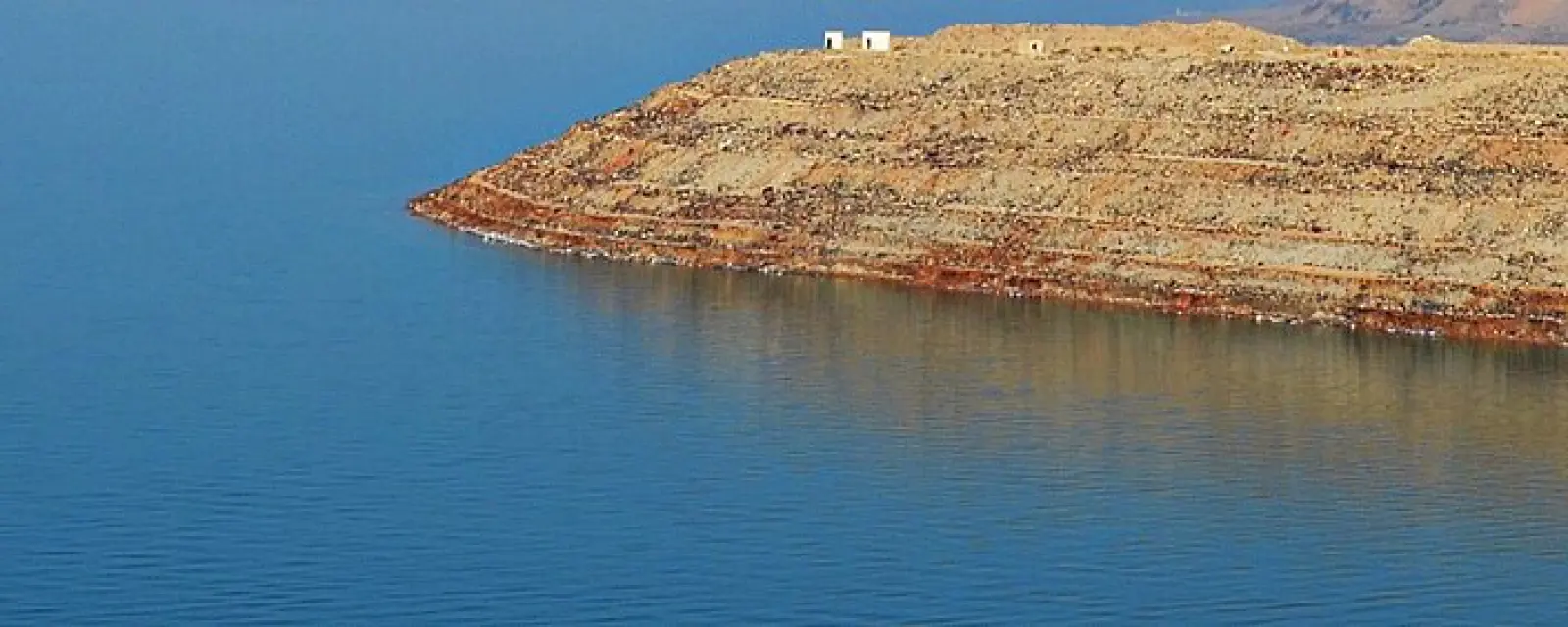
Most of the territory consists of desert and arid highlands. Notable features include the Jordan River valley and the Dead Sea — the lowest point on Earth's land surface, approximately 430 meters below sea level. The only maritime access is the Gulf of Aqaba on the Red Sea.
Amman sits at approximately 750 to 1,000 meters elevation, providing a milder climate than much of the Middle East: summers are hot and dry, ranging from 28 to 35 degrees Celsius but with low humidity, while winters are cool and can include snow, ranging from about 5 to 15 degrees Celsius.
Water is a genuine challenge for Jordan — it ranks among the world's most water-stressed countries, affecting daily life and costs significantly.
History and Culture
The region has deep historical roots: Petra — the carved city of the Nabataeans — is a UNESCO World Heritage Site and one of the world's most recognizable archaeological monuments. Jerash contains some of the best-preserved Roman ruins outside Italy.
Modern Jordan emerged after World War I and achieved independence in 1946 under a constitutional monarchy.
The most distinctive aspect of Jordan in its regional context: relative stability. Despite being surrounded by conflict zones, Jordan has maintained stability for decades and has absorbed large numbers of refugees from neighboring countries through multiple waves.
Arabic is the official language. English is widely spoken in Amman in education and business contexts.
Economy and Taxation
The economy relies on services, tourism, phosphate extraction, textiles, and remittances. Jordan has limited oil and gas resources compared to neighboring countries and is energy-import dependent.
The country has progressive personal income taxation and value-added tax.
Unemployment rates are high, particularly among youth, and the domestic market has limited purchasing power.
Residency and Citizenship Programs
Jordan's citizenship by investment program offers multiple investment pathways:
- Non-interest-bearing deposits at the central bank for a specified period
- Government bond purchases
- Business investment with requirements to create a certain number of jobs for Jordanian nationals
There are also permanent residency options with lower thresholds.
Strengths:
- Grants citizenship, not just residency — something very few programs outside the Caribbean offer
- Multiple investment pathways to suit different asset structures
- Jordan is relatively stable within its region
- Amman has a milder climate than most of the Middle East
Disadvantages:
The travel value of a Jordanian passport is moderate. This must be stated clearly: if your primary goal is visa-free travel access, a Jordanian passport does not compete with Caribbean passports. You should compare specific visa-free lists before deciding, rather than assuming that "citizenship" means "good travel benefits."
Regional geopolitical context. Jordan is stable but situated amid zones of conflict. This is a factor you must assess independently, and we take no political position on it.
Program terms change fairly regularly — Jordan has adjusted investment thresholds and pathways multiple times.
Water scarcity affects long-term quality of life.
Limited domestic market and high unemployment rates.
Arabic language proficiency needed for life outside Amman.
We have not processed applications for this program. Program terms change regularly — verify current requirements with the competent authorities.
Who Should Consider Jordan
Well-suited for those with business interests connected to the Middle East who want citizenship in that region.
Well-suited for those who prioritize holding citizenship over the travel value of a passport — for example, to facilitate business operations and asset ownership within the region.
Not well-suited for those whose primary goal is visa-free travel access. For that objective, the five Caribbean programs at the 200,000 USD floor level offer better value, and Grenada is the only country in that group with an E-2 treaty with the United States.
Not well-suited for those unwilling to account for regional geopolitical considerations.
This information is provided for reference only and does not constitute legal or investment advice. We take no position on regional political matters.