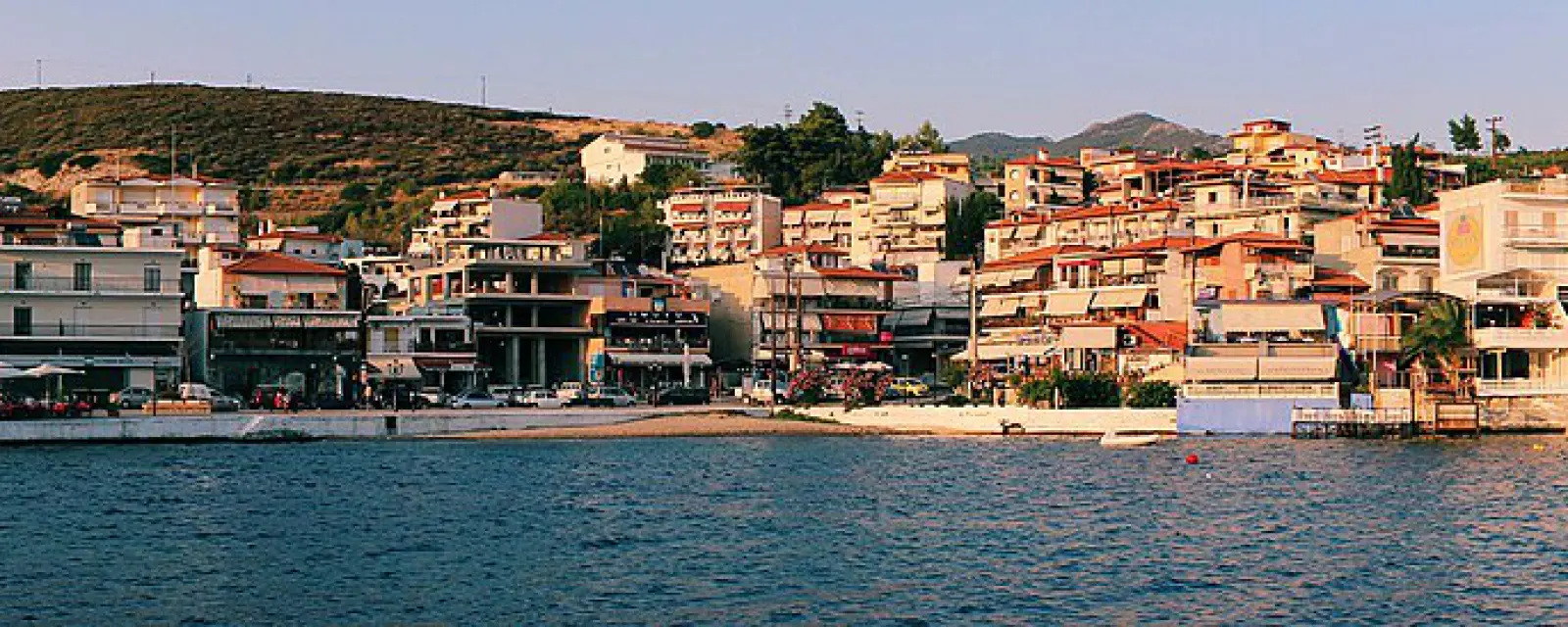
Overview
Greece occupies the southern tip of the Balkan Peninsula, consisting of a mainland region plus approximately 6,000 islands of varying sizes scattered across the Aegean and Ionian Seas—roughly 230 of which are inhabited. Population is approximately 10.4 million.
As a member of the European Union, Schengen Area, and Eurozone, Greece issues a residency card permitting visa-free travel throughout 29 Schengen countries.
What distinguishes Greece's program: no minimum residency requirement. You may never set foot in Greece after receiving the card and still retain it. This is the highest flexibility available among EU investment residency programs—even exceeding Portugal, which still requires 7 days per year.
In return, precisely because actual residency is not required, the pathway to citizenship is nearly impossible—a common misunderstanding. This will be clarified below.
Geography & Climate
Area of 132,000 km², but with a coastline exceeding 13,600 km—the longest in the Mediterranean and among the longest in the world. Terrain is predominantly mountainous; plains are limited.
Typical Mediterranean climate:
- Athens: hot dry summers 30–38°C, mild winters 8–15°C, rare snow
- Thessaloniki in the north: colder winters, can drop to 0°C
- Islands (Crete, Rhodes, Santorini): temperate year-round, winters 12–17°C
For those accustomed to tropical humidity, Athens summers can be more intense than expected—dry and intense sun, quite different from humid heat. Spring and fall are most pleasant.
A frank point about risks: Greece sits on one of Europe's most seismically active zones, with minor earthquakes occurring regularly. Additionally, summer wildfires are a serious problem and intensifying—when purchasing property in forest-adjacent areas or on islands, ask detailed questions about fire history and distance from forests.
Historical Development
Few places on earth carry historical weight like this region. 5th-century Athens saw the birth of democracy, Western philosophy, dramatic arts, and mathematical principles still taught today.
Following antiquity came Rome, then the Byzantine Empire with Constantinople as capital, lasting over a thousand years. From the 15th century, Greece fell under Ottoman rule for nearly four centuries—influences still evident in cuisine, music, and language.
The independence struggle began in 1821, with the modern Greek state recognized in 1830. The 20th century saw significant upheaval: civil war following World War II, military rule 1967–1974, then democratic restoration and EU accession in 1981.
The sovereign debt crisis of 2010–2018 is the defining event of contemporary Greece: severe economic contraction, unemployment exceeding 27% at its peak, three international bailouts with harsh austerity conditions. The Golden Visa program was introduced in 2013 precisely in this context—Greece needed foreign capital to revive its frozen real estate market.
Understanding this background helps you assess correctly: this program was born from an urgent capital need and may be tightened when that urgency fades—as occurred in 2024.
Culture & Society
Greek uses its own alphabet, entirely different from Latin script—a genuine barrier for newcomers. However, English is widely spoken in Athens, major cities, and all tourist areas. Young Greeks speak English well.
Society emphasizes family, friends, and communal dining—quite familiar to Vietnamese culture. Dinner starts late, typically after 21:00. Greek Orthodoxy is the dominant religion and influences daily life and festivals deeply.
Work pace is noticeably slower than Northern Europe. Greek administrative procedures are notorious for slowness and paperwork—mentally prepare yourself and always work through an experienced service provider.
The Vietnamese community in Greece remains small, concentrated mainly in Athens. Significantly smaller than in Portugal.
Economy & Opportunities
Three pillars: maritime shipping, tourism, agriculture.
Maritime shipping is a little-known strength: Greek shipowners control the world's largest commercial fleet by deadweight tonnage. Piraeus is among the busiest ports in the Mediterranean.
Tourism contributes roughly one-fifth of GDP. Greece welcomes over 30 million international visitors annually—three times the population. This creates genuine demand for short-term rentals, particularly on islands and in central Athens.
Agriculture: olive oil, wine, feta cheese, fruit—all export staples with established brands.
The economy has recovered clearly from the crisis, with positive growth for consecutive years and upgraded credit ratings. However, public debt remains high and domestic wages lag Western Europe.
Currency is the Euro—no exchange rate risk.
Residency Program
Greece's Golden Visa operates since 2013, having been Europe's most popular real-estate-based investment residency program for a decade due to its lowest thresholds in the bloc.
Major change in 2024: Greece raised investment thresholds and regionalized them. Hot zones—Athens, Thessaloniki, Mykonos, Santorini, and densely populated islands—face much higher minimums than the rest of the country. The goal is to reduce housing pressure where locals can no longer afford to buy.
Two paths still offer lower thresholds: restoration of heritage-listed properties, and conversion of commercial real estate to residential use. Both require deep technical and legal knowledge—not suitable for everyone.
Strengths:
- No minimum residency requirement—highest flexibility in EU
- Card issued to spouse, dependent children, and parents on both sides—broader family scope than most programs
- Processing relatively fast compared to other EU countries
- You retain genuine asset ownership, not a contribution that disappears
Points to understand correctly—this is where many are advised wrongly:
Golden Visa is a residency card, not citizenship. To apply for Greek citizenship you need actual residency for 7 years plus Greek language certification and integration testing. But if you don't live in Greece—which is precisely why most choose this program—time holding the card does not count toward naturalization.
To be direct: this is a residency and travel program, not a pathway to an EU passport. Those seeking European citizenship should look elsewhere.
On specific figures: investment thresholds vary by region, fees, and processing times have changed in 2024 and may continue to change. Check current parameters in the Program section on this page or consult a specialist.
Daily Life
Cost of living is among the lowest in the EU. Fresh groceries, dining out, and local wine are all inexpensive. Electricity and winter heating are notable expenses. Housing prices in Athens have risen sharply since 2018 but remain lower than Lisbon, Madrid, or Milan.
Healthcare: the public system suffered severe damage during the debt crisis and remains underfunded in rural areas. Private hospitals in Athens and Thessaloniki offer good quality at reasonable cost compared to Western Europe. For long-term residency, purchase private health insurance.
Education: public schools teach in Greek. Athens has several international schools offering English and IB curricula at average European costs. Greek universities have very low fees but most instruction is in Greek.
Travel: no direct flights from Vietnam. One connection through Doha, Dubai, or Istanbul, totaling roughly 15–18 hours. From Athens, flying throughout Europe is convenient and inexpensive.
Time difference from Vietnam is 4–5 hours depending on the season—easy for collaborating with domestic partners.
Who Should Consider Greece
Well-suited if you:
- Want an EU residency card without relocating to Europe—no country is more flexible
- Travel Schengen frequently for business and don't want to apply for visas repeatedly
- Want to hold real assets rather than make a non-recoverable contribution
- Need to include both sets of parents in your application—broader family scope than most alternatives
- Intend to operate rental properties and understand the risks of managing from abroad
Not well-suited if:
- Your goal is an EU passport—Golden Visa Greece nearly never leads to citizenship unless you genuinely relocate for 7 years
- You cannot tolerate slow administration and extensive paperwork
- You want to purchase in Athens or famous islands with previous budget levels—thresholds rose in 2024
- You're uncomfortable with earthquake and wildfire risks, or lack time to thoroughly evaluate property location
- You need capital recovery quickly—selling property may affect your residency card, and island markets have low liquidity
This article provides foundational information for reference purposes. Greece's investment thresholds and program conditions changed in 2024 and may continue to evolve. Please consult with a Viking Global Group specialist before making any decisions.