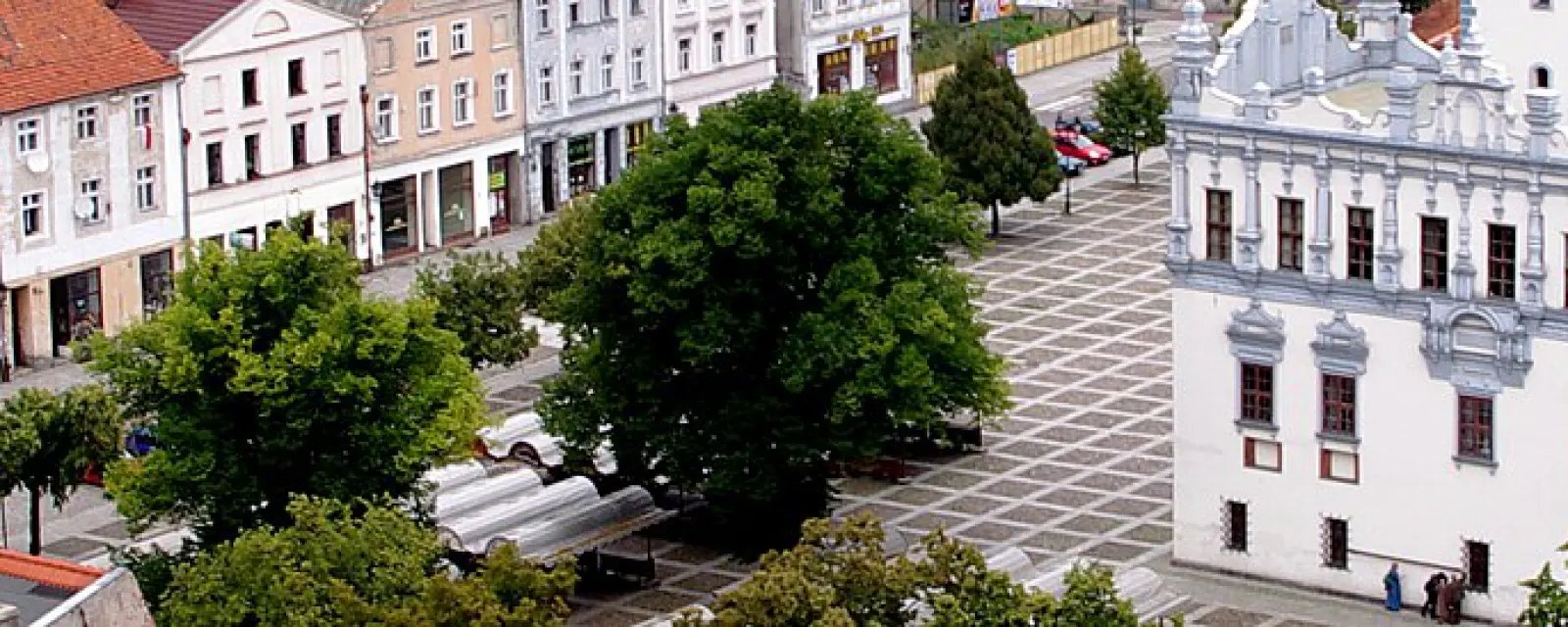
Overview
Poland holds a rank-6 passport with 162 destinations reachable without a prior visa. It is a member of the European Union and Schengen, but does not use the euro — its currency is the złoty (PLN).
With around 36.7 million people, it is Central Europe's most populous country and the EU's sixth-largest economy.
State it plainly: Poland has no residence or citizenship by investment. There is no golden visa. The routes in are work, business, study, family — or, for those of Polish descent, a separate path covered below.
Of note for Vietnamese readers: Poland hosts a Vietnamese community dating from the socialist era, with the same roots as the community in Czechia — students and workers who came under state-to-state agreements, then stayed and moved into business after 1989. The Wólka Kosowska trade centre near Warsaw is the community's commercial hub, playing a role similar to Prague's SAPA market.
One important difference from Czechia: Vietnamese in Poland do not hold recognised national-minority status. The community is real and useful, but it does not come with a dedicated legal framework as in Czechia.
Geography & climate
Poland lies in Central Europe, bordering Germany to the west, Czechia and Slovakia to the south, Ukraine and Belarus to the east, and Lithuania and Russia's Kaliningrad exclave to the north-east, with a Baltic coastline to the north.
Most of the territory is plain — the country's Polish name derives from the word for field. The south holds the Tatra range within the Carpathians, home to Zakopane. The north has the Masurian lake district with thousands of glacial lakes.
The capital, Warsaw, in the centre, is the financial and administrative hub. Kraków is the former capital and cultural centre; Wrocław, Poznań, Gdańsk and Łódź are genuine economic poles in their own right, meaning opportunity is not concentrated solely in the capital as it is in many countries.
The climate is temperate continental: cold snowy winters, typically around −5°C with deeper cold spells in the east; warm summers around 25°C. Four distinct seasons.
History
Poland's history is both glorious and tragic, and understanding it explains the national character.
Ascendancy: the Polish-Lithuanian Commonwealth of the sixteenth and seventeenth centuries was among Europe's largest entities, with a tradition of religious tolerance and an unusual elective monarchy.
Erasure: in the late eighteenth century, Poland was partitioned by three neighbours and removed from the map for 123 years. It was re-established only in 1918.
The Second World War: the war began in Poland in 1939, and the country suffered among the highest per-capita losses in the world. Warsaw was almost entirely destroyed after the 1944 Warsaw Uprising — the old town today is a reconstruction, and is UNESCO-listed precisely for that act of rebuilding.
Post-war: within the Soviet bloc. The Solidarity movement, born in the Gdańsk shipyards in 1980, provided the first push toward the bloc's collapse in Central Europe; Poland held semi-free elections in 1989.
It joined NATO in 1999 and the EU in 2004.
Culture & people
Poles are known for hospitality, family orientation and strong patriotism — understandable in a nation once erased from the map. Catholicism has deep historical significance, though observance among the young is visibly declining.
Polish is a West Slavic language, related to Czech and Slovak. It is difficult — seven noun cases, dense consonant clusters — but written in the Latin alphabet, making reading and writing more approachable than Russian.
English is common among urban young people and in technology, less so in the regions and among older generations.
One major shift is worth knowing: Poland moved from being a country of emigration to one of immigration within a decade. After 2004, millions of Poles went to work in Western Europe; today Poland receives large numbers of foreign workers, especially from Ukraine. This means the system for receiving foreigners is far more practised than fifteen years ago, though processing can still be slow.
Economy & opportunity
This is Poland's clearest strength and the reason it deserves serious consideration.
Poland was the only EU member state to avoid recession during the 2008-2009 financial crisis, and has sustained growth across the three decades since its economic transition. This is not a short boom but a long process.
The pillars: industrial manufacturing (vehicles, components, appliances, furniture — Poland is a world-leading furniture exporter), business services for global corporations — Kraków, Wrocław and Warsaw are major centres for accounting, finance and technical support for multinationals; information technology, with a large and well-regarded developer workforce; logistics, on the strength of its transit position; and agri-food.
Demand for foreign labour is broad: IT, engineering, healthcare and nursing, construction, logistics, manufacturing.
Wages sit below Western Europe but are rising quickly, and living costs are correspondingly lower, so real income differs less than headline figures suggest.
As always: Polish tax obligations do not replace those in your home country.
Immigration routes
No investment programme exists. The genuine routes:
- Work permit and temporary residence with work rights — the main door. Typically the employer obtains a permit first, or a temporary residence card is issued combining residence and work rights.
- EU Blue Card — for highly qualified workers meeting a salary threshold, accumulating time across EU states.
- A technology-sector route — Poland operates a streamlined scheme for IT specialists and startups in the field. Its conditions and name have changed over time; check the current version.
- Business activity — establishing a company and obtaining residence as its operator. Authorities assess genuine activity: turnover, jobs created, tax contribution. It is not an investment programme; no capital threshold buys a permit.
- Study — low fees by Western European standards, many English-taught programmes, with a post-graduation period to find work.
- Family reunification.
- The Pole's Card (Karta Polaka) — for those of Polish descent who can document their origins and demonstrate a connection to Polish language and culture. It opens a markedly faster path to residence and citizenship. Mentioned because it exists and is highly valuable to those who qualify — but to be clear: it is a descent-based route and does not apply to most applicants.
Permanent residence and citizenship
Permanent residence typically follows several years of continuous temporary residence, with a Polish language certificate.
Citizenship has two main paths:
- Recognition as a citizen, decided by the provincial governor, typically requiring a number of years with permanent residence status, a Polish language certificate at B1, stable income and lawful accommodation.
- A grant by the President — a discretionary power with no fixed conditions and no right of appeal.
On dual citizenship, this is easily misunderstood and deserves precision: Poland does not require naturalising applicants to renounce their former nationality. But Polish law treats a Polish citizen solely as a Polish citizen in dealings with the Polish state — meaning you cannot invoke your other nationality before Polish authorities. In practice most people retain both, but understand the nature of the rule rather than reading it as full recognition of dual nationality.
Everyday life
Living costs are moderate by Western European standards, and lower than Czechia on many lines outside Warsaw. Warsaw and Kraków are the most expensive; the other cities are considerably easier.
Housing: prices have risen sharply in the major cities in recent years, but the rental market remains more accessible than Dublin or Amsterdam. The multi-polar economy offers real options outside the capital.
Healthcare: a public system exists but with long specialist waits; private insurance is very common and far cheaper than in Western Europe, often provided as an employment benefit. Factor this in when comparing packages.
Education: free public schooling in Polish. International schools exist in the major cities. Public universities charge non-EU students, but at modest levels by Western European standards.
Transport: road and rail networks have improved enormously through two decades of infrastructure investment. Major cities have good, inexpensive public transport.
Safety: high.
What to prepare for: Polish is a real barrier outside technology and multinational environments; and residence processing can be slow — waiting times in some provinces are considerable, so file early and keep documentation of your lawful status while waiting.
Regional security: bordering Ukraine and Belarus is a factor many families weigh. Poland is a NATO member; consider this on the evidence rather than ignoring or exaggerating it.
Who should consider Poland
A good fit if:
- You work in IT, engineering, business services, healthcare or logistics: these are where Poland is short of people and where pay is rising fastest.
- You want a low-cost EU country with a durable economy, and accept nominal wages below Western Europe.
- You have an existing Vietnamese network or plan to trade, and will handle procedures properly from the start.
- You or your spouse are of Polish descent — if so, check the Pole's Card before any other option, as it is a markedly faster route.
Not a fit if:
- You are looking for an investment programme: Poland has none.
- You need Western European wages immediately: the gap is narrowing but has not closed.
- You do not intend to learn Polish yet are aiming at citizenship: the B1 certificate is a hard requirement.
- You need fast, predictable administration: residence processing times in some provinces are a genuine weakness.