Overview
Switzerland holds a rank-4 passport with 164 destinations reachable without a prior visa, income per head among the world's highest, and its own currency — the Swiss franc (CHF).
Two points need stating up front because they are so often misunderstood:
Switzerland is NOT in the European Union. It belongs to Schengen and holds a series of bilateral agreements with the EU, but it is not a member. A Swiss residence permit allows Schengen travel; it does not confer the right to live and work in EU states.
Switzerland has no citizenship by investment and no golden visa. No capital threshold buys a Swiss passport, and naturalisation here is among the most demanding in the developed world.
But — and this is where Switzerland differs from every other Western European country in this series — a lawful residence route for the wealthy does still exist: lump-sum taxation. It is not an investment programme, it does not shorten the path to citizenship, and it carries a condition many do not anticipate. The immigration section below covers it in detail.
Geography & climate
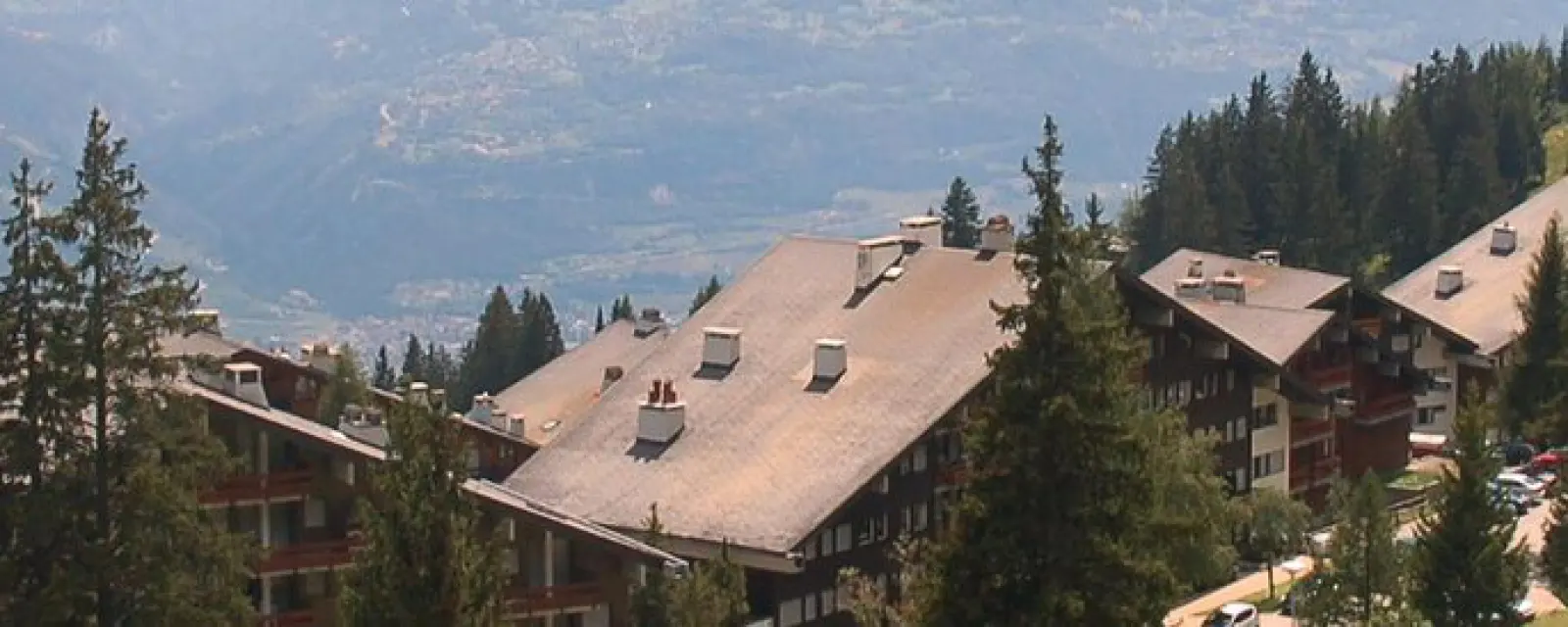
Switzerland sits landlocked at the heart of Europe, between France, Germany, Austria, Liechtenstein and Italy. The Alps cover roughly 60% of the territory, the central plateau — where most people and economic activity are concentrated — about 30%, and the Jura range the remainder.
The capital is Bern, not Zurich or Geneva — a very common error. Zurich is the largest financial centre, Geneva hosts numerous international organisations, and Basel is the pharmaceutical hub.
Climate varies sharply with altitude. The plateau has four distinct seasons and cold but not severe winters. The mountains hold deep snow for months. In the south, Italian-speaking Ticino has a near-Mediterranean climate with palms along the lakes — a corner of Switzerland that surprises many.
History
The Swiss Confederation dates from 1291, when three mountain cantons swore a pact of mutual aid. Over centuries others joined, forming a loose federation of communities speaking four different languages.
What shaped the national character above all is armed neutrality, recognised by the European powers in 1815 and maintained through both world wars. Switzerland stayed out of the fighting but never disarmed — military service persists to this day, and defensive works are scattered across the country.
Neutrality plus political stability plus banking secrecy turned a resource-poor mountain country into a financial centre and international arbiter. To be direct: Swiss banking secrecy in the old sense is gone. Switzerland has participated in automatic exchange of financial information with hundreds of jurisdictions since the mid-2010s. Anyone still picturing Switzerland as a place to hide assets from their home tax authority is living in a past decade.
Switzerland joined the United Nations only in 2002, and has repeatedly voted against joining the European Union.
Culture & people
Around 8.8 million people, roughly a quarter of them foreign nationals — a very high proportion.
Four official languages: German (about 62%), French (about 23%), Italian (about 8%) and Romansh (under 1%). This has a large practical consequence: which language you must learn depends on which canton you settle in. Moving from Zurich to Geneva means changing the language of daily life entirely.
One further point rarely mentioned: in German-speaking regions, daily life runs in Swiss German, a group of dialects so distant from standard German that Germans themselves struggle. Standard German serves for reading, writing and work, but is not enough to join everyday conversation.
Society runs on punctuality, discretion and respect for rules to an unusual degree. Apartment-building regulations on quiet hours strike newcomers as excessive until they realise everyone genuinely observes them.
Direct democracy is a defining feature: citizens vote on specific questions several times a year. This is why naturalisation includes a communal tier, discussed below.
Economy & opportunity
Switzerland is strong in high-value sectors: pharmaceuticals and chemicals (Roche, Novartis — Basel is one of the world's largest pharma clusters), banking and wealth management, insurance and reinsurance, watchmaking and precision engineering, commodity trading (Geneva and Zug are global hubs for agricultural, metal and energy trading), plus the many international organisations based in Geneva.
Salaries are Europe's highest, and income tax is markedly lower than in neighbouring countries — but tax varies enormously by canton and municipality. The gap between a low-tax canton such as Zug and a high-tax one can be very large, and many people choose where to live on that basis.
One cost the payslip does not show: compulsory health insurance bought from private insurers, a substantial monthly sum per family member, not deducted from salary as in Germany. Together with rent, this is why a "Swiss salary" on paper differs sharply from what actually remains.
As always: Swiss tax obligations do not cancel those in your home country. Under today's automatic information exchange, assuming otherwise has no basis.
Immigration routes
No investment programme
Switzerland has no golden visa and does not sell citizenship. Anyone offering "Swiss citizenship by investment" is misrepresenting the facts.
Lump-sum taxation — a real route, correctly understood
This is what separates Switzerland from Denmark, Norway or the Netherlands. Lump-sum taxation allows foreign nationals to reside in Switzerland and be taxed on their EXPENDITURE — usually referenced to housing costs — rather than on worldwide income and assets. In return comes a lawful residence permit.
Four things must be understood before treating it as a solution:
- A person under this regime may NOT carry out gainful work in Switzerland. This is the core condition, not a footnote. Anyone who still wants to run a business on the ground should look elsewhere.
- Not every canton offers it. Several, including Zurich, abolished it following popular votes. The regime exists at cantonal level, so where you live determines whether it is available at all.
- The amount is agreed with the cantonal tax authority, subject to statutory minimums, and differs between cantons. It is not a published figure.
- This is a TAX regime, not an immigration programme. It does not shorten the path to citizenship, confers no right to work, and the applicant must still obtain a residence permit under the ordinary rules for non-EU/EFTA nationals.
In short: this is a route for those who already have wealth and do not need to work — typically the retired or those living off assets — not for entrepreneurs still building a business.
Work permits — quotas are the real barrier
For non-EU/EFTA passport holders, Swiss work permits fall under numerical quotas set annually by the federal government and allocated to the cantons. The employer must show that no domestic or EU/EFTA candidate could be found, and the role must be a highly qualified one.
This is a major difference from the Netherlands or Ireland: there, meeting the criteria means being granted a permit; in Switzerland, meeting the criteria can still fail because the canton has exhausted its quota for the year.
Other routes
- Study — a very strong university system; ETH Zurich and EPFL rank among the world's best. But note that post-graduation work rights for non-EU/EFTA nationals remain constrained, not automatic as in some EU states.
- Family reunification.
- Non-working, financially self-sufficient residents — some cantons permit residence for those above a certain age, with a required connection to the canton and proof of adequate means. Conditions vary by canton.
Citizenship — among the developed world's strictest
The standard requirement: ten years of residence in Switzerland (years between ages 8 and 18 count double, but at least six actual years are still needed), holding a C settlement permit, demonstrated successful integration, proficiency in a national language, familiarity with Swiss life and institutions, respect for public order, and no reliance on social assistance.
A distinctive feature: applications pass three tiers of approval — federal, cantonal and communal. Many communes add their own minimum residence period in that specific commune, and in some places approval rests with a local assembly. Moving between communes can therefore reset the clock.
Switzerland has permitted dual citizenship since 1992 — naturalising does not require renouncing your original nationality under Swiss law. That is a clear advantage over the Netherlands and Austria.
Everyday life
Among the most expensive places on earth. Zurich and Geneva regularly top global cost-of-living rankings. Rent, dining out and services are all very high. Salaries compensate, but not by as much as the headline figures suggest — and for someone living off assets rather than working, there is no compensation at all.
Healthcare: very high quality, but compulsory private insurance is a significant monthly cost per person, plus a deductible. Budget for the whole family properly.
Education: free, good-quality public schools taught in the cantonal language. Switzerland's dual vocational training system is regarded worldwide as a model. International schools are plentiful but very expensive.
Housing: an unusually high share of residents rent rather than own. Big-city markets are tight and competitive, and rental applications demand thorough documentation.
Safety, infrastructure and public transport are among the world's best — trains punctual to the minute is fact, not slogan.
Integration takes time and language. Swiss society is reserved, and in German-speaking regions the dialect barrier is real.
Who should consider Switzerland
A good fit if:
- You work in pharmaceuticals, finance, wealth management, commodities or research, and have an employer able to secure a place within the quota.
- You already hold wealth and do not need to work, and want a stable base in the heart of Europe — lump-sum taxation is a genuine route, provided you accept the no-work condition.
- You value that Switzerland permits dual citizenship, unlike the Netherlands and Austria.
- You are after quality of life and long-term stability rather than quick documents.
Not a fit if:
- You want to "buy Swiss citizenship": it does not exist in any form.
- You need the right to live and work in the European Union — Switzerland is outside it.
- You want lump-sum taxation while also running a business in Switzerland: the two are mutually exclusive.
- You need results within a few years: ten years of residence plus three tiers of approval is the longest path in this series.
- You imagine Switzerland as somewhere to keep assets beyond your home tax authority's view — automatic information exchange ended that in the mid-2010s.