Overview
Sweden holds a rank-3 passport with 165 destinations reachable without a prior visa. It is an EU member, part of Schengen, but does not use the euro — its currency is the Swedish krona (SEK).
With around 10.6 million people, it is the most populous Nordic country, roughly double Denmark, Norway or Finland.
And like the whole region: Sweden has no residence or citizenship by investment.
The most important thing to convey here is not the current rules but the direction of travel. Over some fifteen years, Sweden has moved from having one of Europe's most open labour-immigration systems toward marked tightening: salary thresholds raised, a self-support condition added to permanent residence, and language and civics requirements for citizenship — which previously did not exist at all — placed on the reform agenda. A great deal of what circulates online still describes the old system. Whatever figure you read about Sweden, ask first: what year was this written?
Geography & climate
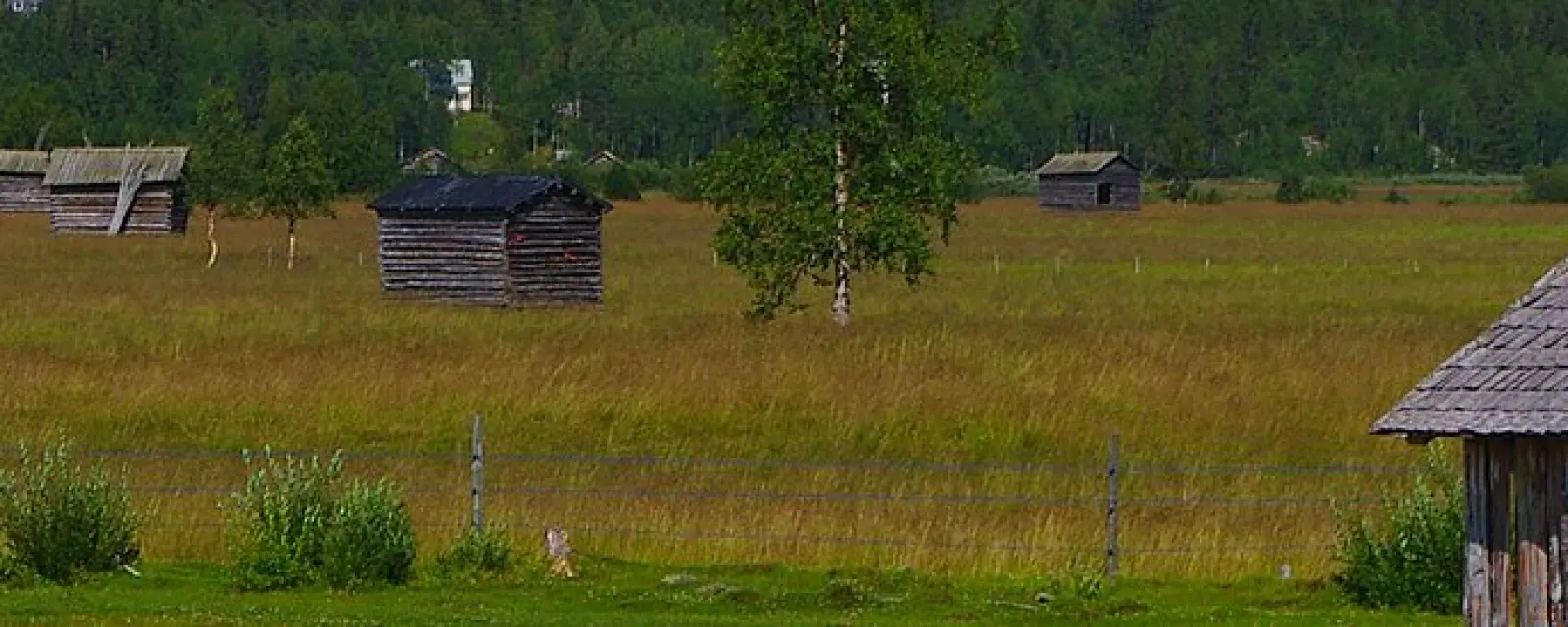
Sweden occupies the eastern side of the Scandinavian peninsula, running about 1,570 km north to south. Forest covers more than half the country, which also holds nearly 100,000 lakes.
The capital, Stockholm, spreads across fourteen bridge-linked islands where Lake Mälaren meets the Baltic. The two other major cities are Gothenburg (port, automotive industry) and Malmö (linked to Copenhagen by the Öresund bridge — many people live in Malmö and work in Denmark).
The southern climate is milder than most expect, moderated by the sea. Further north it grows severe; above the Arctic Circle there is polar night in winter and midnight sun in summer.
History
In the Viking era, Swedes travelled east — down Russia's rivers as far as Constantinople. In the 17th century Sweden was a European great power controlling much of the Baltic, a period that ended with defeat by Russia in the early 18th.
The most striking fact about modern Sweden: it has not fought a war since 1814 — more than two centuries of unbroken peace, the longest in Europe. Neutrality through both world wars left its industrial base intact while Europe lay in ruins, and that underwrote the prosperity that followed 1945.
The Swedish social model — high taxes, broad welfare, collective bargaining between unions and employers — took shape in the 1930s and did much to define what the world pictures as "the Nordic model".
Sweden joined the European Union in 1995, rejected the euro in a 2003 referendum, and joined NATO in 2024, ending more than two centuries of military non-alignment. That NATO milestone is recent and missing from older material.
Culture & people
Swedish society runs on two principles newcomers should grasp early. The first is lagom — "just enough, nothing excessive" — expressed as restraint in everything from dress to how one speaks about one's own success. The second is consensus: decisions in Swedish companies take time because opinion is canvassed widely, but once settled, everyone executes.
Fika — a mid-work coffee break, with something sweet, taken with colleagues — is a genuine institution rather than a habit, and for newcomers it is the entry point into workplace relationships.
English is spoken very well across all age groups, and in many technology firms it is the official working language. But Swedish remains a practical condition for long-term integration, and given the policy direction, its becoming a formal citizenship requirement is likely.
Sweden's immigrant population is large and diverse — roughly a fifth of residents were born abroad. That has come with a fierce decade-long political debate over immigration and integration, which is the context explaining why policy is tightening.
Economy & opportunity
Sweden has an unusually strong and varied industrial base for its size: cars and trucks (Volvo, Scania), telecommunications (Ericsson), pharmaceuticals, steel and mining, forestry, and a standout technology sector — Spotify, Klarna and Mojang all began here. Stockholm has for years ranked among the world's most prolific producers of billion-dollar tech companies per head.
Demand for foreign labour concentrates in IT, engineering, healthcare and nursing.
On tax: personal income is taxed heavily, with 25% VAT. But one detail is less widely known: Sweden has abolished both inheritance tax and net wealth tax — unlike Norway, which still levies the latter. For anyone with substantial assets, that is a meaningful regional difference.
Even so: Swedish tax obligations do not cancel those in your home country. The two residencies are assessed separately; consult a tax specialist before moving assets.
Immigration routes
No investment programme exists. The genuine routes:
- Work permit — requires a job offer on terms matching the sector's collective agreement, and pay meeting a threshold published by the migration agency. That threshold has risen substantially in recent years and continues to be adjusted — the single biggest change from the formerly very open system.
- Self-employment — for those establishing and running their own business. The agency assesses sector experience, language ability, and whether the business can support the applicant through the first two years. It tests viability, not capital.
- Study — with a post-graduation period to find work.
- Family reunification — with housing and income requirements on the sponsor.
- EU Blue Card — for highly qualified workers, with the advantage that time in other EU states counts.
On permanent residence: a self-support requirement now applies where none previously did.
On citizenship: under the traditional system, Sweden was among very few developed countries requiring no language test and no civics test — only residence time, established identity and a clean record. That is being revised: longer residence, a Swedish language test, a civics test and a self-sufficiency condition are all on the reform agenda.
So with Sweden more than any other Nordic country: do not trust figures from older articles. Check directly against the Swedish Migration Agency's current publication at the moment you apply.
Sweden has permitted dual citizenship since 2001, so naturalising does not require renouncing your original nationality under Swedish law.
Everyday life
Costs are high but noticeably below Norway and Denmark, particularly outside Stockholm.
Housing is a real problem. Rent-regulated queues in the big cities run to years, so newcomers typically sublet at considerably higher prices. This is the single largest practical difficulty arrivals face, and it must be budgeted for from the outset.
Family policy is among the world's most generous: long parental leave shareable between both parents, plus child allowances and capped childcare fees. For young families this is a genuine strength.
Healthcare is universal with co-payments up to an annual ceiling; quality is good but non-urgent waits are long.
What to prepare for: dark, long winters; a courteous but reserved society; and a difficult housing market. Against that: safety, nature close at hand, and public systems that simply work.
Who should consider Sweden
A good fit if:
- You work in technology, engineering or healthcare and can meet the salary threshold a work permit demands.
- You have a young family and value parental provision — Sweden excels here.
- You are aiming at EU citizenship and can start early, before the new conditions take full effect.
- You hold significant assets and care that Sweden levies neither inheritance tax nor net wealth tax — unlike Norway.
Not a fit if:
- You want to convert capital into documents. That route does not exist.
- You are relying on the claim that "Sweden needs no language test for citizenship" — true of the old system, and being changed. Do not plan around it.
- You need settled housing on arrival without a contingency budget for it.
- You need a fast route: every path here is measured in years, and they are lengthening rather than shortening.