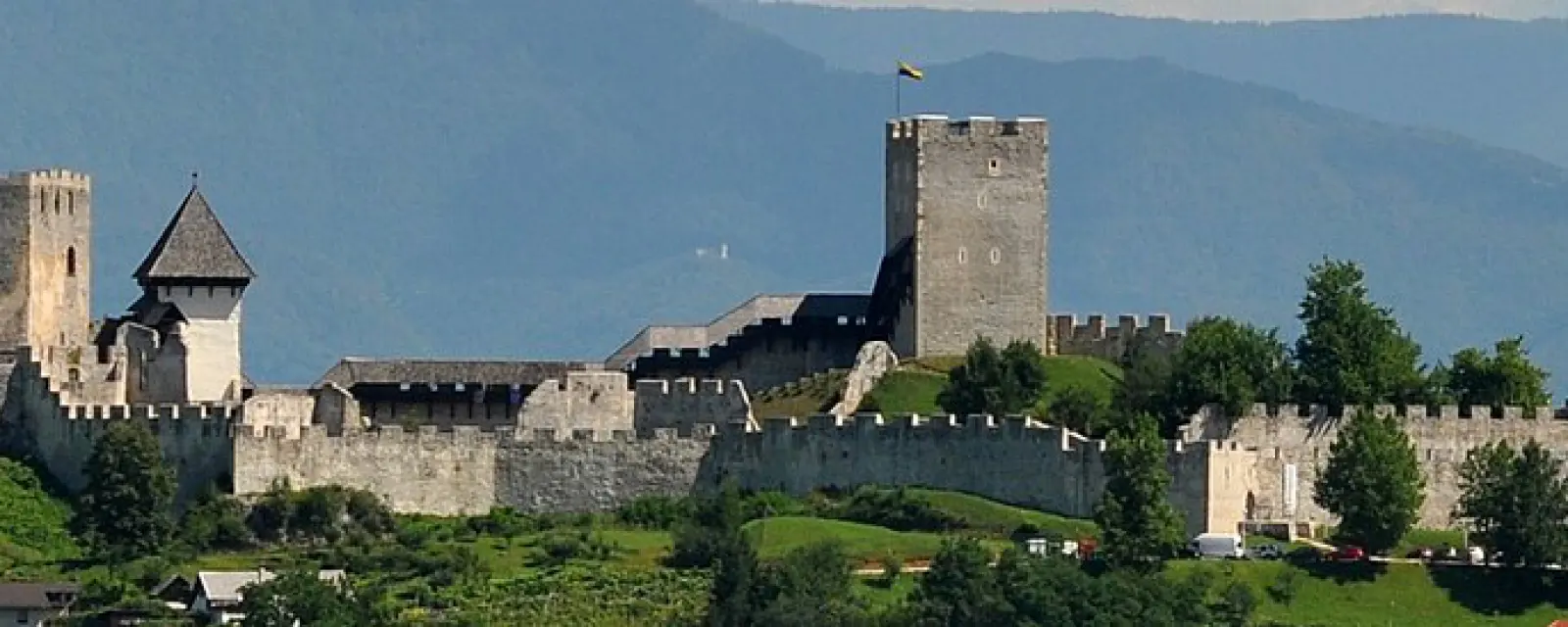
Overview
Slovenia holds a rank-9 passport with 159 destinations reachable without a prior visa. It is a member of the European Union and Schengen, and has used the euro since 2007. Its population is around 2.1 million.
Slovenia is small, and this article returns to that repeatedly because it is both the strength and the limit.
The strength: within roughly 20,000 km², Slovenia contains the Alps in the north-west, an Adriatic coast in the south-west, a karst limestone plateau in the middle and the Pannonian plain in the east. Skiing in the morning and the sea in the afternoon is genuinely possible, not tourist copy. More than 60% of the country is forested, placing Slovenia among Europe's most wooded, and social safety ranks among the highest in the world.
The limit: two million people means a very narrow labour market. If your field does not match the handful of sectors this country has, opportunities will be few — and if you lose a job, domestic alternatives are limited.
And the citizenship point deserves stating up front, because it decides matters for many families:
🔴 Slovenia requires renouncing your original nationality on naturalisation, on a ten-year path. The same group as the Netherlands, Austria, Estonia and Lithuania — and the opposite of Romania, Czechia and Belgium.
Slovenia has no residence or citizenship by investment.
Geography & climate
Slovenia sits where four of Europe's major geographic regions meet — Alpine, Mediterranean, Pannonian and Balkan — bordering Austria to the north, Italy to the west, Hungary to the north-east and Croatia to the south.
Its coastline runs only about 46 km, one of the shortest of any coastal country, with Venetian-influenced coastal towns such as Piran.
The karst region in the south-west is where cave science began — the scientific term "karst" derives from this region's name. The Postojna and Škocjan cave systems are UNESCO-listed.
The capital, Ljubljana, is very small by capital standards — around three hundred thousand people — with a car-free pedestrian centre and a river running through it. Many find it among Europe's most pleasant capitals for daily living.
The climate varies by region: Alpine areas are cold with deep snow, the coast is mild Mediterranean, and the interior is continental with four clear seasons.
History
The territory belonged to the Habsburg Empire for more than six centuries, leaving a clear Central European mark on architecture, administration and culture.
After the First World War, Slovenia formed part of the Yugoslav state; after the Second, it was one of the six republics of socialist Yugoslavia, and the most developed among them.
Slovenia declared independence in 1991. The ensuing conflict — usually called the "Ten-Day War" — was far shorter than the wars elsewhere in the former Yugoslavia. That is why Slovenia recovered and integrated markedly faster than its southern neighbours.
It joined NATO and the EU in 2004, Schengen in 2007, and adopted the euro in 2007 — the first of the 2004 accession group to do so.
Culture & people
Slovenian is a South Slavic language written in the Latin alphabet. It has a feature rare among modern European languages: it retains the dual number — a distinct grammatical form for exactly two people or things, separate from singular and plural. With six noun cases, it is a demanding language.
English is very widespread, especially among the young and in cities — Slovenia regularly ranks high in European English proficiency assessments. Italian and German are common in border regions.
Slovenians have a reputation for reserve, orderliness and a strong attachment to the outdoors — hiking, skiing and cycling are ordinary life. The temperament is closer to Austria than to the Balkans.
A small society has a notable flip side: everything is close and everyone knows everyone, so personal reputation travels fast — helpful when you do well, unhelpful after a stumble.
The Vietnamese community in Slovenia is very small.
Economy & opportunity
Slovenia has the highest income per head among the former Yugoslav countries and sits comfortably within the EU range.
Strong sectors: pharmaceuticals (Krka and Lek hold European positions), automotive components, machinery and electronics, chemicals, tourism, and logistics through the port of Koper — an important maritime gateway for Austria, Hungary and southern Germany.
Demand for foreign labour concentrates in engineering, IT, healthcare, construction and transport.
Wages sit below Austria and Italy but above most of Central and Eastern Europe; living costs are mid-range for the EU.
To repeat the limit noted above: labour market size is a genuine risk factor for foreigners. Come to Slovenia with a specific position already secured, or with work you can bring — not intending to look after arriving.
As always: Slovenian tax obligations do not replace those in your home country.
Immigration routes
No investment programme exists. The genuine routes:
- Single permit for residence and work — requiring a contract and usually a labour market test, except for shortage occupations.
- EU Blue Card — for highly qualified workers meeting a salary threshold, accumulating time across EU states.
- Residence for the self-employed or business founders — requiring genuine business activity, turnover and social contributions; authorities assess sustainability rather than capital.
- Study — English-taught programmes available, with fees low by Western European standards.
- Family reunification.
Permanent residence and citizenship
Permanent residence typically follows five years of continuous temporary residence, with a Slovenian language certificate.
Citizenship requires ten years of residence in Slovenia, including five continuous immediately before applying, plus a Slovenian language exam, stable income, lawful accommodation and a clean record.
🔴 And as noted: renunciation of the original nationality is required. Narrow exceptions exist — those of Slovenian descent, spouses of Slovenian citizens in certain circumstances, and a national-interest category — but the requirement applies to ordinary naturalisation.
So, as with Estonia and Lithuania: the practical question is whether giving up your original nationality is acceptable. If not, aim to stop at EU long-term residence — which still permits living and working indefinitely without giving anything up.
Everyday life
Living costs are mid-range for the EU — above Romania, Poland or Slovakia, below Austria and Italy.
Housing: prices in Ljubljana and along the coast have risen appreciably; rental supply is limited by the market's small size. This is a common practical difficulty for newcomers.
Healthcare: compulsory public insurance of good quality; highly specialised cases sometimes go to Austria or Italy — short distances make that practical.
Education: free public schooling in Slovenian. International schools exist in Ljubljana but with limited choice — a consequence of scale.
Transport: the country is small enough that everything is close, with good motorways. Ljubljana airport is small, and many fly via Vienna, Venice, Trieste or Zagreb — all a few hours by road.
Safety: among the highest in the world. For families with young children, a genuine plus.
Nature: Lake Bled, the Julian Alps, Postojna Cave, the coast at Piran — all within a day trip of the capital.
What to prepare for: Slovenian is a real barrier outside international environments; and small scale limits both career opportunities and service choices.
Who should consider Slovenia
A good fit if:
- You already have a specific position in pharmaceuticals, engineering, IT or logistics — or can bring your work with you.
- Your first priority is safety, nature and daily quality of life for a family with young children.
- You like a small, walkable capital without traffic — Ljubljana is among Europe's easiest cities in that respect.
- You are content to stop at EU long-term residence rather than citizenship.
Not a fit if:
- 🔴 You want an EU passport while keeping your original nationality: ordinary naturalisation requires renunciation. If that is your condition, look at Romania, Czechia or Belgium.
- You plan to arrive and then look for work: a market of two million offers little room to experiment.
- You need a wide choice of international schools or specialised services.
- You are looking for an investment programme: Slovenia has none.