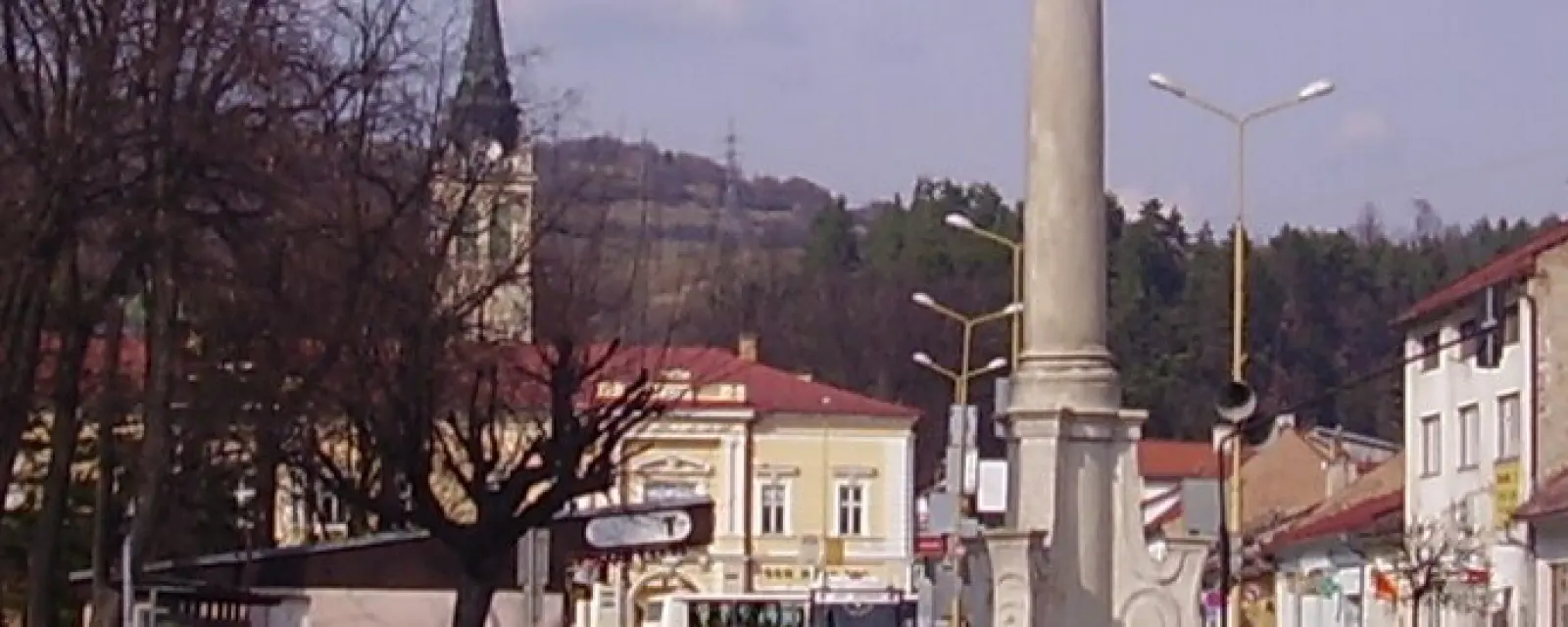
Overview
Slovakia holds a rank-8 passport with 160 destinations reachable without a prior visa. It is a member of the European Union and Schengen, and has used the euro since 2009. Its population is around 5.4 million.
Slovakia holds a little-known economic record: it produces more cars per head of population than any country in the world. With barely five million people, it hosts plants for several major manufacturers, and automotive production with its supplier chain is the economy's backbone.
But the most important thing to know before considering citizenship is something else, and it needs full treatment:
🔴 The 2010 law — and why caution still applies
In 2010, Slovakia enacted a provision under which a Slovak citizen AUTOMATICALLY LOST Slovak citizenship on voluntarily acquiring the citizenship of another country. There was no permission procedure and no category-based exception — loss was loss.
The real consequence: thousands of Slovaks living abroad lost their original citizenship on naturalising in their country of residence, and with it voting rights, documents, and in many cases ownership or inheritance rights tied to citizenship. It became one of the most contested citizenship provisions in the European Union for over a decade.
The provision has been amended. The amendment permits retaining Slovak citizenship where the person genuinely resided in the other country for a substantial period before acquiring its citizenship — targeting precisely the group most harmed: real emigrants living abroad.
But the provision has not been abolished, and the retention conditions remain conditions rather than a default. Therefore:
- For those naturalising in Slovakia: Slovakia does not currently require you to renounce your original nationality when naturalising. But if you later acquire a third country's citizenship, check the consequences for your Slovak citizenship before doing so.
- For existing Slovak citizens considering another nationality: this is a matter for a lawyer beforehand, not afterwards.
It is a clear illustration of a general principle: citizenship rules can change adversely, and change on people mid-plan. Do not assume the present state will hold still.
Also: Slovakia has no residence or citizenship by investment.
Geography & climate
Slovakia sits landlocked in Central Europe, bordering Poland to the north, Ukraine to the east, Hungary to the south, Austria to the south-west and Czechia to the north-west.
Most of the country is hilly or mountainous — the High Tatras in the north are the highest part of the Carpathian system, with peaks above 2,600 metres, and the main skiing and climbing region. The south is Danube lowland.
The capital, Bratislava, has a distinction found almost nowhere else: it is the only capital directly bordering two other countries — Austria and Hungary. And it lies only about 60 km from Vienna, close enough that many people live in Bratislava and work in Vienna, or the reverse. For anyone wanting access to the Austrian labour market at lower living costs, that is a very concrete geographic advantage.
Košice in the east is the second city.
The climate is temperate continental: four distinct seasons, cold snowy winters especially in the mountains, warm summers.
History
This territory lay within the Kingdom of Hungary for almost a thousand years, then under the Habsburgs. That is why Bratislava served as the coronation city of Hungarian kings, and why Hungarian influence remains visible in the south.
After the First World War, Slovaks joined Czechs to form Czechoslovakia in 1918. That state endured many upheavals, including the Second World War and four decades within the Soviet bloc.
In 1993, Czechoslovakia separated peacefully into two countries — the "Velvet Divorce". Notably, the split was decided by politicians rather than by referendum, and the two countries remain very close: Czechs and Slovaks understand each other's languages, and travelling, studying and working across the border is routine.
Slovakia joined NATO and the EU in 2004, Schengen in 2007, and the eurozone in 2009 — the first Visegrád country to adopt the euro.
Culture & people
Slovak is a West Slavic language, very close to Czech — close enough that speakers of each understand the other without study. For most learners it is as difficult as Czech: six noun cases, dense consonant clusters.
One practical benefit: learning Slovak gives you most of Czech, and vice versa — and the two labour markets together are far larger.
English is common in Bratislava and among the young, less so in the regions. German is fairly widespread given the proximity to Austria.
Slovaks have a reputation for friendliness and close attachment to family and to the outdoors — hiking in the Tatras is ordinary life. Catholicism plays a deep cultural role.
A Vietnamese community exists in Slovakia, much smaller than in Czechia but with the same historical roots, formed during the Czechoslovak period.
Economy & opportunity
Automotive is the backbone, as noted, along with the full components supply chain. Beyond it: machinery and electronics, metallurgy, shared services for multinationals concentrated in Bratislava and Košice, a rising information technology sector, and mountain tourism.
Heavy dependence on one industry is worth noting: the economy is sensitive to the global automotive cycle and to the transition to electric vehicles.
Wages sit below Austria or Germany but living costs are correspondingly lower. And as noted, proximity to Vienna makes it possible to work in Austria on Slovak living costs — a structure few places offer.
As always: Slovak tax obligations do not replace those in your home country.
Immigration routes
No investment programme exists. The genuine routes:
- Temporary residence for employment — requiring a contract; occupations on the regional shortage list receive more favourable handling and exemption from the labour market test. That list changes quarterly and by district, so consult the current version.
- EU Blue Card — for highly qualified workers meeting a salary threshold.
- Residence through business activity — establishing and running a genuine company, with capital and business-plan requirements.
- Study — low fees; Slovak-taught programmes at public universities charge no tuition, and English-taught medical programmes are available at lower cost than Western Europe.
- Family reunification.
Permanent residence and citizenship
Permanent residence typically follows five years of continuous temporary residence.
Citizenship generally requires eight years holding continuous permanent residence, plus a Slovak language exam, basic knowledge of history and institutions, means of support, and a clean record. Adding the preceding temporary residence, the practical path runs considerably longer than the headline eight years — plan on total time in country, not on a single figure.
On dual citizenship, see the opening section — it is the part of this article to read most carefully.
Everyday life
Living costs are moderate, markedly below Austria and Germany, comparable to Czechia. Bratislava is the country's most expensive city but remains comfortable against Vienna, an hour away.
Housing: Bratislava prices have risen appreciably, partly through buyers who work in Vienna; other cities are far easier.
Healthcare: compulsory insurance, of reasonable quality in the larger cities; specialist cases may go to Vienna or Prague — something the geography here makes practical.
Education: free public schooling in Slovak. International schools exist in Bratislava.
Transport: the central European location is a major advantage — Vienna, Budapest and Prague are all a few hours away. Vienna airport is closer to Bratislava than any Slovak airport and functions as the region's practical air gateway.
Nature: the High Tatras are among Europe's most beautiful and accessible mountain ranges, alongside extensive caves and thermal springs.
Safety: high.
What to prepare for: Slovak is a real barrier outside multinational environments; and the labour market is heavily concentrated in a few sectors.
Who should consider Slovakia
A good fit if:
- You work in engineering, automotive, machinery or electronics, or in business services — where demand concentrates.
- You want to live in Slovakia while accessing the Vienna labour market: 60 km is a very concrete advantage few places offer.
- You already have ties to Czechia — the languages are mutually intelligible and the two labour markets complement each other.
- Your children want low-cost EU university study, including English-taught medicine.
Not a fit if:
- 🔴 You hold or expect to acquire multiple citizenships and have not carefully checked the consequences under Slovak rules — this is the country in this series requiring the most careful research on that point.
- You are looking for an investment programme: Slovakia has none.
- You need a diversified labour market: the economy leans heavily on automotive.
- You do not intend to learn Slovak yet are aiming at citizenship: the language exam is a hard requirement.