Overview
Seychelles holds a rank-21 passport with 135 destinations reachable without a prior visa — Africa's strongest, ahead of Mauritius (26th) and South Africa (42nd).
It is an archipelago of roughly 115 islands in the Indian Ocean with just 100,000 people, and the highest income per head in Africa.
For anyone interested in citizenship, Seychelles is worth reading about for two reasons:
One — it has NO current citizenship-by-investment programme. An investor residence category exists, but that is residence.
Two — and this is the valuable part — Seychelles once had such a programme, and it was scrapped. That story is among the clearest lessons in this entire field, so this article gives it a section of its own.
🔴 The lesson of the 1990s
In the mid-1990s, Seychelles passed legislation allowing citizenship to be granted to foreign investors meeting a capital threshold — and, most controversially, the scheme came bundled with legal protections for participants, including limits on extradition and asset seizure.
International reaction was strong and swift. International bodies and numerous governments warned that such a mechanism risked becoming a haven for assets of questionable origin. The pressure reached the point where Seychelles had to abandon the programme.
Why does something from nearly thirty years ago matter today? Because it demonstrates three things that remain true:
- A citizenship programme can be ended by outside pressure, not only by a domestic decision. The issuing country may wish to keep it and still have to stop.
- Any programme tying citizenship to avoiding legal obligations will eventually be closed — and those who participated are not compensated.
- The programme's reputation determines the passport's value, not the investment level. This is precisely what the Nauru article in this series describes as it happens, and why St Vincent and the Grenadines refuses to operate one at all.
Put differently: Seychelles has already travelled the road Nauru is on. Anyone weighing an investment passport should read all three cases side by side.
Geography & climate
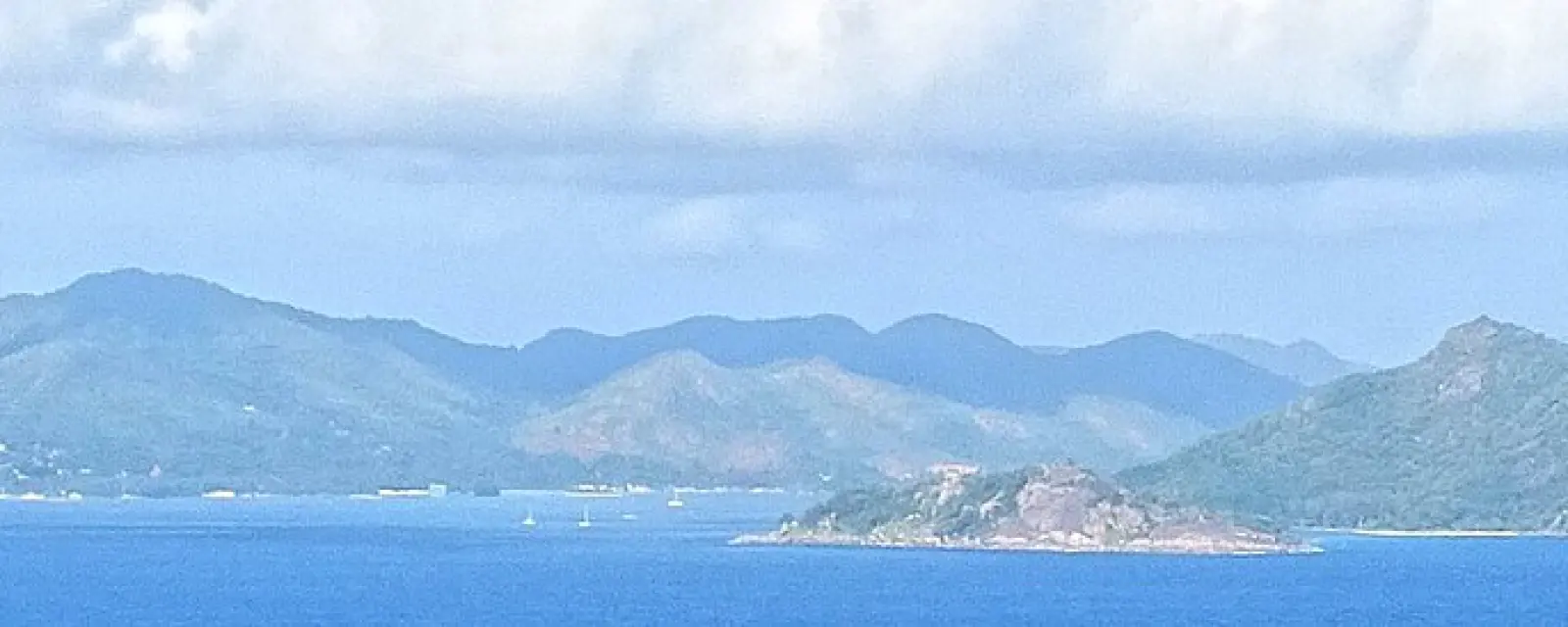
Seychelles lies in the western Indian Ocean, north-east of Madagascar, roughly 1,500 km from the East African coast.
The archipelago divides into two geologically distinct groups:
- The inner islands — made of granite, which is very rare for oceanic islands — including Mahé, home to the capital Victoria, plus Praslin and La Digue. Almost the entire population lives here. The terrain is hilly and forested.
- The outer islands — low coral atolls scattered across a very wide sea area, largely uninhabited.
One accurate and notable point: the inner islands sit outside the main Indian Ocean cyclone belt and are rarely struck directly — unlike Mauritius or Madagascar. A real difference between islands in the region, though not an absolute guarantee.
The climate is tropical, warm year-round, with two monsoon seasons. There is no cold season.
Seychelles has two UNESCO natural World Heritage Sites, including the Vallée de Mai on Praslin — home to the coco de mer palm, bearing the largest seed in the world.
History
The archipelago had no indigenous population — it was entirely uninhabited until the eighteenth century. That sets it apart from almost every other country in this series.
The French began settlement from 1770, introducing plantations and slavery. Britain took control in the early nineteenth century and Seychelles became a British colony.
That two-layered history explains today's linguistic and cultural profile: a British-style legal and administrative system, but a French-based creole as the language of daily life.
Independence came in 1976. A long single-party period followed, then a transition to multi-party politics in the early 1990s. Seychelles has seen transfers of power through elections in recent years.
Culture & people
Just 100,000 people — the smallest population of any African country.
Three official languages: Seychellois Creole, English and French. Creole is the language of daily life; English is used in administration, business and education; French is common in media and tourism.
The practical point: English is sufficient to live and work here — no new language required.
Seychellois society blends African, French, Indian, Chinese and Arab origins — the result of an archipelago with no indigenous population, where everyone came from somewhere else. This makes society notably open to outsiders compared with many island nations.
The predominant religion is Catholicism, a French legacy.
There is virtually no Vietnamese community in Seychelles.
Economy & opportunity
High-end tourism is the pillar. Seychelles positions itself at the very top of the market, with expensive resorts — a "fewer visitors, higher spend" strategy intended to limit environmental pressure on a small archipelago.
The second pillar is tuna fishing and processing — the Seychelles exclusive economic zone is vast relative to its land area, and canned tuna is the main export.
The third is offshore financial services — international company registration and related services. To be clear: this sector has faced substantial international pressure on transparency over two decades, and Seychelles has repeatedly amended its legal framework to meet international standards. That is the continuation of the 1990s story described above.
For foreigners, local employment opportunities are very limited — a market of 100,000 people with strict prioritisation of Seychellois workers. The Gainful Occupation Permit requires proof that no qualified local is available.
The realistic path: bring your work with you, or invest in tourism and accommodation.
Living costs are high — a small archipelago importing almost everything, with high-end tourism positioning pushing prices up.
As always: Seychellois tax obligations do not replace those in your home country.
Immigration routes
No citizenship-by-investment programme — as noted, the old scheme was abandoned and has no successor.
The routes that exist:
- Gainful Occupation Permit — employer-sponsored and tied to a position, requiring demonstrated need. A narrow door given the market's size.
- Investor residence permit — for those investing in encouraged sectors, chiefly tourism and accommodation. This is a residence right, not citizenship, and usually requires a genuinely operating project.
- Residence for the self-supporting — a category for those demonstrating financial capacity without local employment. Conditions change with current regulations.
- Residence through marriage to a Seychellois citizen.
Citizenship
Naturalisation requires a long period of residence — on the order of a decade — plus physical presence requirements, knowledge of the country, and a discretionary decision. Approvals are very few.
For a country of 100,000, tightly controlling naturalisation is understandable as policy — each new citizen represents a far larger proportional share than in a large country.
The practical conclusion: treat Seychelles as a place to reside and invest in tourism, not a place to obtain a passport.
Everyday life
Living costs are high, as noted. Budget on actual island prices, not general impressions.
Housing: foreigners buying property in Seychelles face restrictions and require official approval — check this carefully before considering a purchase. Renting is simpler.
Healthcare: local facilities exist but are limited for a small archipelago. For specialist cases the standard approach is flying to India, South Africa or the UAE. International health insurance with medical evacuation is effectively mandatory — the general rule for every small island in this series.
Education: an English-language public system; international school options are very few. Families with older children typically plan for schooling abroad.
Connectivity: the international airport on Mahé serves the UAE, Ethiopia, Kenya, South Africa and several European points. Travel to Southeast Asia usually connects through the Gulf — less convenient than the Asian options but workable.
Internet: adequate on the main island, more limited on smaller ones. Remote workers should verify conditions at the specific location.
Safety: good, though petty theft occurs in tourist areas.
Environment: Seychelles is a leader in marine conservation, with a very high share of its waters protected. But it is also a country facing clear sea-level rise risk — particularly for the low-lying outer atolls.
Very small scale: 100,000 people means very limited choice in goods, specialised services, schools and careers. The sense of isolation is real, and something foreign residents commonly mention after the first year.
Who should consider Seychelles
A good fit if:
- You are investing in tourism, accommodation or marine services — the encouraged sectors, with a corresponding residence category.
- You work remotely for foreign clients and want an English-speaking, tropical base outside the main cyclone belt.
- You value not having to learn a new language and a society open to outsiders.
- You are targeting residence, not a passport.
Not a fit if:
- 🔴 You are seeking a passport by investment: the old scheme was abandoned with no successor. Naturalisation requires around a decade of residence and is discretionary.
- You need local employment: a market of 100,000 with strict local-worker priority.
- Your family needs regular specialist medical care: all serious cases require flying abroad.
- You intend to buy property without first checking the restrictions on foreign ownership.
- You expect low costs: this is a high-end destination and prices reflect it.
- Your children need a range of schooling options.