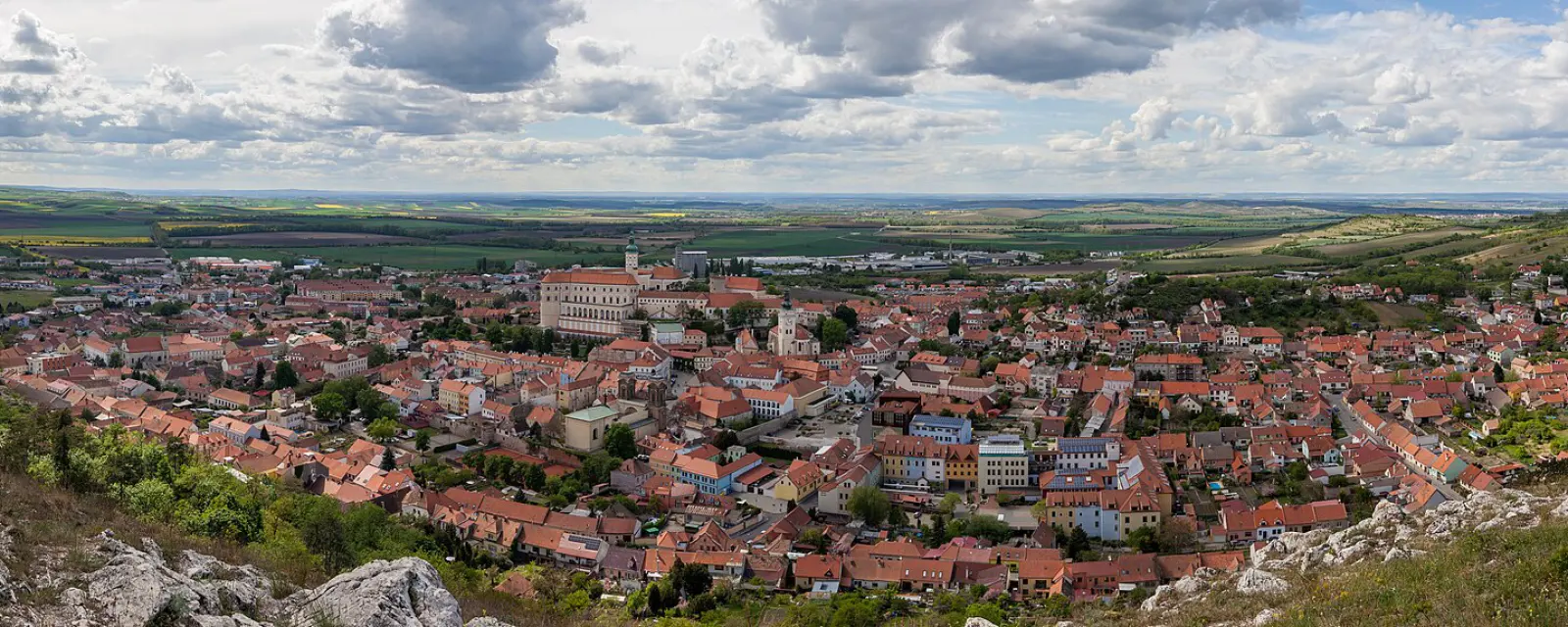
Overview
The Czech Republic holds a rank-7 passport with 161 destinations reachable without a prior visa. It is a member of the European Union and Schengen, but does not use the euro — its currency is the Czech koruna (CZK).
For Vietnamese readers, Czechia is a special case and deserves separate treatment.
Since 2013, Vietnamese have been recognised as an official national minority of the Czech Republic. This is not a symbolic title. The status carries concrete consequences: representation on the Government Council for National Minorities, entitlement to support in education and culture, and — most significant socially — acknowledgement that this community is part of the country rather than a guest population.
No other European country grants that status to its Vietnamese community. It is what sets Czechia apart from Germany, France, Poland or any other EU option where community matters to the decision.
The second point balances the first: Czechia has NO residence or citizenship by investment. No golden visa, no capital threshold that buys a permit. The routes in are employment, business, study or family — and for Vietnamese applicants, the family and business routes come with a support network no other country offers.
Geography & climate
Czechia sits landlocked in Central Europe, bordering Germany to the west and north, Poland to the north-east, Slovakia to the south-east and Austria to the south.
The territory comprises three historic lands: Bohemia in the west with the capital, Prague; Moravia in the east centred on Brno; and a small part of Silesia in the north-east. The terrain is a basin ringed by low mountains and forest.
The climate is temperate continental: four distinct seasons, cold snowy winters typically around 0 to −5°C, warm summers around 25°C. Neither Nordic-harsh nor Dutch-grey — one of the more adaptable European climates for newcomers from a tropical country.
History
This land was the heart of the Kingdom of Bohemia, a major entity within the Holy Roman Empire. Prague served as imperial capital under Charles IV in the fourteenth century — which is why the city carries architecture on a scale far exceeding a capital of ten million.
After centuries under the Habsburgs, Czechoslovakia was founded in 1918 from the dissolution of Austria-Hungary. The country was occupied by Germany during the Second World War, then fell within the Soviet bloc after 1948.
Two milestones explain today's society: the Prague Spring of 1968, a reform effort crushed by Warsaw Pact forces, and the Velvet Revolution of 1989, the peaceful transition that ended communist rule.
In 1993, Czechoslovakia separated peacefully into Czechia and Slovakia — the "Velvet Divorce". Czechia joined NATO in 1999 and the EU in 2004.
The socialist Czechoslovak period is the origin of the Vietnamese community here: from the 1950s to the 1980s, tens of thousands of Vietnamese came to study and work under state-to-state agreements. Many stayed after 1989 and moved into business as the economy opened. That is why the community in Czechia has a generational depth that Vietnamese communities in much of Western Europe do not yet have.
Culture & people
Around 10.5 million people. Czechs have a reputation for pragmatism, dry humour, little display and considerable reserve with strangers — but durable friendships once made. Beer culture is powerful: Czechia regularly leads the world in beer consumption per head, and the pub is a social institution rather than merely a place to drink.
Czech is the official language, a West Slavic language. It is difficult for Vietnamese speakers — seven noun cases, dense consonant clusters — but the community here has demonstrated it is learnable, and the second generation typically speaks it natively.
English is common in Prague and among the young, less so in the regions.
The Vietnamese community — specifics
Vietnamese form one of the largest foreign communities in Czechia. That creates an ecosystem a newcomer can use immediately:
- The SAPA market in Prague is the community's commercial and cultural centre, with services, food, goods and business networks.
- Vietnamese-language services for essentials — accounting, paperwork, healthcare, interpreting — are available in Prague and the larger cities.
- Schools and associations maintain Vietnamese for children, supported through the national-minority status.
- The second generation has entered the professions — medicine, law, technology — meaning the network extends well beyond trade.
But the other side must be said plainly: a strong community can become a cocoon. Many families live in Czechia for decades with limited Czech, and that closes off both employment outside the community and the path to citizenship. If you choose Czechia because of the community, plan language study from the first year — that is what separates families who stop at trade from families who go further.
Economy & opportunity
Czechia is distinctly an industrial economy: automotive and components form the backbone (Škoda, plus foreign manufacturers' plants), alongside machinery, electronics, chemicals, and a well-developed information technology sector in Prague and Brno.
Unemployment has been among the EU's lowest for years, meaning the labour market is short of people — favourable for skilled newcomers.
Wages sit below Germany or Austria but living costs are correspondingly lower, and the gap is narrowing.
For Vietnamese arrivals, the traditional sectors are retail, food, restaurants and nail salons — while the expanding ones are logistics, manufacturing, technology and professional services.
As always: Czech tax obligations do not replace those in your home country.
Immigration routes
No investment programme exists. The genuine routes:
- Employee card (zaměstnanecká karta) — the main door. A dual permit covering both residence and work in a specific position. It requires an employment contract, and the position must have been advertised as prescribed.
- EU Blue Card — for highly qualified workers meeting a salary threshold, accumulating time across EU states.
- Trade licence (živnostenský list) and business-based residence — the route many Vietnamese families have taken. It requires registering an activity and demonstrating genuine operations with tax and insurance obligations met. This is not an investment programme — there is no capital threshold; what is assessed is real business activity.
- Study — fees are low, and Czech-taught programmes at public universities are free of tuition even for non-EU students. This is little known and well worth considering for families with children approaching university age: the trade-off is learning Czech to entrance level.
- Family reunification.
Permanent residence and citizenship
Permanent residence typically follows five years of continuous residence, with a basic-level Czech certificate.
Citizenship typically follows a further five years holding permanent residence — a practical path of about ten years — with a Czech language exam at a higher level, a test on Czech society and institutions, proof of income, no tax or insurance arrears, and a clean record.
The requirement of no tax or social-insurance arrears is the most common point of failure for the self-employed. Anyone on the trade-licence route should keep clean books from the first year, not start tidying in year nine.
Czechia has permitted dual citizenship since 2014 — naturalising does not require renouncing your original nationality under Czech law. Before that date it did, so older material online may say the opposite.
Everyday life
Living costs are moderate by Western European standards. Prague is dearer than the rest of the country but still easier than Vienna, Amsterdam or Dublin. Outside Prague it is markedly cheaper.
Housing: Prague prices have risen sharply and buying is a genuine burden for the young; renting is easier. Brno, Plzeň and Ostrava are considerably more comfortable.
Healthcare: insurance is compulsory. Those with employment contracts join the public system; newcomers not yet eligible usually buy commercial cover, a cost to model carefully since premiums vary widely by plan and age.
Education: free public schooling, taught in Czech. Vietnamese children arriving young typically integrate quickly; those arriving in their teens need planned language support.
Transport: Prague has a good metro, tram and bus network at fares low by Western European standards. Intercity rail and coach networks are dense.
Safety: among the higher levels in Europe.
What to prepare for: Czech is a real barrier, and administration demands complete, timely paperwork. The system is inflexible — but also not arbitrary; file correctly and it works.
Who should consider Czechia
A good fit if:
- You have existing family or a network in Czechia — the single largest advantage, and one no other EU country matches for Vietnamese applicants.
- You have skills in manufacturing, engineering, IT or healthcare: the labour market is short of people.
- You intend to run a real business and will handle tax and insurance obligations properly from the start.
- You have children approaching university age and will invest in Czech — Czech-taught public university tuition is free.
- You want a rank-7 EU passport while keeping your original nationality — Czechia has allowed dual citizenship since 2014.
Not a fit if:
- You are looking for an investment programme: Czechia has none in any form.
- You do not intend to learn Czech. The community is strong enough to live without it — and that is precisely the trap that closes off both work and citizenship.
- You need results within a few years: the practical citizenship path is around a decade.
- You are self-employed and unwilling to keep rigorous tax and insurance records — exactly where citizenship applications fail.