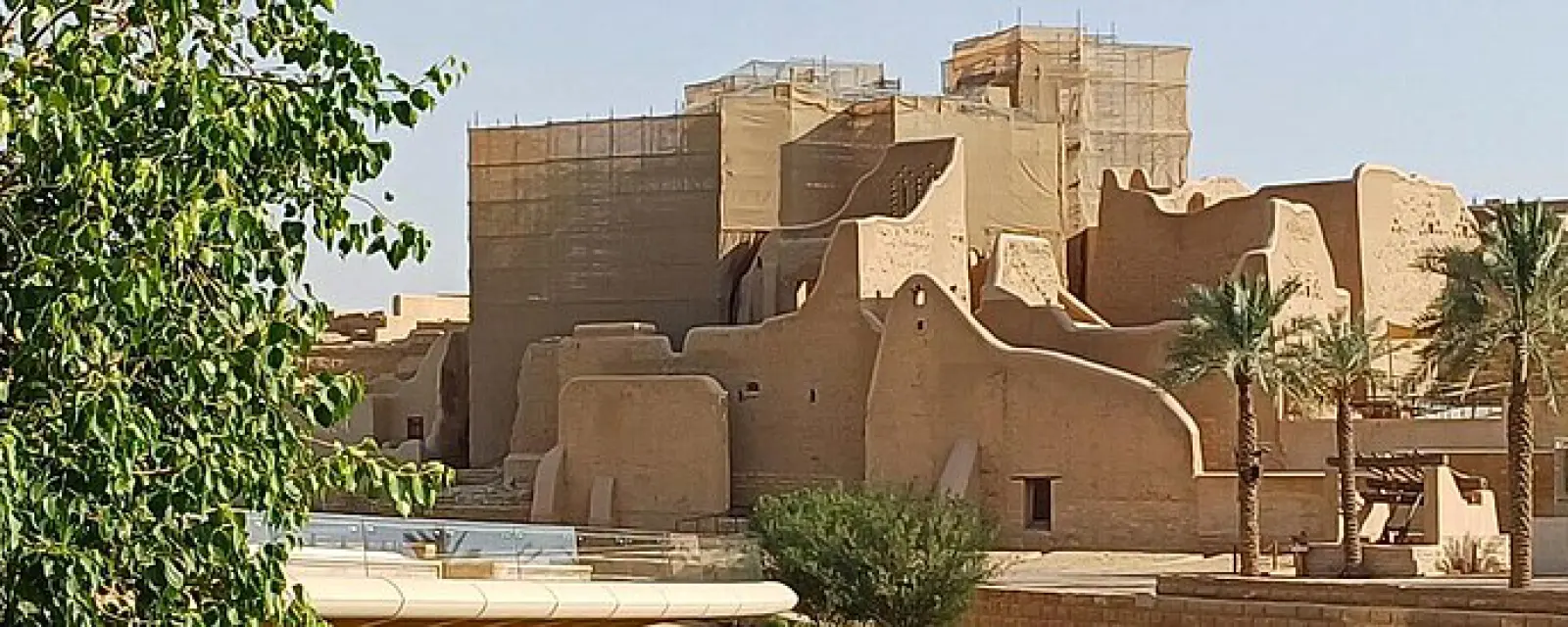
Overview
Saudi Arabia holds a rank-45 passport with 87 destinations reachable without a prior visa, and is the largest economy in the Arab world.
The country offers several tiers of Premium Residency, including a lifetime tier, allowing foreigners to own property and establish businesses without a local sponsor.
That last clause is the heart of it, and it deserves explanation to show how large a change it is. In the Gulf, foreigners have traditionally worked under the kafala system: residence status tied to a sponsor — usually an employer — meaning losing a job means losing the right to stay, and changing employer or starting a business depends on a third party. Premium Residency severs that dependency. For anyone planning long-term business in the region, that is a difference in kind, not in convenience.
But state the limit clearly: this is a RESIDENCE right, not a route to citizenship. Saudi naturalisation for foreigners is discretionary, exceedingly rare, and has no open application process comparable to a programme. Come here for residence, work and tax treatment — not for a passport.
Tiers and fees change with current regulations; consult the programme page rather than trusting a figure in an older article.
Geography & climate
Saudi Arabia occupies most of the Arabian Peninsula, bordering Jordan, Iraq, Kuwait, Bahrain by causeway, Qatar, the UAE, Oman and Yemen, with the Red Sea to the west and the Persian Gulf to the east.
Most of the territory is desert, including the Rub' al Khali — the "Empty Quarter" — the world's largest continuous sand desert. Mountains run along the Red Sea in the west, where the high Asir region is cooler and receives rainfall.
The capital, Riyadh, sits in the interior. Jeddah on the Red Sea is the commercial gateway and the entry point for pilgrimage. Dammam and the Eastern Province form the oil and gas hub.
The climate is severe: interior summers regularly exceed 45°C, while the coasts are heavily humid. This genuinely shapes daily life — most activity happens indoors under air conditioning, and summer is when many expatriate families temporarily leave.
History
The Arabian Peninsula is where Islam arose in the seventh century. Mecca and Medina are Islam's two holiest sites, and custodianship of them underpins the kingdom's religious standing.
The modern state was founded in 1932, after three decades of unification led by Abdulaziz Ibn Saud.
Oil was discovered in 1938, and the scale of the reserves has shaped the country's entire modern economic history — from a largely nomadic and oasis-farming society to one of the world's most influential economies within a few decades.
Since 2016, the Vision 2030 programme has aimed to reduce oil dependence: developing tourism, entertainment, industry and megaprojects such as NEOM. Alongside it has come a series of social changes in recent years — women driving, cinemas reopening, public entertainment events, and tourist visas opened to citizens of many countries.
This context matters: the country is changing fast, so older information becomes outdated more quickly than usual — in both directions.
Culture & people
Around 36.9 million people, a very large share of them foreign nationals — migrant labour is the backbone of many sectors.
The official language is Arabic. English is widely used in business, healthcare and international companies, so working in English is feasible in the major cities. But administrative paperwork and life outside international circles require Arabic or assistance.
Society is organised around Islam, and this shows concretely in daily life: prayer times, the inverted rhythm of Ramadan, and a working week running Sunday to Thursday.
Several points deserve plain statement, so you can decide rather than be judged:
- Alcohol is prohibited. This is law, not guidance.
- Dress and public conduct rules are stricter than in most places, though considerably relaxed compared with a decade ago.
- Non-Muslims may not enter Mecca or Medina.
- Law is based on Islamic jurisprudence, and penalties for certain conduct differ substantially from what you may be used to.
For families comfortable within that framework, this is a safe, orderly and hospitable society. For families who are not, there is no middle path — so decide honestly at the outset.
Economy & opportunity
Oil and gas remain the pillar — Saudi Aramco is among the world's most valuable companies — but Vision 2030 is pushing petrochemicals, mining, construction and infrastructure, tourism and entertainment, logistics, healthcare and technology.
Demand for foreign labour is large and broad: engineering, construction, healthcare and nursing, education, IT, project management.
The clearest financial draw: Saudi Arabia levies no personal income tax. That is a major difference from every European country in this series. VAT and various fees exist, along with corporate obligations, but employee salaries are not subject to income tax.
🔴 This is where extra emphasis is warranted: no income tax in the host country does NOT mean your home-country tax obligations end. Your tax residency at home is determined by your home country's own rules, independently of whether the other country levies anything. This is the most common misunderstanding among people moving to the Gulf, and the kind of error that is expensive when found late. Consult a tax specialist before shifting residence and before moving assets.
Immigration routes
- Premium Residency — several tiers, including renewable fixed-term and lifetime categories. Rights typically include residence without a sponsor, property ownership, establishing and owning a business, sponsoring family members, and free entry and exit. Beyond the fee-based tiers there are categories for investors, property owners, entrepreneurs and specialist talent, each with its own conditions.
- Standard work visas — still on the employer-sponsor model; rules on changing employer have been relaxed in recent years.
- Investment visas and business licences — permitting foreign ownership across many sectors, depending on the activity.
- Family reunification — for those with appropriate residence status to sponsor spouse and children.
Citizenship
As stated at the outset: there is no citizenship-by-investment programme, and naturalisation is an exceedingly rare discretionary decision. Citizenship has been granted to a small number of individuals with exceptional expertise under Vision 2030, but these are individual decisions, not an open process.
Saudi Arabia also does not, as a rule, permit dual citizenship, so even in those rare cases, retaining your original nationality is a question requiring clarification.
The practical conclusion: treat this as a place to reside, work and accumulate — not a place to obtain a passport.
Everyday life
Take-home income is high given the absence of personal income tax, and many expatriate contracts include housing, schooling and home-flight allowances. Negotiate these explicitly in the contract.
Housing: expatriate compounds are common in the major cities, with their own living standards and internal rules that are more relaxed than outside. Costs are significant but often partly employer-funded.
Healthcare: modern private systems in the major cities, with health insurance compulsory for foreigners — usually provided by the employer.
Education: many international schools in Riyadh, Jeddah and the Eastern Province, at high fees. This is the largest line in a family budget if the employer does not contribute.
Transport: almost entirely car-dependent; road infrastructure is good and fuel is cheap. Riyadh has brought a metro system into service.
Summer is a genuine trial for families with young children — months of extreme heat make outdoor life largely impractical.
Who should consider Saudi Arabia
A good fit if:
- You work in engineering, construction, healthcare, education, technology or project management and are aiming at rapid financial accumulation through income not subject to personal income tax.
- You want to do business in the region without depending on a local sponsor — precisely what Premium Residency solves.
- Your family is comfortable with the country's social and legal framework, after researching specifics rather than relying on general impressions.
Not a fit if:
- You are aiming at citizenship: there is no open route, and the country does not as a rule permit dual nationality.
- Your family is not comfortable with rules on alcohol, dress and public conduct.
- You believe moving to the Gulf ends your home-country tax obligations — it does not, and this misunderstanding is costly.
- You need a temperate climate for elderly relatives or small children.