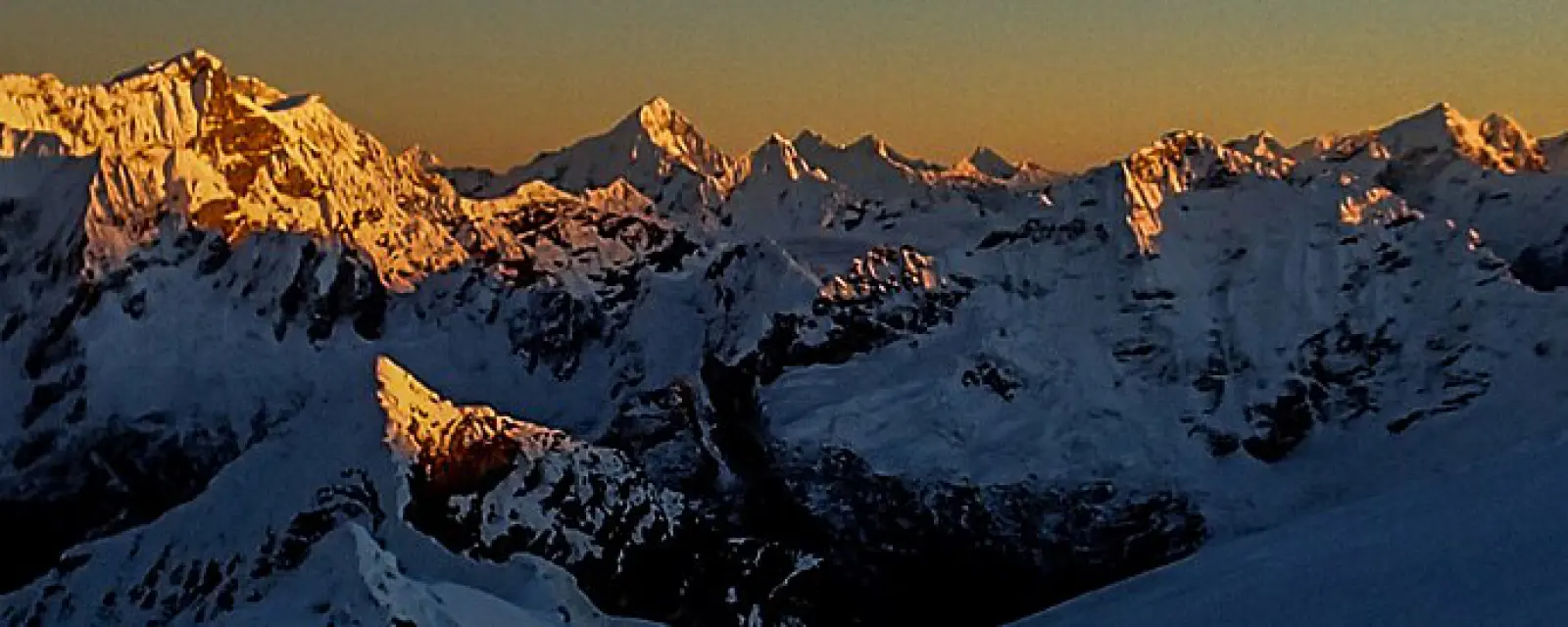
Overview
Peru holds a rank-23 passport with 132 destinations reachable without a prior visa — including visa-free access to the Schengen area, which not every South American country has.
But what makes Peru genuinely notable in a citizenship context lies elsewhere, and it is seldom mentioned:
✅ Peru allows naturalisation applications after roughly TWO YEARS of lawful residence. That is among the shortest paths in the world. For comparison within this series: Czechia and Slovakia around ten years, Estonia eight, Slovenia ten, Switzerland ten plus three tiers of approval.
✅ And Peru permits dual citizenship — no renunciation of your original nationality.
Combine the three — two years, keeping your original passport, and Schengen visa-free travel — and Peru is among the shortest routes to a second citizenship through genuine residence, without buying into a programme.
But three trade-offs must be stated, because there is no free lunch:
- Two years of residence means real residence. You must live in Peru with valid status and meet physical presence requirements. This is not a remote enrolment.
- Spanish is required, along with knowledge of Peruvian history, culture and the constitution — there is an examination.
- 🔴 Political instability is a real risk. Peru has seen multiple changes of president in short succession in recent years, alongside periods of large-scale protest. Stated as fact: this is something to monitor, and it also means rules can change — verify current legislation when you apply rather than trusting a figure in an older article, including this one.
Peru has no citizenship-by-investment programme.
Geography & climate
Peru sits in western South America, bordering Ecuador and Colombia to the north, Brazil to the east, Bolivia to the south-east and Chile to the south, with a Pacific coast to the west.
The country divides into three very different regions, and which you choose largely determines your experience:
- Costa — a narrow coastal strip, mostly desert, containing the capital, Lima, and most of the population and economic activity.
- Sierra — the Andean highlands, home to Cusco, Lake Titicaca and Machu Picchu. Altitude is significant — Cusco sits at around 3,400 metres, and altitude sickness is a real issue for newcomers.
- Selva — the Amazon rainforest, covering roughly 60% of the territory but holding only a small share of the population.
On Lima's climate, one surprise is worth knowing in advance: Lima is among the world's least rainy capitals because it sits on desert — yet it is grey and damp for months in winter owing to a coastal fog known as garúa. Many people picture South America as sunny and are startled by Lima's long grey winter. If that matters to you, consider northern cities such as Trujillo or Piura, which are sunny year-round.
🔴 Earthquakes: Peru sits on the Pacific Ring of Fire with significant seismic activity — a factor when choosing housing.
History
Peru was the heart of the Inca Empire, the largest state in the pre-Columbian Americas, with its capital at Cusco. Before the Incas came many other civilisations — Caral, Moche, Nazca, Chimú — some among the oldest in the Americas.
The Spanish conquered the Inca Empire from the 1530s, and Lima became Spain's centre of power in South America for nearly three centuries. That is why Lima has a large colonial historic centre, UNESCO-listed.
Peru declared independence in 1821, consolidated in 1824.
The twentieth century and early twenty-first brought upheaval: internal armed conflict through the 1980s and 1990s, economic crisis, then strong growth from the early 2000s on the back of minerals. In recent years, instability at the level of national leadership has been a defining feature — noted as fact because it affects the legal and business environment.
Culture & people
Around 34.4 million people. Spanish is the official language, alongside Quechua and Aymara, which hold official status where they predominate — Quechua was the language of the Inca Empire and still has millions of speakers.
English is of limited reach, mainly in tourism and among professionals in Lima. Life in Peru without Spanish is very difficult — and it is also a citizenship requirement.
Peruvian society blends indigenous, Spanish, African and Asian heritage deeply. Notably: Peru has among the largest Japanese- and Chinese-descended communities in Latin America. The Chinese-descended population is large enough that **Chinese restaurants in Peru have their own name — *chifa*** — and form part of the national cuisine rather than a foreign one. Being Asian in Peru is therefore unremarkable.
Peruvian cuisine is regarded as among the world's finest, and Lima has for years placed restaurants at the top of global rankings. This is not a trivial detail — gastronomy is a genuine business and employment sector here.
Economy & opportunity
Minerals are the pillar: Peru is the world's second-largest copper producer after Chile, with major positions in gold, silver and zinc.
Other notable sectors:
- Export agriculture — Peru's great success story of the past two decades: avocados, blueberries, grapes and asparagus shipped to North America, Europe and Asia, exploiting counter-seasonal timing. Peru has become a leading exporter in several of these.
- Fisheries — Peruvian waters are among the world's richest, thanks to the Humboldt Current.
- Tourism — Machu Picchu, Cusco, the Amazon, Lima's food scene.
- Textiles, particularly Pima cotton and alpaca wool.
The risks belong here too: the economy is heavily exposed to world mineral prices, the informal sector is very large, and political instability weighs on long-term investment.
For foreigners, the realistic route is usually to bring your work with you — remote employment, or a business in tourism, food, agricultural export or technology. Local wages are low, so local employment holds limited appeal.
Living costs are low — one of Peru's clearest strengths for those earning in foreign currency.
As always: Peruvian tax obligations do not replace those in your home country.
Immigration routes
No golden-visa-style investment programme. The genuine routes:
- Work visa — requiring a contract with a Peruvian company; note the rules limiting the proportion of foreign staff a company may employ.
- Investor visa — requiring capital invested in a Peruvian company that genuinely operates and creates jobs. Substance is assessed, not just the figure.
- ***Rentista* visa — for those with stable, guaranteed passive income** from abroad, such as a pension or income from assets. A notable category for those living on passive income, similar in spirit to South Africa's retired person visa.
- Student visa.
- Residence through marriage or family relationship with a Peruvian citizen.
Citizenship — the main draw
As stated at the outset: applications may be filed after roughly two years of lawful residence with valid status.
The accompanying conditions:
- Spanish language ability;
- An examination on Peruvian history, culture and the constitution;
- Proof of lawful means of support — a profession, business or stable income;
- A clean criminal record in both Peru and your country of origin;
- Meeting physical presence requirements — the most common stumbling block, since long periods abroad easily break continuity.
✅ Peru permits dual citizenship.
Because these rules can change — and Peru's legal environment is more volatile than average — verify current requirements when you apply, and work with a local immigration lawyer.
Everyday life
Living costs are low — rent, food, services and domestic help are all inexpensive compared with North America, Europe or even Chile. This is why Peru appeals to remote workers and those living on foreign pensions.
Housing: Lima districts such as Miraflores, San Isidro and Barranco are favoured by foreigners, being safer with better infrastructure — but also more expensive than the general market. Outside Lima is far cheaper.
Healthcare: private hospitals in Lima are of reasonable quality at costs well below North America; public provision is overloaded. Private health insurance is necessary. In the highlands and Amazon, services are considerably more limited.
Education: private and international schools exist in Lima at fees moderate by international standards.
Safety: street crime and theft are real problems in cities, particularly Lima. Choosing where to live and adjusting habits is necessary. Conditions vary greatly by district.
Transport: Lima is heavily congested. Inter-regional travel is mainly by air or long-distance coach.
International connectivity: Lima airport is an important South American hub, but travel to Asia is a very long multi-leg journey.
Altitude: if you plan to live in Cusco or the Andes, allow for acclimatisation — those with cardiac or respiratory conditions should consult a doctor first.
Who should consider Peru
A good fit if:
- ✅ You want a second citizenship through genuine residence in a short time, and accept living in Peru for around two years and learning Spanish — one of the shortest such paths anywhere while keeping your original nationality.
- You work remotely or live on passive income — low costs plus the rentista visa are a coherent combination.
- You work in export agriculture, mining, fisheries, tourism or gastronomy — Peru's genuinely strong sectors.
- You are Asian and value that the Asian-descended community here is large and long-integrated, so you are not a curiosity.
Not a fit if:
- 🔴 You need a stable legal and political environment for long-range planning: recent instability is a real risk and brings the possibility of rule changes.
- You do not intend to learn Spanish: daily life is hard and you will not qualify for citizenship.
- You imagine maintaining residence status remotely and applying after two years: physical presence is the most common stumbling block.
- You picture South America as sunny year-round but choose Lima: its winters are grey and damp for months.
- Your family cannot accept urban security risk and seismic risk.