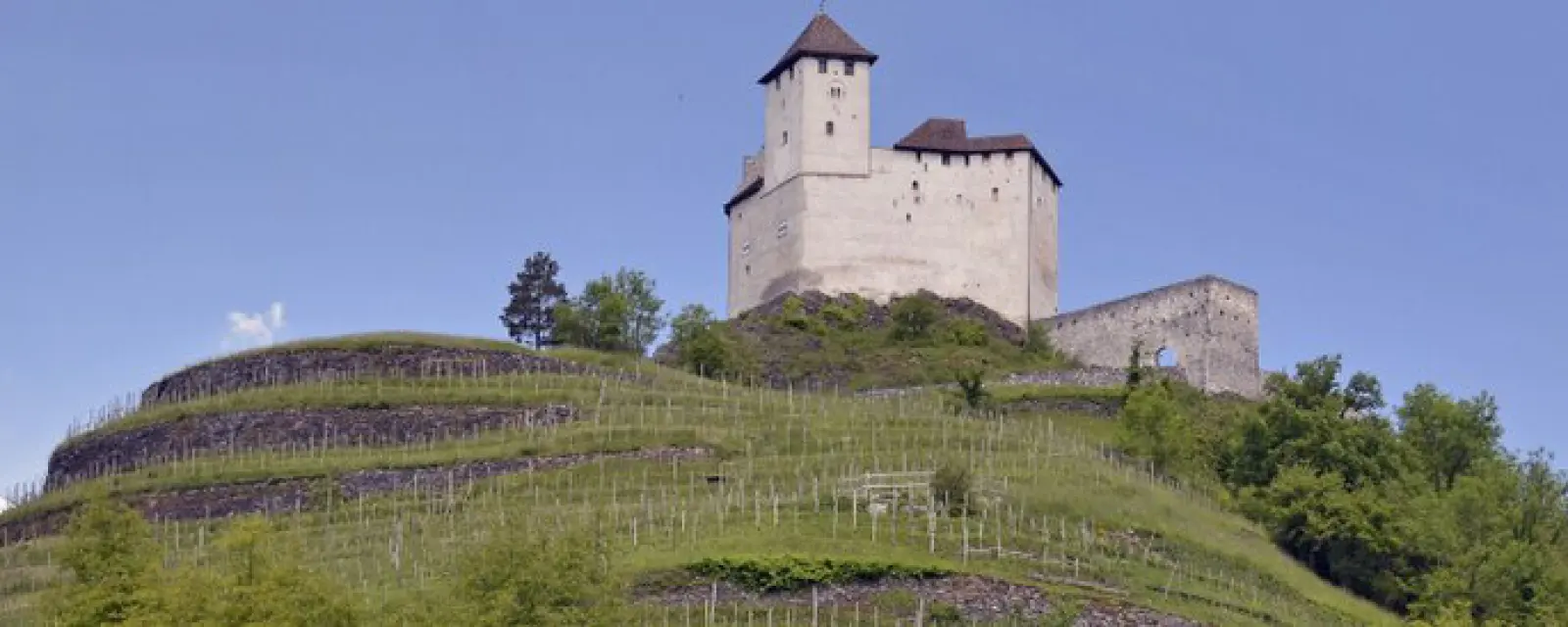
Overview
Liechtenstein holds a rank-9 passport with 159 destinations reachable without a prior visa. It is among the world's smallest countries: roughly 160 km² and 39,000 people.
Its legal position is an unusual combination worth grasping first:
- Not an EU member, but a member of the European Economic Area (EEA) alongside Norway and Iceland — participating in the EU single market without EU membership.
- In Schengen.
- Uses the Swiss franc and has been in a customs union with Switzerland since 1923.
And now the two features that make Liechtenstein among the hardest countries in Europe to enter — both are real and need stating plainly:
🔴 One — residence permits for non-EEA nationals are capped by quota, and part of them are awarded BY LOTTERY. This is not a figure of speech. Liechtenstein holds a draw among qualifying applications, twice a year, to allocate the small number of permits available. That means meeting every condition may still not get you a permit, and there is no way to improve your odds with money or a better file.
🔴 Two — the ordinary citizenship path is THIRTY YEARS of residence. Among the longest requirements anywhere. Time spent here before the age of twenty counts double, so those arriving young can qualify considerably sooner — but for an adult arriving now, thirty years means thirty years.
And the accompanying condition: renunciation of your original nationality.
This is a country to understand correctly from the outset: Liechtenstein is a place to work and live, and almost never a place to target citizenship.
It has no residence or citizenship by investment. No capital threshold buys a place within the quota.
Geography & climate
Liechtenstein lies in the Alps between Switzerland to the west and Austria to the east, along the upper Rhine.
It has a rare geographic distinction: it is one of only two "doubly landlocked" countries in the world — landlocked, and surrounded entirely by landlocked countries. The other is Uzbekistan.
The terrain is mostly mountainous; the flat land runs along the Rhine valley, holding the capital, Vaduz, and most of the population. The highest point exceeds 2,500 metres.
The Alpine climate is moderated by the valley setting: cold snowy winters, mild pleasant summers.
Because the country is so small, every point within it is under half an hour's drive from every other, and the Swiss or Austrian border is always close by.
History
The Principality of Liechtenstein was formed in 1719 when the House of Liechtenstein merged two purchased lordships — the family bought land to obtain a title and a seat in the Holy Roman Empire.
One striking detail: the ruling family did not set foot in its own territory for the first hundred years or more, and only moved permanently to Vaduz in the mid-twentieth century.
Liechtenstein remained neutral through both world wars. After the First, it shifted from alignment with Austria to close alignment with Switzerland — shared currency, customs union, and Swiss diplomatic representation in many places.
In the early twentieth century this was still a poor agricultural country. Industrialisation and the growth of financial services from mid-century turned it into one of the world's highest-income states.
On institutions: this is a constitutional monarchy with unusually strong princely powers compared with other European monarchies — following a 2003 referendum, the Prince holds veto powers and substantive executive authority. Noted as fact, because it distinguishes the country institutionally.
Liechtenstein joined the United Nations in 1990, the EEA in 1995, and Schengen in 2011.
Culture & people
Around 39,000 people. German is the official language, and daily life uses an Alemannic dialect — closer to Swiss German than to standard German.
English works in finance and international companies, but German is a practical necessity for daily life and mandatory for all procedures.
Society is very small and closely knit. The municipality (Gemeinde) structure carries unusual weight — and as the citizenship section explains, the municipal community itself has a say in who becomes a citizen.
Around a third of residents are foreign nationals, mostly from Switzerland, Austria, Germany and other EEA countries.
One striking figure: Liechtenstein has more jobs than residents, so most of the workforce commutes across the border daily from Switzerland and Austria. This matters for anyone considering a move: working in Liechtenstein does not mean residing in Liechtenstein — a great many people work here and live next door, and that is usually the practical arrangement.
There is virtually no Vietnamese community in Liechtenstein.
Economy & opportunity
Liechtenstein has among the world's highest incomes per head, and its economy is considerably more diversified than the "tax haven" image suggests.
Precision manufacturing is a genuine pillar, not a sideline:
- Hilti — construction tools and equipment, sold worldwide;
- Ivoclar Vivadent — dental materials;
- plus numerous makers of components and specialised equipment.
Alongside sit financial services — private banking, wealth management, trusts and corporate structures.
One point to prevent outdated information: Liechtenstein changed substantially on financial transparency from around 2009 onward, joining international tax information exchange and signing numerous agreements. The image of a place to hide assets belongs to a past era, as with Switzerland.
For foreigners, opportunity concentrates in finance, engineering, precision manufacturing and IT. But to repeat: having a job and having residence rights are two different things here.
As always: Liechtenstein tax obligations do not replace those in your home country.
Immigration routes
Quotas and the lottery
For EEA and Swiss citizens, residence is considerably easier under free-movement arrangements — though quotas still apply.
For non-EEA nationals, the rules are far tighter:
- The number of residence permits issued each year is set by quota;
- Part is allocated to those with employment grounds, assessed by the authorities;
- Part is distributed by lottery among qualifying applications, held twice a year.
The practical consequence: you may meet every condition and still not receive a permit, and that will not be because anything was wrong with your file. There is no way to improve your odds by paying more.
Other routes
- Work permits — employer-sponsored, within quota; the main door for highly qualified people.
- Residence through marriage to a Liechtenstein citizen.
- Residence for the non-working and self-supporting — this category exists but is also within quota and very limited.
- Study — small scale; the University of Liechtenstein exists.
Citizenship — read carefully before planning
There are three routes, and all three are very difficult:
1. Ordinary naturalisation: thirty years of residence. Time lived here before the age of twenty counts double, so those arriving as children can qualify considerably sooner, but for an adult arriving now, thirty years is thirty years.
2. Through marriage: substantially shorter — typically requiring a number of years of residence plus a number of years married to a Liechtenstein citizen.
3. By municipal vote (Gemeinde): the most distinctive route. After a period of residence, an applicant may ask the residents of their municipality to vote on accepting them as a citizen. This is a genuine popular vote by local people — meaning the outcome depends on whether your neighbours know and accept you, not on meeting criteria on paper.
All three require German language ability, knowledge of the country, and 🔴 renunciation of your original nationality.
The candid conclusion: for an adult arriving from abroad, Liechtenstein citizenship is not realistically a plannable objective. Treat this as a place to work and live, and look elsewhere if you need an EU passport.
Everyday life
Living costs are very high, on a par with Switzerland — being tied to the Swiss economy and currency.
Housing: supply is extremely limited given the small territory and strict building rules. This is among the reasons many who work here choose to live in Switzerland or Austria.
Healthcare: compulsory insurance of high quality; many specialist services use facilities in Switzerland and Austria — short distances make this entirely practical.
Education: free public schooling in German. Students typically go to Switzerland or Austria for university.
Transport: there is no airport — the nearest is Zurich, a little over an hour by road. There is no major railway station; movement is mainly by bus and car, connecting into the Swiss network.
Safety: among the highest in the world. The country has no army — it was disbanded in the nineteenth century.
Nature: the Alps are immediately outside; skiing and hiking are everyday activities.
Very small scale: 39,000 people means everything — goods, services, schools, careers, even social life — has clear limits. Most needs beyond the basic are met by crossing into Switzerland or Austria.
Who should consider Liechtenstein
A good fit if:
- You have high-level expertise in finance, wealth management, engineering or precision manufacturing, with an employer here willing to sponsor you.
- You accept working in Liechtenstein while living in Switzerland or Austria — the most practical arrangement, and what most of the workforce does.
- You are aiming at income and working environment, not documents.
- You like a very small, safe, orderly society in the Alps.
Not a fit if:
- 🔴 You are aiming at citizenship: thirty years of residence, or a vote by your municipality, plus renunciation of your original nationality. This is not realistically a plannable objective.
- 🔴 You need certainty of obtaining residence: part of the non-EEA permit allocation is by lottery, so qualifying may still not suffice.
- You are looking for an investment programme: there is none, and money cannot buy a place within the quota.
- You need a broad labour market or wide service choice: 39,000 people is an absolute ceiling.
- You imagine this as a place to keep assets discreetly: Liechtenstein has participated in international tax information exchange since around 2009.