Overview
Chile holds a rank-14 passport with 149 destinations reachable without a prior visa — the strongest in Latin America, well ahead of Brazil, Argentina or Mexico.
But that figure does not tell the whole story. What makes the Chilean passport distinctive is a detail most rankings do not surface:
✅ Chile is the ONLY Latin American country in the US Visa Waiver Program. Chilean citizens travelling to the United States for tourism or business need only register online for ESTA — no visa, no embassy interview. No other Latin American country has this; citizens of Brazil, Argentina, Mexico and Colombia all apply for US visas through the full process.
For frequent travellers to the United States, that is a very concrete difference rather than a number on paper.
Chile is also an OECD member, one of very few Latin American countries to achieve that status.
But one important update, missing from many older articles:
🔴 Chile's immigration law was fundamentally overhauled, effective from 2021. Previously, the common approach was to enter on a tourist visa and change status locally — that is no longer permitted. Under the new law, foreigners must apply for a residence visa from abroad, at a Chilean consulate, before travelling. Any article still advising "come as a tourist and switch" describes a system that has been abolished, and following it will derail your plans.
Chile has no citizenship-by-investment programme.
Geography & climate
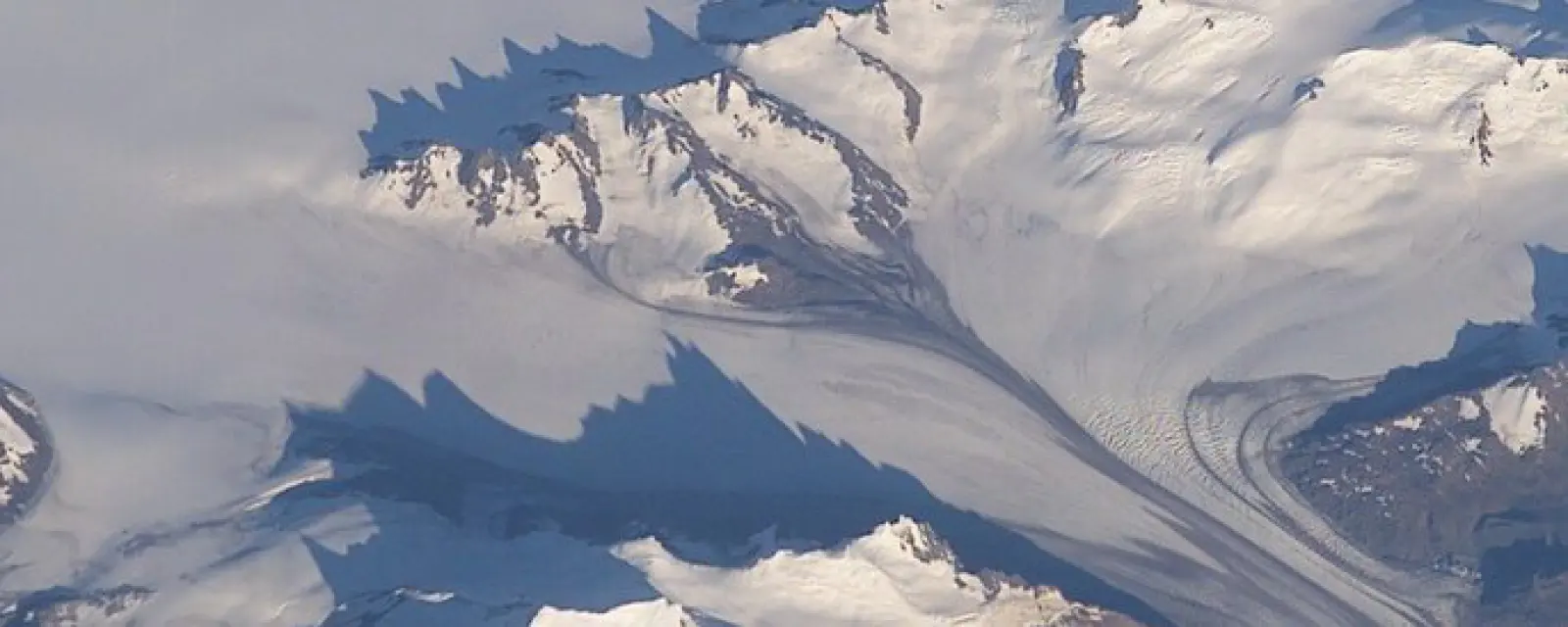
Chile has the world's most unusual shape: more than 4,300 km from north to south but averaging only about 180 km wide, wedged between the Andes to the east and the Pacific to the west.
That shape produces almost the planet's full range of climates within one country:
- The Atacama Desert in the far north — the driest place on Earth, with weather stations that have never recorded rainfall; also home to many of the world's largest observatories, thanks to its clear skies.
- The central region around the capital, Santiago — Mediterranean climate with four clear seasons, holding most of the population, the economy and the wine-growing valleys.
- The Lake District and Patagonia in the south — heavy rainfall, forest, glaciers and fjords.
Chile also administers Easter Island (Rapa Nui) in the mid-Pacific, more than 3,500 km from the mainland.
🔴 Earthquakes are a constant and serious risk. Chile sits on the Pacific Ring of Fire and is among the world's most seismically active countries — the strongest earthquake ever recorded occurred in Chile in 1960. The positive side: precisely because of this, Chile has among the world's strictest seismic building codes, and modern structures withstand shaking very well. But it must enter decisions on housing and insurance.
Winter air pollution in Santiago is a real problem, as the city sits in a mountain-ringed basin that traps smog. Families with respiratory conditions should factor this in.
History
This land was home to indigenous peoples, among whom the Mapuche of the south resisted Spanish expansion more successfully than most indigenous peoples of the Americas, retaining relative independence for centuries.
Chile was Spanish from the sixteenth century, declared independence in 1810 and consolidated it in 1818.
Through the nineteenth and twentieth centuries the economy revolved around minerals: first nitrates in the northern desert, then copper — still the pillar today.
The twentieth century included a period of deep upheaval: the government elected in 1970 was overthrown by a military coup in 1973, beginning a military government that lasted until 1990, a period with documented human rights violations. Chile returned to democracy in 1990 and has since been among the region's more stable democracies. This is stated as historical fact, without political judgement.
Chile joined the OECD in 2010, the first South American country to do so.
Culture & people
Around 19.6 million people, mostly concentrated in the central region around Santiago.
Spanish is the official language. Know in advance: Chilean Spanish has a reputation as the hardest to follow among Spanish-speaking countries — fast, with dropped final syllables and abundant local slang. Those who learned Spanish elsewhere usually need time to adjust. But that is accent — the underlying grammar and core vocabulary remain standard Spanish.
English is common among professionals in Santiago and in technology, less so in the regions.
Chilean society has a reputation for orderliness, respect for institutions and somewhat more reserve than other Latin American countries — Chileans often describe themselves this way relative to their neighbours.
The Vietnamese community in Chile is very small, though other Asian communities exist, particularly of Chinese and Korean origin.
Economy & opportunity
Chile has among Latin America's most open and stable economies, with an unusually broad network of free trade agreements.
Minerals are the pillar: Chile is the world's largest copper producer, and holds among the largest lithium reserves — beneath the salt flats of the Atacama. With the transition to electric vehicles and batteries, Chile's lithium position is a long-term strategic factor.
Other sectors: wine — Chile is a major exporter — aquaculture, particularly salmon, fruit exported to the northern hemisphere in its off-season, forestry, financial services, and a rising technology sector in Santiago.
One programme deserves separate mention: Start-Up Chile — a state-backed accelerator providing equity-free funding to foreign founding teams who come to work in Chile for a period. It is among the earliest programmes of its kind anywhere and has brought thousands of teams from many countries. Understand it correctly: this is startup support with a work visa attached, not a settlement category — but it is a very practical door for technology people.
Wages sit below North America and Western Europe but are the highest in Latin America; living costs are mid-range, with Santiago dearer than the rest.
As always: Chilean tax obligations do not replace those in your home country.
Immigration routes
🔴 To repeat the most important procedural point: under the law effective from 2021, residence visas must be applied for FROM ABROAD, at a Chilean consulate, before entry. Entering on a tourist visa and switching locally is no longer possible.
The genuine routes:
- Temporary residence visa for employment — requiring a contract or job offer from a Chilean company.
- Visas for those with specific expertise or skills — for sectors Chile needs.
- Start-Up Chile and innovation categories — as described, with a work visa for the programme's duration.
- Residence through investment or business activity — requiring a genuine project with a plan and value creation; the assessment covers substance rather than a capital threshold alone.
- Study — good universities by regional standards, with transitional categories after graduation.
- Family reunification.
Permanent residence and citizenship
Permanent residence typically follows a period of continuous temporary residence, meeting requirements on physical presence in the country.
Citizenship generally requires around five years of residence with valid status, knowledge of Spanish and of Chilean history and institutions, and a clean record.
On dual citizenship: Chile does not require naturalising applicants to renounce their original nationality in current practice. This is favourable compared with the Netherlands, Austria, Estonia or Lithuania. As always, verify current rules on both sides at the time of applying.
Everyday life
Living costs are mid-range — the highest in Latin America but markedly below North America, Western Europe or Australia.
Housing: Santiago has a broad market across many segments; the eastern districts are considerably more expensive. Outside the capital is far cheaper.
Healthcare: a two-tier system — public (FONASA) and private (ISAPRE). Private care in Santiago is of high quality at costs far below the United States, and is the usual choice for foreigners. Health insurance is a budget item.
Education: public, subsidised and private systems exist; international schools concentrate in Santiago.
Safety: good by Latin American standards, though urban crime has risen in recent years and is a live domestic concern. Choosing where to live remains an important decision.
Transport: Santiago has a good and extensive metro by regional standards. Domestic travel is largely by air, given the country's length.
International connectivity: Santiago airport is a major South American hub with direct flights to North America, Europe, Australia and some Asian routes. Travel to Asia remains very long — Chile is among the most distant places on the planet from Vietnam.
Nature: from the world's driest desert to Patagonian glaciers, with the Andes running the country's full length.
Who should consider Chile
A good fit if:
- ✅ You travel to the United States frequently and value that the Chilean passport is visa-free there — no other Latin American country offers this.
- You work in mining, energy, technology, export agriculture or aquaculture — Chile's strong sectors with genuine demand.
- You are a technology founder wanting to try Start-Up Chile — equity-free funding is a rare condition.
- You want a Latin American country with institutional stability, OECD membership and an open economy.
- You are prepared to learn Spanish.
Not a fit if:
- 🔴 You plan to enter on a tourist visa and switch status locally: this was abolished in 2021; applications must be filed from abroad.
- Your family cannot accept earthquake risk as a constant factor.
- You or a relative have respiratory conditions and plan to live in Santiago: winter pollution is a real problem.
- You do not intend to learn Spanish: outside Santiago's technology environment, English is not enough.
- You need to be near home in Asia: Chile is among the most distant countries, and every trip back is very long.